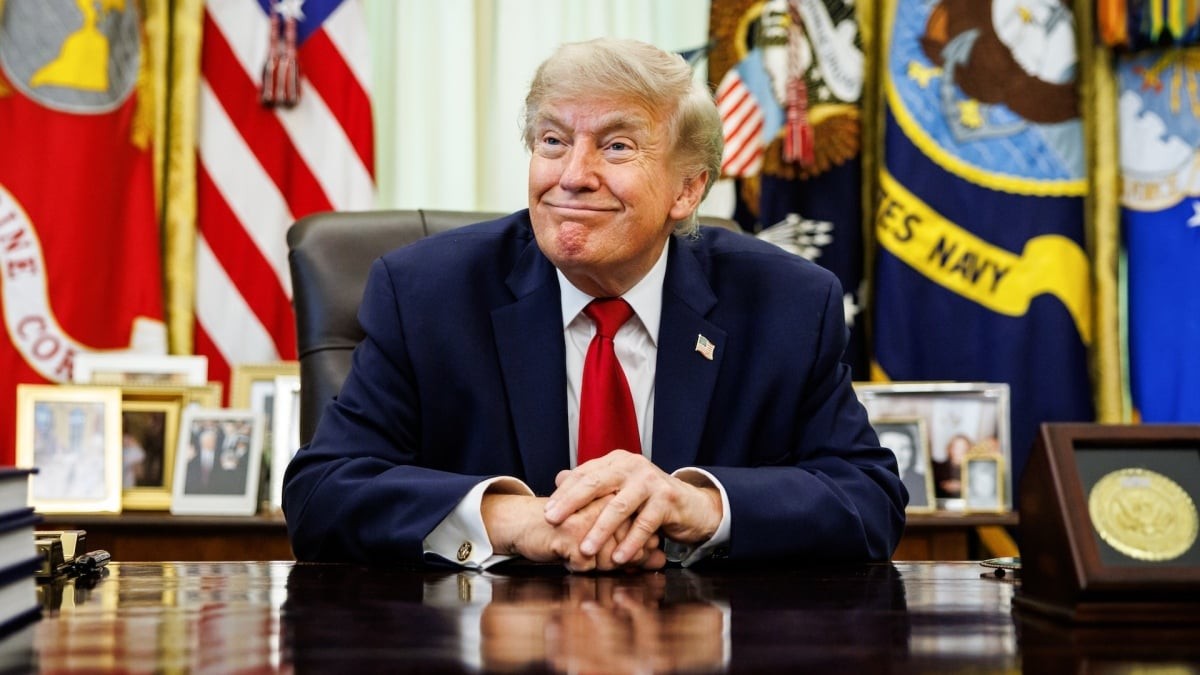
Donald Trump used to call crypto a “scam”. Now? It just netted him over $1 billion.
The number came from a massive 927-page report released by the US Office of Government Ethics. It lays bare the business dealings of the president and his family.
Juliana Stratton, an Illinois lieutenant governor, called it “infinite greed”. She says he uses office while families starve. The White House pushes back, claiming everything is done in America’s best interest. But the math is hard to ignore.
Digital Money, Real Cash
Crypto isn’t just magic internet coins. It’s code. Traditional money comes from central banks. Crypto comes from algorithms, sometimes run by companies, sometimes by nobody at all. Transactions live on blockchains. Immutable records. Bitcoin is the famous one, decentralized, no master. But thousands of others exist on chains like Ethereum. Private companies issue these to make profit. Anything codifiable becomes an asset. Value optional.
The Three Buckets
Trump’s money flows from three specific buckets: $TRUMP the memecoin, WLFI the governance token, and USD1 the stablecoin.
Memecoins are pure attention economies. Buying them is like paying for a child’s doodle because your child drew it. Stablecoins mirror fiat cash. USD1 pegs to the US dollar. It needs backing. Usually government bonds. Governance tokens, like WLFI, let you vote on projects. They give you a voice, not a share of the profit. Not really ownership at all.
The Machine in Motion
The $TRUMP memecoin launched just days before the 2025 inauguration. Trump’s firms hold about 80% of the supply. They take a fee on every swap. Pure arbitrage of hype. Then there’s World Liberty Financial. The family co-founded it in 2024, owning roughly 60%. They are entitled to 75% of the proceeds. The numbers are staggering. World Liberty brought in $500 million alone. The memecoin added another $600 million. Forbes estimates his net worth jumped to $6 billion in a year.
How?
Let’s look at USD1.
It works simply. You give the issuer dollars. They give you a token. They park the dollars in US Treasury bonds. They collect interest. The more tokens sold, the more bonds bought, the more interest earned. Binance, the massive exchange previously convicted of money laundering, helped write the code for USD1. Then MGX, a state fund from Abu Dhabi, threw $2 billion in USD1 at Binance. This created $2 billion in reserves. Worth $80 million in interest annually.
Binance holds 87% of all USD1 tokens.
Is it coincidence?
The SEC dropped its lawsuit against Binance right after they listed USD1. In October, Trump pardoned Binance’s founder, Changpeng Zhao. Reports say Sheikh Tahnoon, the UAE official behind MGX, secretly bought 49% of World Liberty for $500 million days before the inauguration.
The memecoin business is even darker. Legal experts see it as a channel for anonymous gifts. Buyers paid $148 million just to buy seats at dinner with the president. The coin price has since collapsed, down 98%, but the fees stayed. A Reuters investigation found Trump’s four crypto ventures gained $2.3 billion. Almost exactly what investors lost.
Broken Rules
The administration did pass the GENIUS Act. It brings clarity. Good for industry stability. But credibility is evaporating. Special favors replace market forces. The precedent is terrifying. If you want presidential access, you just buy the token. The US reputation for rule of law hangs in the balance, dangling on a chain of questionable transactions.
The question remains.