It’s easy to forget that billions of chemical reactions take place inside each cell. They keep us alive. They keep us going. When these processes fail, we get sick. The problem is that modern medicine produces data on a scale that the human brain cannot process. We are aware. You need a computer to understand it. In particular, bioinformatics and artificial intelligence are needed to bridge the gap between raw biological knowledge and actual medical progress.
Flood of information in molecular medicine
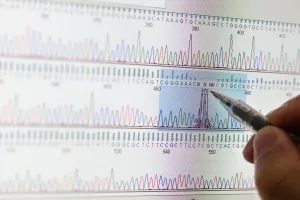
Molecular biology research is no longer just about mixing chemicals in a beaker. It’s all about creating large data sets. Remember the Human Genome Project? This is a huge achievement, but it is just the beginning. Genome sequencing has given us the letters of life, but it hasn’t given us the story.
When the set is finished, the actual work begins. Researchers have to explain the connections between different data points. Without effective bioinformatics methods, this data becomes just useless noise. As Hans-Werner Möwes of the Technical University of Munich points out, these data are unusable without efficient computational methods.
Biologists and programmers need to work together here. Biologists know what genes mean. Programmers know how to build networks that collect and order information. Neither can work alone anymore.
Looking for BRCA genes
Consider breast cancer. It is important for women with a family history of this condition to understand their genetic risk. The most well-known risk factors are mutations of the BRCA1 and BRCA2 genes. Mutations in any of these increase the risk of breast cancer by 60-80%.
It seems easy to identify these mutations. In reality, this is a logistical nightmare. Human biologists cannot manually scan the human genome and find two specific needle sequences in a haystack of billions of data points. This will take years. It is also easy to make mistakes.
Computers have changed the equation. A network of smart computers can scan the entire genetic code in a fraction of the time it takes a human to read a page. They report anomalies. This enables preventive measures to be implemented at an early stage. Early detection can save lives.
Find unknown causes using comparison
This technology has applications beyond known genes such as BRCA1 and BRCA2. There are still many diseases that doctors cannot explain. These are often called “rare diseases” or simply unexplained diseases.
Computational analysis offers a way forward. By comparing the genomes of people suffering from the same unknown disease, algorithms can find genetic commonalities. If a certain genetic pattern occurs in 90 percent of patients but not in healthy controls, that pattern may be the cause.
This approach shifts healthcare from reactive to proactive. The focus shifts from treating the symptoms to solving the root cause. This allows researchers to identify potential therapeutic targets that would otherwise be hidden in the noise of an individual’s genetic variation.
The intersection of biology and code is about more than speed. It’s all about the possibilities. We are opening doors that were previously closed by huge amounts of data. As algorithms get smarter, the questions we can ask about our own biology deepen. Data is waiting. The tools are ready. The next step is to know what to look for.
Outside the norm: Why artificial intelligence is rewriting the rules of medical diagnosis
The time of completely relying on traditional computer algorithms in bioinformatics is coming to an end. Instead, artificial intelligence-powered systems (especially neural networks) step in to handle complex analytical tasks. These aren’t just quick calculators. These are tools trained on large data sets to make autonomous decisions and analysis without constant human intervention.
Consider the training process of a breast cancer detection system. The machine did not start intuitively. It starts with data. The radiologist provides a series of mammograms where the tumor is marked. This is basic work.
“We need to tell the computer which cells in the image are cancer cells so it can learn and eventually identify them individually.”
— Shadi Albarkouni, Technical University of Munich
The logic is simple, but effective. By feeding the system these labeled images, the researchers taught the algorithm to recognize specific structural patterns associated with malignant tumors. Learn to distinguish tumor tissue from healthy tissue based on visual cues that are difficult to detect with the naked eye or by routine doctors.
Once trained, the AI can scan new mammogram images on its own. Flag and check suspicious structures. This is not science fiction. Some of these systems already operate at a level comparable to that of human radiologists. These uses are not limited to breast cancer.
–Skin cancer
– Other tumors
This change will change the workflow. Doctors no longer have to rely solely on manual pattern recognition for every scan. Artificial intelligence takes care of the hard work of the initial screening. Highlight potential problems. A human expert will then verify it.
This does not mean changing doctors. This improves their abilities. This technology can handle volume. Experts take care of the nuances. For patients, this means a faster diagnosis. This means fewer errors in diagnosis. This means that healthcare systems are becoming more sophisticated.
The results are already visible in clinical practice. Accuracy is comparable to experienced medical professionals. This is just the beginning. The more information is added to the model, the more detailed the differences become. The line between human and machine analysis is blurring, not in a scary way, but in a practical way.
We are moving towards the future of collaborative diagnostics. The computer provided the evidence. Doctors provide background. By working together, we can achieve better results. But the value of technology is determined by the information it provides. Garbage goes in, garbage goes out. This is still the basic rule.
Gamification in der Krebsforschung
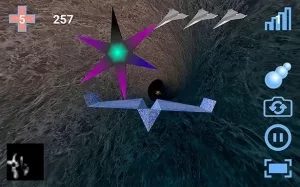
Diagnose-Algorithmen sind nur so gut wie die Daten, auf denen sie trainiert wurden. Das Problem? Medizinische Experten haben nicht genug Zeit, jede einzelne Gewebeprobe manuell zu labeln. Süleyman Albarqouni und sein Team haben das erkannt. Ihre Lösung ist ungewöhnlich: ein Spiel.
Es klingt absurd. Ein Computerspiel zur Krebsbekämpfung?
Genau. Freiwillige Spieler navigieren durch digitale Gewebeschnitte. Ihre Aufgabe ist simpel und brutal: Identifiziere die bösartigen Zellen. Schieße sie ab. Jede Klick wird zur Trainingsdatenpunkt. Die KI lernt aus den Entscheidungen der Menschen. Sie erkennt Muster, die dem menschlichen Auge entgehen könnten, aber der Computer noch nicht verstanden hat. Es ist Crowdsourcing im biologischen Maßstab. Und es funktioniert schneller als jede herkömmliche Annotation.
Die chaotische Welt der Proteinfaltung
Doch Krebsdiagnose ist nur ein Zweig. Der andere, vielleicht wichtigere, liegt in der Bioinformatik. Hier geht es um Proteine.
Proteine sind die Maschinen des Körpers. Um Medikamente oder Impfstoffe zu entwickeln, muss man verstehen, wie diese Maschinen funktionieren. Und ihre Funktion hängt zu 100% von ihrer Form ab. Die 3D-Struktur.
Die Struktur zu entschlüsseln, ist ein mathematisches Nightmare.
Nehmen wir ein Protein mit 150 Aminosäuren. Die Anzahl der möglichen Faltungen liegt bei $3^{150}$. Das ist eine Zahl, die das menschliche Verständnis sprengt. Selbst für Supercomputer ist das brute-forcing unmöglich. Man kann nicht alle Möglichkeiten durchgehen. Man braucht einen Shortcut. Man braucht Intuition.
Hier kommt Künstliche Intelligenz ins Spiel. Nicht als Assistent, sondern als Erkunder.
AlphaFold und der Durchbruch
Google DeepMind hat hier einen Meilenstein gesetzt. AlphaFold ist keine gewöhnliche Software. Es ist ein neuronales Netzwerk, das mit 170.000 bekannten Proteinsequenzen und ihren entsprechenden Strukturen gefüttert wurde.
Der Prozess ist faszinierend. Die KI sucht nach Gesetzmäßigkeiten. Sie lernt, welche Aminosäuren zusammenpassen, welche Abstände physikalisch Sinn ergeben und welche Konformationen stabil sind.
Wenn AlphaFold nun eine völlig unbekannte Sequenz erhält, passiert Magie.
Es ordnet der Sequenz nicht einfach eine zufällige Form zu. Es projiziert die unbekannte Struktur auf die gelernten Regeln. Das Ergebnis ist eine Vorhersage, die der tatsächlichen Realität oft verblüffend nahekommt. Das beschleunigt die Arzneimittelentwicklung von Jahren auf Tage. Oder Stunden.
Die Grenzen zwischen Spiel, Biologie und Datenverarbeitung verschwimmen. Wir trainieren Algorithmen durch Klicks. Wir zwingen Maschinen, die Sprache der Proteine zu sprechen. Der Code wird zum Skalpell.
Und was kommt als nächstes? Wer weiß.