5G is still getting its footing. We are watching carriers roll out the infrastructure, debating coverage, and adjusting to the reality of next-generation mobile connectivity. But while you are waiting for your next signal boost, researchers are already obsessing over what comes after. The target is 6G.
The promise is simple on paper. Faster data. Near-zero latency. But achieving that requires throwing out the rulebook. The secret weapon is the terahertz frequency range.
“The next mobile generation aims for higher transmission rates and shorter delays using carrier waves in the terahertz range.”
This isn’t just a minor tweak to existing towers. It is a fundamental shift in how we move data. Wolfgang Kellerer, heading a major project at the Technical University of Munich (TU München), is leading the charge to define the standards for this future network. His work focuses on how terahertz waves can actually function in real-world conditions.
The problem with current 5G networks is physical. There is a limit to how much data you can squeeze through radio waves before you hit the ceiling of physics. Terahertz waves sit between microwave radiation and infrared light on the electromagnetic spectrum. They offer massive bandwidth. That means more data. Much more.
But bandwidth is only half the battle. Signal decay is the killer. Terahertz waves struggle to travel long distances. They get absorbed by air, rain, even walls. To make 6G viable, engineers have to solve the propagation problem. You cannot just build taller towers. You need new types of antennas. You need intelligent surfaces. You need a complete rethinking of the radio access network.
Kellerer’s team is digging into the specifics of which standards can handle this chaos. It is not about speed alone. It is about reliability. It is about making a network that works when you move, when it rains, when you are in a crowded stadium.
The transition will not be smooth. We are moving from a world of macro-cells to a world of micro-segments and potentially even drone-based relays. The infrastructure cost will be steep. The power consumption will be high. But the payoff is a network that feels instantaneous.
Why are we pushing for this? Because the applications are changing. It is not just about streaming video faster. It is about tactile internet. Remote surgery. Holographic communication. These require response times that 5G cannot guarantee. They demand the terahertz leap.
The standards are not written yet. The hardware is not mass-produced. But the research is accelerating. If Kellerer’s team finds a way to stabilize those high-frequency waves, the definition of “connection” changes forever.
We are looking at a future where the network disappears into the environment. Where data flows so fast it feels like magic. But magic has a price. It requires engineering that is just starting to take shape.
Die nächste Mobilfunkgeneration, 6G, verspricht mehr als nur schnellere Downloads. Sie soll Hologramme zur Kommunikation und ferngesteuerte chirurgische Eingriffe ermöglichen. Der Schlüssel dazu liegt in der Nutzung von Terahertz-Frequenzen. Diese Wellenlängen bewegen sich im Spektrum zwischen Mikrowellen und Infrarotstrahlung. Sie sind kürzer als die Frequenzen, die aktuelle Mobilfunkstandards nutzen.
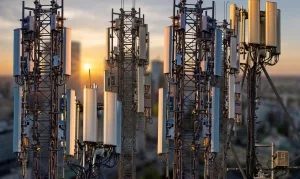
Kürzere Wellen bedeuten jedoch eine physikalische Grenze: die Reichweite. Signale in diesem Bereich verbreiten sich nicht weit. Das zwingt dazu, die Sendemasten deutlich dichter zu platieren. 5G hatte bereits mehr Antennen in kleineren Abständen nötig. 6G treibt dieses Konzept noch einen Schritt weiter.
Der TUM-Forschungsansatz
Wissenschaftler an der Technischen Universität München (TUM) untersuchen derzeit, wie ein solches Netz funktionieren kann. Das Projekt 6G Zukunftslabor Bayern ist das größte universitäre Vorhaben in Deutschland zur sechsten Mobilfunkgeneration. Das Team arbeitet daran, die grundlegenden Mechanismen für diese Technologie zu entwickeln. Ziel ist eine Roadmap für die Standardisierung.
“Es geht in der Forschung weniger um Geschwindigkeitsrekorde als vielmehr um eine Sicherheit von 99,999999999 Prozent.” – Professor Wolfgang Kellerer
Die drei Jahre Laufzeit sind kurz bemessen. Das Projekt muss beweisen, dass 6G nicht nur ein theoretisches Konzept ist. Es soll die Grundlage für den späteren Standard setzen.
Latenz und künstliche Intelligenz
Warum sollte man sich mit so vielen kleinen Antennen herumplagen? Der Vorteil liegt in der Latenz. Weil die Signale kürzere Wege zurücklegen müssen, erreichen sie das Zielgerät in Bruchteilen von Millisekunden. Diese extreme Geschwindigkeit ist entscheidend für zeitsensitive Anwendungen.
Autonomes Fahren ist ein Paradebeispiel. Ein autonomes Fahrzeug muss Reaktionen in Echtzeit verarbeiten. Bei 6G würden Daten kaum spürbare Verzögerungen haben. Auch künstliche Intelligenz profitiert davon. Modelle, die auf Cloud-Rechenleistung angewiesen sind, könnten komplexere Aufgaben schneller lösen, wenn die Verbindung nicht zum Flaschenhals wird.
Deutschland als Vorreiter?
Professor Wolfgang Kellerer, Projektleiter am TUM, sieht Potenzial für eine führende Rolle Deutschlands. Die Frage ist nicht nur, wer die ersten Geräte baut. Sondern wer die Infrastruktur definiert. Die Sicherheit der Verbindung steht dabei im Vordergrund.
Die geforderte Ausfallwahrscheinlichkeit liegt bei null Punkt null null null null null null null null neun. Das ist eine andere Art von “perfekt”. Es geht nicht um maximalen Durchsatz. Es geht um absolute Zuverlässigkeit. Wenn eine Roboterhand im Ausland operiert, darf die Verbindung nicht zusammenbrechen. 6G soll diese Stabilität bieten.
Die Forschung konzentriert sich also auf Stabilität. Nicht auf Blitze. Auf Präzision. Auf Dichte.
Ob das Netz in Bayern bereits jetzt die Zukunft vorwegnimmt, bleibt abzuwarten

5G is still rolling out in many areas. Yet researchers are already deep in the trenches of 6G. The question isn’t really whether 5G is obsolete. It’s about what each standard enables.
5G remains critical for Industry 4.0. It facilitates machine-to-machine communication on an industrial scale. 6G shifts the focus. It centers on humans and their immediate environment.
Beyond the smartphone: What 6G actually controls
When experts talk about humans in 6G, they don’t mean just scrolling through feeds on a phone. The technology integrates with a vast array of embedded systems. We will interact with these technologies naturally, aided by superior mobility and sensor capabilities.
Imagine assistive robots in the household. High-resolution 3D maps for autonomous vehicles. Holographic visualizations that make remote conversations feel present. These are not science fiction concepts anymore. They are engineering targets.
The standard will enable millimeter-precise positioning. This allows for remote operation of medical surgical devices. It supports applications where precision is non-negotiable.
Terabit speeds and the myth of “fast enough”
6G operates on higher frequencies. This theoretically supports transmission rates of one terabit per second. That is incredibly fast. But speed isn’t the primary research goal.
“We are less interested in speed records. We want to lay the groundwork for maximum fail-safe reliability, shortest latency periods, highest energy efficiency, and new methods for data security even when using quantum computers.”
Reliability is the real metric. In telemental operations, 99.9 percent reliability is unacceptable. When a human life is on the line, margins for error vanish. The target for 6G networks is 99.999999999 percent availability.
Latency is equally critical. Human-robot collaboration requires near-zero delay. If a robot misinterprets a signal, it could injure someone or destroy property in a fraction of a second. 6G aims for latency significantly below one millisecond. These guarantees must hold across different networks, not just within a single provider’s infrastructure. That is a massive architectural challenge.
Smart networks and digital twins
Intelligence in a 6G network means self-optimization. Artificial Intelligence will perform calculations and adjust performance dynamically. The network becomes flexible. It provides power exactly where needed, exactly when it’s needed.
For the first time, the network and countless sensors in devices will collaborate. Robots and autonomous vehicles contribute to this ecosystem. The network itself becomes a sensor. By analyzing radio signals, it can detect objects between sender and receiver. AI processes this data to build a picture of the user’s surroundings. It then adjusts the network accordingly.
Developing architectures that optimize various sensor properties is difficult. These systems must be trainable. Digital twins are central to this research. These are virtual replicas of physical objects. Manufacturers already use them to simulate production plants. Researchers now want to create digital twins of network components. They will use machine learning to optimize them.
Timeline and sovereignty
Developing a new mobile generation typically takes ten years. To hit the ground running in the early 2030s, research started early. This breaks the usual cycle. Collaboration with other stakeholders is key.
The Thinknet 6G platform facilitates this networking. It gathers requirements from the economy and society. Early involvement ensures the technology meets real-world demands.
Germany sees a chance for leadership here. The goal is to create a foundation for forward-thinking companies. Startups can emerge. Top experts can be trained in academic programs. This is about sovereignty. If components fail, the ability to replace them independently is essential. Dependence on external infrastructure is a risk. Self-sufficiency is the objective.
The shift from speed to precision changes everything. It’s not just about faster downloads. It’s about networks that think, adapt, and protect. The infrastructure required is complex. The stakes are higher than bandwidth metrics.