They glide. Spin a quarter turn. Resume. No collisions.
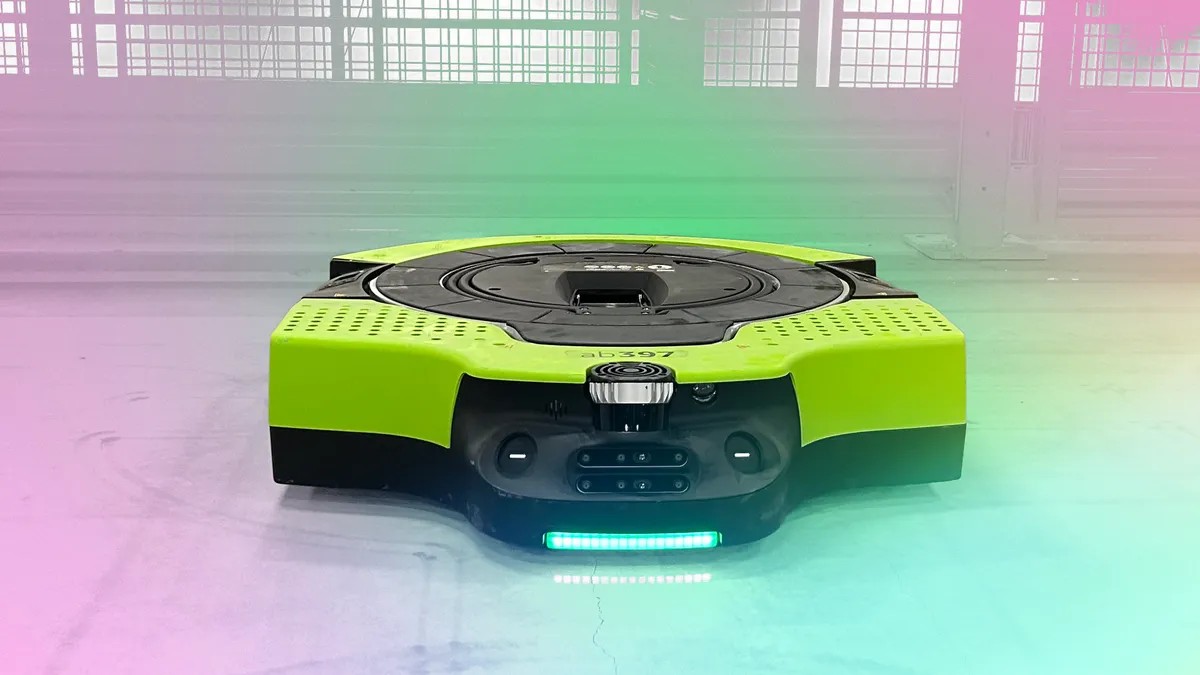
It looks like ballet. If the dancers were flat, low-profile machines that resembled oversized bathroom scales. But these aren’t props. They’re Proteus robots. And they are everywhere Amazon has a warehouse.
London, Massachusetts, anywhere. Proteus and its kin like Titan are on fetch quests. They grab shelves, carry items we ordered for lunch, and bring them to packers. Simple. Essential.
Some days are quieter. Prime Day? Chaos. The order volume spikes. Robots keep up. They always do.
We went to LCY3 in London. Also BOS27 in Westborough, MA. To see the engine behind the two-day delivery promise. To see what comes next.
Sci-fi met Reality
Decades of science fiction promised us helpers. What we got were wheeled platforms.
Advances in AI over the last five years changed the game. Large language models. Vision models. Robots now talk back. Kind of. They interact.
Humanoids are rare. Amazon’s fleet isn’t humanoid. It’s industrial. Utilitarian. From Proteus to Vulcan (a robotic arm that can feel what it picks up), Amazon runs over a million bots. Stowing. Sorting. Transporting.
Tye Brady, Amazon’s chief technologist, called it the early stage. Still early, despite the volume.
The math works in Amazon’s favor.
* 41% drop in accidents.
* 40% increase in goods delivered.
“Efficiencies allow us to pass on low cost,” Brady said. “And store goods closer to you.”
It’s a loop. Deploy. Learn. Improve. Expand.
Proteus fits this perfectly. The original model is mature. A replacement is waiting in the wings.
Freewheeling and Chatty
Proteus is unique. Fully autonomous.
Most industrial bots stay in fenced areas. Restricted. Controlled. Proteus walks among people. In their space.
“Put them where people are,” said Travis Hearn, QA engineer at BOS27. “They’ll get around you.”
The demo area is open. It simulates the chaos of a real warehouse.
Specs matter less than behavior, but here they are anyway: 7.8 inches tall. 31.5 by 29.9 inches. Carries 900 lbs. Modest compared to Hercules or Titan. But free.
No floor markers needed. No lanes to paint.
“It’s an invisible force field,” said Scott Dresser, VP of robotics. A bubble around the bot. Steps in? It stops. Or slows down. Detects. Avoids. Safe.
Generation one is at 25 sites now. ~4,000 units.
Proteus 2 is here. It speaks.
Not just binary. Natural language. “Hey Proteus, take this to the corner.” You can gesture. The robot plans the route. It executes.
“Advancements in our generative and agenticAI systems” make this possible. Brady’s words.
Rollout starts now. Next few months.
Fulfillment, Faster
LCY3 in Dartford sits on the Thames. Strategic.
It ships Prime Day orders across the UK and Europe. Fast.
Amazon poured $60B into Europe last year. The goal? Speed.
* Amazon Now: Expanding to 20+ UK sites.
* Same-day: 25+ new sites in Europe.
Mariangela Marseglia calls it time savings. “Minutes. Hours. Given back to people.”
But speed needs infrastructure. $10B more for robotics in Europe.
Some bots are employee inventions. Stark, for instance. Designed by someone in Spain. It moves heavy crates from conveyor belts. Saves backs. Pilot in Barcelona. 15+ sites by late 2027.
Armin Cossman, VP of Operations Europe, called it successful. Side-by-side work. Collaborative.
Amazon pushes this narrative hard. Not replacing workers. Upgrading them.
Accusations of unsafe conditions? Denied.
Replaced by machines? No.
“People vs machines mentality is wrong,” Brady insists. He believes tech is just a tool. He’s upskilled 70,000… wait, 700,0,00? Seven hundred thousand workers. New jobs for robot management will come too.
Paul Miller at Forrester agrees. “Robots create jobs. Full stop.” Maintenance. Management. New workflows made cheap by automation.
Disruption happens. People need support. Miller notes the trade-off.
The Amnesty Responders
Walk LCY3. Two million square feet. Windows overlooking the river. Light.
Workers pack. They unpack. Some maintain bots.
There are amnesty responders. Their job: rescue fallen items.
Something slides off a Proteus shelf. The “ballet” stops. A human grabs the item. The floor clears. The bots resume.
Rare collisions happen. A cracked camera lens? Fixed. Back to work.
The system has points of failure. Humans handle them.
What Comes Next?
Drone deliveries exist. Prime Air operates in the US and tests in the UK. MK30 drops shoeboxes from above. Detects obstacles. Hovers. Safe.
But the real shift is internal.
Elon Musk imagines Optimus. Amazon imagines integration.
Merging mobility and manipulation. Proteus moves. Sparrow handles objects. Put them together?
“That’s where operations are heading.” Dresser’s vision.
New form factors coming. Fast.
Amazon learns by doing. Designs for specific needs. Refines in real time.
“The systems we’re building today are laying the foundation.” Brady said that.
Maybe.
Or maybe it just means more packages arrive tomorrow. And the robots are already there to take them away.