
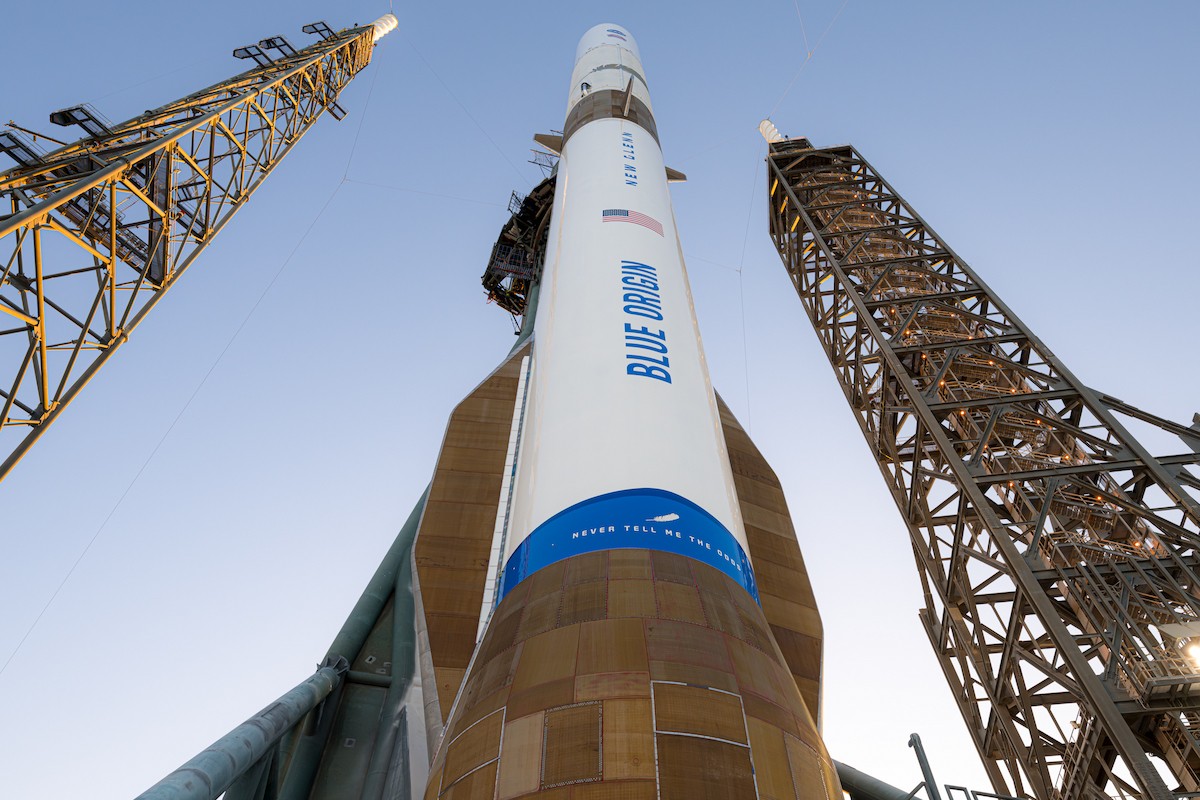
Blue Origin successfully demonstrated its rocket reusability on Sunday, but the mission ended in a significant setback for its customer. While the New Glenn rocket’s booster performed as expected, a malfunction in the upper stage prevented a communications satellite from reaching its intended orbit.
The Mission Failure: A Satellite Lost to Orbit
The mission was intended to deliver AST SpaceMobile’s BlueBird 7 satellite into space. However, the deployment did not go according to plan.
- The Outcome: The satellite was placed in an orbit much lower than required.
- The Consequence: While the BlueBird 7 successfully separated from the rocket and powered on, the altitude is too low to support its intended operations. Consequently, the satellite will eventually de-orbit and burn up in Earth’s atmosphere.
- The Cause: Blue Origin CEO Dave Limp attributed the failure to an engine in the upper stage that “didn’t produce sufficient thrust” to reach the target altitude.
Despite the loss, AST SpaceMobile noted that the satellite is covered by insurance and the company remains on track with its broader deployment goals, aiming to launch 45 more satellites by the end of 2026.
A Mixed Result for Blue Origin
The launch was a study in contrasts, showcasing both a technological milestone and a critical operational failure.
Success: Reusability Demonstrated
The mission marked the first time Blue Origin reused a New Glenn booster. Roughly 10 minutes after liftoff from Cape Canaveral, the booster successfully landed on a drone ship in the ocean, mirroring the success of its previous flight in November. This milestone is crucial for the company’s long-term goal of reducing costs through rapid, repeatable launches.
Failure: Upper Stage Reliability
The failure of the second stage (the upper stage) is a setback for a program that has been in development for over a decade. Unlike SpaceX, which often uses “dummy” payloads to test its Starship during its developmental phase, Blue Origin has opted to fly actual commercial payloads early in the New Glenn program. This approach carries higher stakes, as seen in this mission.
Why This Matters: The Race to the Moon
This failure is more than just a lost satellite; it has broader implications for Blue Origin’s standing with government agencies and its future in the “New Space” economy.
- Regulatory Scrutiny: The Federal Aviation Administration (FAA) has ordered an investigation into the failure, which could impact future launch schedules.
- NASA Partnerships: Blue Origin is a key contender for NASA’s Artemis program. The agency, along with the Trump administration, has placed high pressure on providers to deliver lunar landers capable of supporting human missions to the Moon.
- Competitive Landscape: As Blue Origin pushes to become a primary launch provider for deep-space exploration, it must prove that its heavy-lift capabilities are as reliable as those of its primary rival, SpaceX.
“While we are pleased with the nominal booster recovery, we clearly didn’t deliver the mission our customer wanted,” stated Blue Origin CEO Dave Limp.
Conclusion
While Blue Origin proved it can successfully recover and reuse heavy-lift boosters, the failure to deliver a functional payload highlights the technical hurdles remaining for the New Glenn program. The company now faces the critical task of resolving upper-stage engine reliability to secure its role in the upcoming era of lunar exploration.