It sounds like a bad idea.
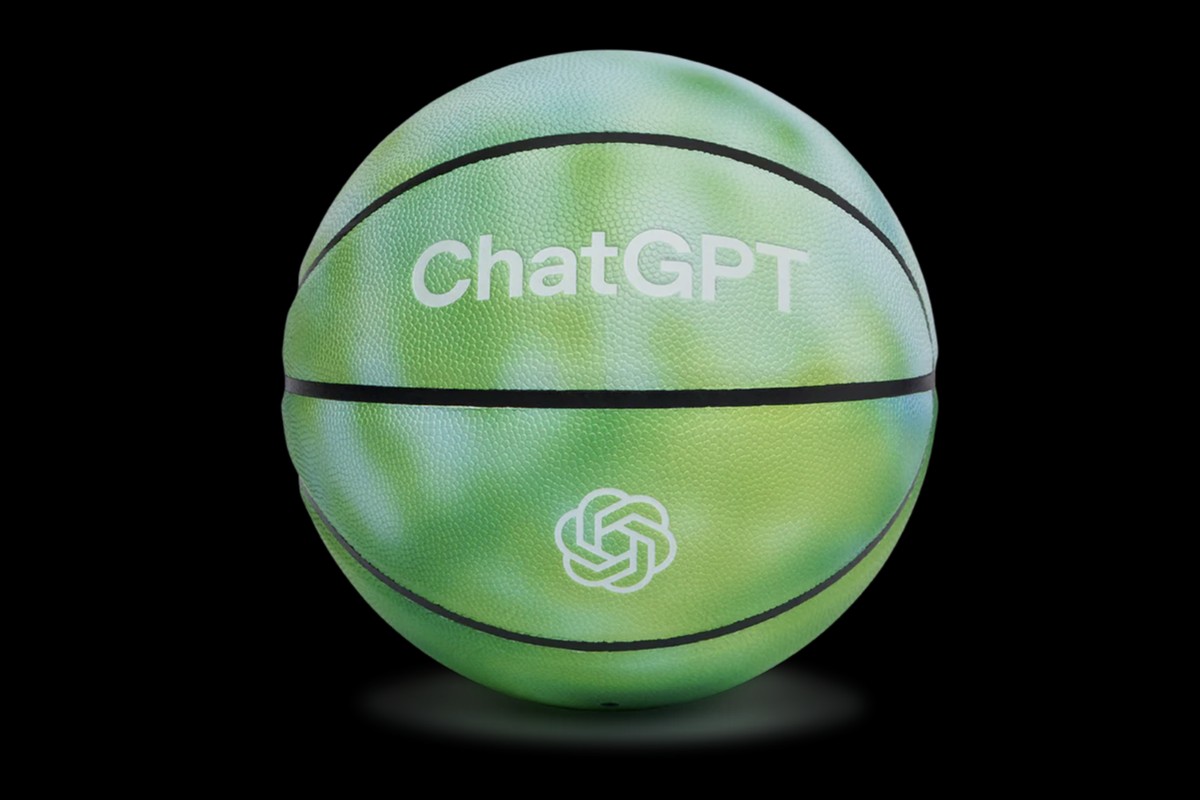
You’re selling a Size 7 rubber basketball. You’re putting the ChatGPT logo on it. You’re charging $70 for something that costs $20 at any sporting goods store with half the markup.
The internet laughed. Of course it did. Memes flew faster than a buzzer-beater three-pointer.
“Legitimately what is the different between this and a regular ass basketball… I could buy for way cheaper.”
Amanda Siberling from TechCrunch wasn’t buying it. Not for $70. Not even to walk onto a community court. “You could not pay me.” She said.
Yet.
Within twenty-four hours. Sold out.
Every single one.
OpenAI launched it as part of a campaign called “Pause. Play. Prompt.” The copy promises it is a physical reminder that creativity doesn’t just live on our screens. It claims the best ideas arrive between open runs. Poetic, maybe. But also absurdly overpriced.
Is the ChatGPT basketball hype or hardware strategy?
The ridicule wasn’t unfounded.
Take a standard Nike or Wilson ball. Pay $20. Shoot hoops. Nobody questions the utility. Now look at this. You pay three times as much for rubber with text on it. Social media users on X pointed this out immediately.
But here is the thing.
The sale speed ignores the jokes. It points to a deeper shift in how AI brand loyalty works. OpenAI is no longer just text in a browser window. They are pushing physical goods. Hard.
Alongside the basketball, they dropped baseball caps, water bottles, and tote bags. And the headline act: the Codex Micro.
For $230.
This isn’t just merch. It is OpenAI’s first actual piece of hardware. A miniature keyboard billed as an AI coding assistant. It has a joystick. A rotary dial. Twelve buttons. It sold out too.
Why would an AI company sell physical products?
You might wonder why a company that exists entirely on servers needs to sell you a ball you can bounce on pavement.
Eugenio Fierro, an AI creative specialist, cut through the noise.
“Companies are trying to step outside and build a tangible brand identity,” he noted. “Even as their entire business depends on you staying inside chats and agents.”
It feels contradictory. To be sure. You want them glued to their screens. But you also want their logo on their chest. Or on their hoop.
Fierro calls it a live case study. It shows how hard it is to turn a digital native brand into something physical without looking tone-deaf. OpenAI pulled it off in sales volume. Even if the product choice baffled critics.
The price point remains a friction point.
Most consumers don’t see $70 as a fair price for a ball. They see it as a tax on belief. You aren’t paying for rubber. You’re paying to signal you are part of the club. The AI early adopter club.
And they snapped it up. Fast.
How does this compare to standard basketball brands?
If you look strictly at the specs, it fails.
- Standard Brand (e.g., Wilson NBA) : ~$20. Durable rubber. Standard size. Available at any Target or Dick’s.
- ChatGPT Basketball : $70. Same size. Likely same rubber composition. Limited stock. Branded with a LLM logo.
There is no performance difference. There is no “AI bounce.” It’s just marketing leverage.
This move aligns OpenAI with luxury tech or hypebeast culture, rather than sports utility. It borrows the playbook of Supreme or Off-White. Put a logo on a common object. Make it scarce. Let people argue about the value in the comments while the checkout button flashes “Sold Out.”
The Codex Micro keyboard follows similar logic. A tool for coders? Maybe. A status symbol? Definitely.
The backlash will continue. The memes will persist.
But the inventory is gone.
What’s next for OpenAI merchandise? A smart hoodie that tracks your prompts? A mousepad that generates code by touch?
The line between digital assistant and lifestyle brand is blurring. OpenAI just drew the first physical marker on the court