People hate vacuuming. They really do. It’s the chore we procrastinate on, the noise we dread. Then you plug in a Dyson. The mood shifts. You actually want to clean your floors.
This isn’t magic. It’s engineering. And after years of testing, the difference between the models is getting thinner.
I’ve spent months running these vacuums over hardwood, plush carpet, and the sticky messes left behind by real pets. Corded Dysons? Dead. They stopped making new corded units back in 2018 because cordless tech simply caught up—and then surpassed—them. You don’t have to choose between power and convenience anymore. The best Dyson vacuum cleaner for you depends entirely on where you live, what you own, and how much you can spend.
Oh, and skip the robot vacuum. I’ll get to that in a minute.
The Heavy Hitter: Dyson V16 Piston Animal
If you have pets, stop reading and start shopping. The Dyson V16 Piston Animal crushes everything else.
It delivers 315 Air Watts of suction. That is not a typo. That beats the corded Dyson Ball Animal 3, which was the gold standard for years. It’s brutal. It digs into carpets and pulls out embedded fur like it’s digging for gold.
Why it works
The cleaning head uses two independent cone-shaped rollers. Hair goes into the middle gap instead of wrapping around the brush. For people who spend hours cutting hair out of brushes, this is a religious experience. It works on hard floors, too. The “Fluffy” rollers are soft enough not to scratch but aggressive enough to grab dust.
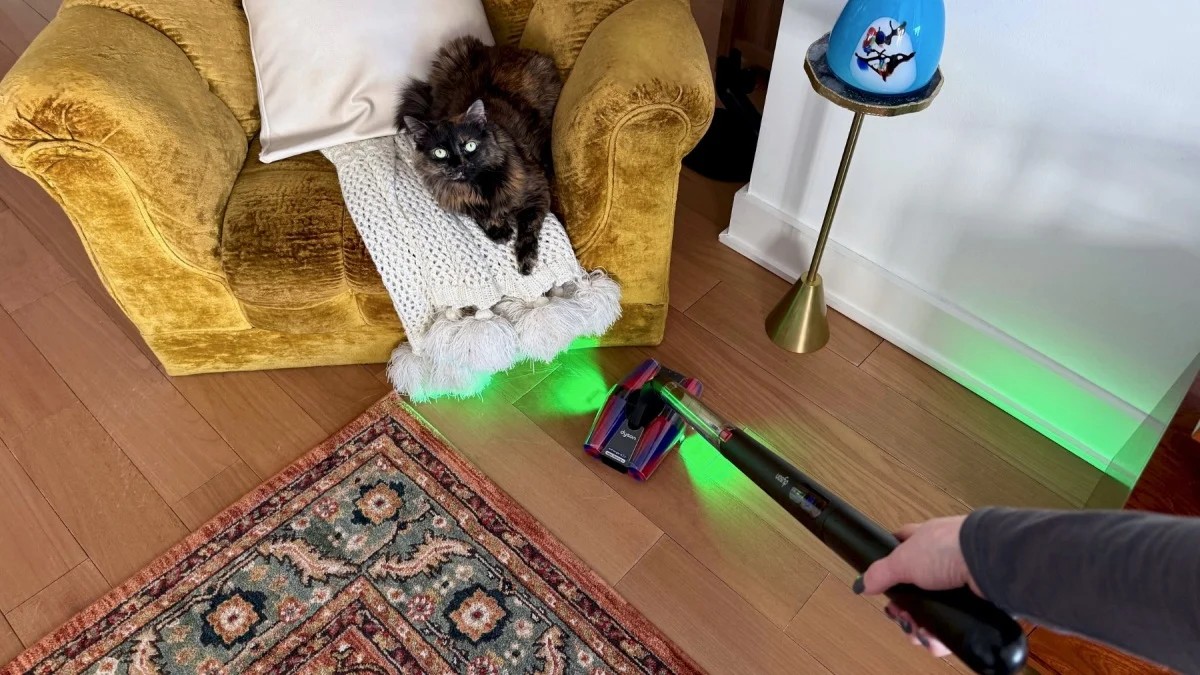
And there’s a laser. Not just one, but two. One on the front, one on the back. They highlight every speck of dust, dander, and stray cat hair. You’ll see things you thought were clean.
The catch
It jams. On rugs. If you’re not careful, the suction gets too strong and the head locks up. You have to shovel it forward. It’s heavy for a handheld—over a pound heavier than the older flagship models. The dust bin is smaller but has a compactor lever. That squishes the debris down so you don’t have to empty it every two days. Pet parents will love that. Most others will just find the weight annoying.
Specs at a glance:
* Suction: 315 Air Watts
* Battery: 70 minutes (standard mode)
* Weight: 7.7 lbs
* Dust Bin: 0.35 Gallons (with compactor)
The Niche Pick: Dyson PencilVac FluffyCone
This thing looks ridiculous. It’s a stick with a weird head on the end. No battery pack in the handle. Just a wand.
It’s also the best Dyson vacuum for small spaces or tight gaps. I’m talking the 2-inch gap between your fridge and the wall. The gap behind your toilet. The space under low cabinets where dust bunnies go to die.
The head spins 360 degrees. It’s slippery on hardwood. Four microfiber cones do the work. It’s light. Barely over 4 pounds with the nozzle attached.
But don’t buy this as your main cleaner. It’s too weak for carpets. The battery drains fast. The bin is microscopic (0.02 gallons). It’s a supplement, not a solution. Use it for the spots you can’t reach with the big boys.
The Sweet Spot: Dyson V12 Detect Slim
You want power without the weight? You want lasers without the bulk? This is it.
The Dyson V12 Detect Slim strikes the balance between the ultra-cheap V8 and the heavy-duty V16. It’s surprisingly light—just over 5 pounds. But it includes two full-size cleaning heads. Most lightweight models give you a skinny wand. This comes with the Motorbar for carpets and the Fluffy Optic for hard floors.
That Fluffy head has a laser. It glows green. You can’t ignore dust. It changes how you see your home.
The price fluctuates. List price is often near $700, but it regularly drops below $500 during sales. If you can wait for a dip, it’s the best value in the Dyson lineup. It handles pet hair well enough for moderate shedders, though the bin is small (0.1 gallons). You’ll be emptying it often if you have multiple animals.
Specs at a glance:
* Suction: 150 Air Watts
* Battery: 60 minutes
* Weight: 5.2 lbs
* Dust Bin: 0.1 Gallons
The Budget Option: Dyson V8 Cyclone
You don’t need to spend $800 to get a Dyson.
The V8 Cyclone is the entry point. It has 150 Air Watts—same suction as the V12 Slim. It’s older tech, yes. The battery life is shorter. The build feels a bit more plastic. But for an apartment dweller or a small home, it does the job.
It lacks the laser. It lacks the anti-tangle head. It lacks the fancy sensors. But it picks up dirt. And if you catch it on sale for under $300, it’s hard to beat. Just note that Shark often offers self-emptying bins for similar prices, which is a strong competitor argument here.
What about the Robot Vacuum?
I left the Dyson Spot+Scrab out of the main picks.
Why? Because it’s a disappointment.
I tested it. The suction is decent, sure. But the navigation is hit-or-miss. It struggles with transitions. The bin is small. The app is clunky. And for the price? You can buy a much better robot vacuum from Roborock or Dreame for less money.
Unless you are brand-loyal to a fault, save your cash. Stick to a stick vacuum.
The Verdict
Which Dyson vacuum should you buy in 2025?
It depends on your floor type.
- For Pet Hair & Carpets: Get the V16 Piston Animal. The suction is unmatched. The anti-tangle rollers save your sanity. Accept the weight and the jaming.
- For Hard Floors & Tight Spaces: The PencilVac is a fun toy. Great for gaps. Use it alongside a real vacuum.
- For Most Homes: The V12 Detect Slim. It’s the best balance of weight, price, and performance. Wait for a sale.
- For Apartments on a Budget: The V8 Cyclone. Basic. Effective. Cheap enough.
Vacuuming will never be “fun” in the way playing a video game is fun. But these machines remove the friction. They make it fast. They make it satisfying. The dust vanishes. The laser points to the future. The floor looks clean.
And sometimes, that’s enough.