Companies aren’t just looking at maps anymore. They are using location-tracking technologies to manage inventories and vehicle fleets with a precision that saves serious money. The logic is straightforward. If you know exactly where every piece of inventory is, you control the supply chain better. You stop losing assets in transit. But tracking isn’t a one-size-fits-all solution. Retailers face a massive challenge when they need to watch their stock across an entire state or country. They also face a different, tighter challenge inside a warehouse or a single store.
Wide-Area GPS Tracking
When you need to track vehicle fleets across a country or the world, GPS is the obvious choice. It works over large areas where line-of-sight isn’t an issue. Every vehicle needs a GPS receiver installed. As the truck moves, satellites lock onto its position. An operator can pull up that location data at any time.
The catch is the signal. GPS struggles in smaller areas. It fails indoors. The walls block the signal from space. So while it is great for long-haul logistics, it is useless for finding a specific box on shelf four.
Local-Area and Indoor Tracking
Consider a warehouse. Or a hospital. GPS is not suitable here. The accuracy is too loose. In a hospital, you are tracking medical equipment. Wheelchairs. Gurneys. Even patients. Relying on satellite data for these assets is not practical. It is not cost-effective. The precision is simply not there.
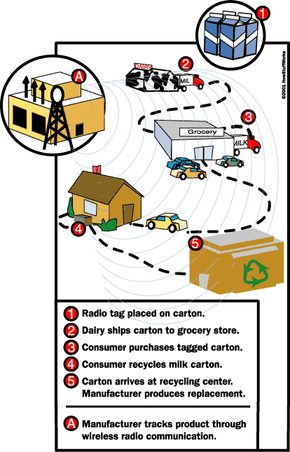
For these smaller scopes, organizations switch tactics. A network of RFID (Radio-Frequency Identification) tags and readers becomes the standard. Wireless LANs also step in to fill the gap. Here is how it works. Each asset gets an RFID tag. Readers are placed in strategic spots throughout the building. They can read those tags within inches.
“A hospital worker would be able to find the exact room a wheelchair is located and retailers would be able to locate an item on any given shelf.”
This level of granularity changes operations. A retailer knows which shelf holds the item. A hospital knows which room holds the life-support machine.
Real-World Applications
This isn’t just theoretical. Amusement parks already use this tech to track children. Kids wear wristbands with embedded RFID tags. Receivers are positioned around the park to monitor those tags. Legoland in Denmark has a system that goes a step further. It links the tag’s identification number directly to a parent’s mobile phone. Parents get alerts. They know where their kids are.
Location tracking does more than just help organizations find their own stuff. It also helps retailers and marketers identify you. They use this data to target key markets. The technology is already being deployed by wireless service providers for location-based services.