
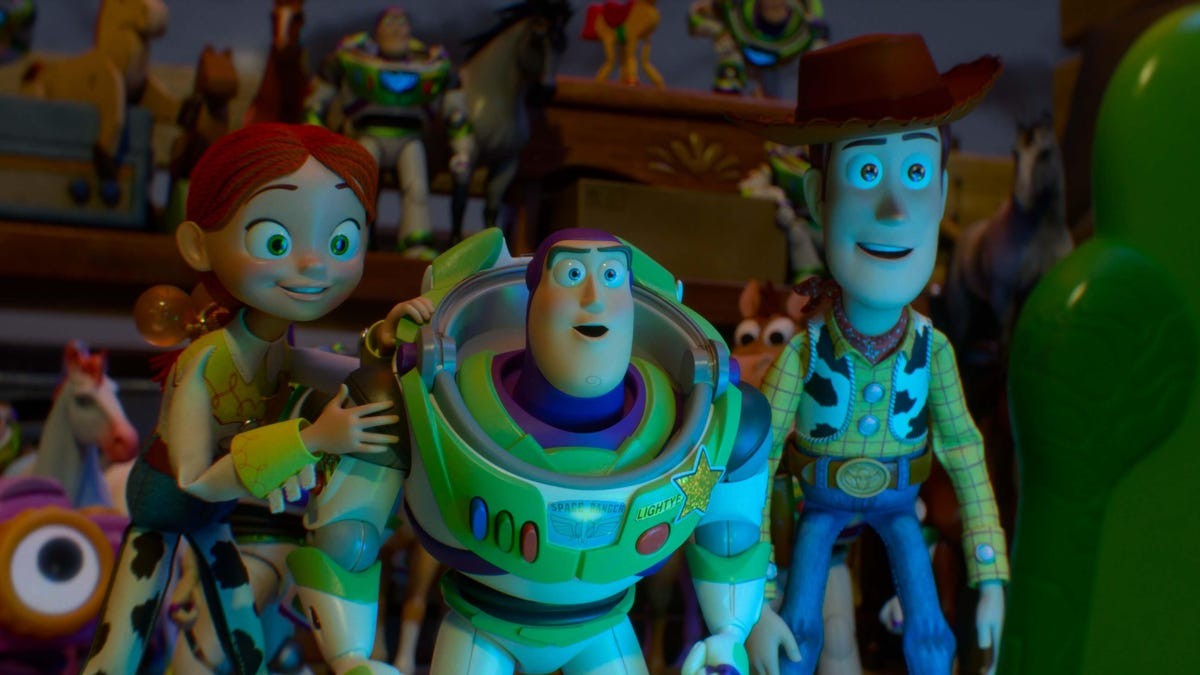
The Toy Story franchise always needed tech. Pixar built it on code, rendering pipelines, and algorithmic character movement. But with Toy Story 5, the technology stops being a tool behind the camera and steps into the spotlight as the villain, or at least the complicated antagonist, of the plot.
It works. Maybe better than expected.
The movie feels necessary right now. We live in a world where our eyes glow blue from rectangular devices instead of reflecting sunlight or firelight. The film taps into that anxiety without preaching. It’s funny. It hurts. And for the first time since the original, it feels urgent.
Why Toy Story 5 tackles the smartphone generation
Bonnie is eight years old. In the past films, she was the golden child who kept Woody relevant. Now she’s struggling. Lonely. She can’t make friends because everyone else is glued to a screen.
It’s a bleak premise for a kids’ movie, but true to life. Bonnie eventually gets her hands on the Lilypad, a tablet device. It hooks her instantly. The toys go from heroes in her room to dusty relics in a closet.
Lilypad isn’t just a passive object. It has agency. A personality, almost. Its job is to connect Bonnie online, to find her digital tribe. To do that, it needs to displace the old-school plastic soldiers and dinosaurs. It’s not malicious. It’s efficient. That’s what makes it terrifying.
“Look at them all, on devices,” Jessie says, watching neighbors through windows. Their faces are illuminated by the cold light of screens.
Jessie’s line lands hard. It captures the isolation of the modern home.
Woody summarizes the existential crisis of his species with one line: Toys are for play. Tech is for everything.
How do you compete with something that does everything? It’s not fair. And that unfairness is the engine of the movie.
Is Toy Story 5 just more nostalgia?
Many people wanted Toy Story 3 to be the end. It was a goodbye. A funeral for childhood, basically. But the franchise didn’t stop. And Toy Story 5 risks feeling like cash-grab nostalgia if it relies only on old feelings.
It doesn’t.
The conflict is fresh because it’s ours. The clash between imaginative play and passive digital consumption isn’t a hypothetical debate in schools. It’s happening in living rooms tonight. This makes the movie culturally relevant again, not just historically significant.
It’s not all doom, though.
There’s Rex the dinosaur, screaming “Extinction! Not again!” There’s humor. Specifically, the new character Smarty Pants. Voiced by Conan O’Brien, he’s a potty-training toy. A literal toilet-shaped device.
Smarty Pants provides unhinged, crude humor. Someone mentions passing a gas station? He quips, “Passed gas.” It’s dumb. It works. And it fits the tone because even digital or smart toys know how it feels to be obsolete. Once Bonnie potty-trains, he’s done. His utility is gone.
Then there are the new Buzz Lightyears. Not just one. Fifty.
They arrive in a cargo container washed up on shore. These are high-tech Buzzes, complete with tiny screens in their chests and hive-mind connectivity. They move together, speak together. It’s eerie. Pixar had to build new animation tech just to render the digital displays on their chests accurately. It’s a meta moment—the tech in the film requiring real tech to make it believable.
What makes Toy Story 5’s visuals stand out
If Toy Story 4 was loud—antique mall colors, kaleidoscopes, shiny distractions—Toy Story 5 is quieter. The visual style is restrained.
Think sun-drenched pastures. Lifelike animals that breathe. The beauty is subtle. It contrasts sharply with the artificial glow of the tablets and screens. The film asks you to notice the difference between rendered light and real sunlight.
Taylor Swift is there too. Her song, I Knew It, I Knew U, plays only in the end credits. Disappointing? Maybe, for fans waiting for an in-movie montage. But it fits. The song’s upbeat, grounded country vibe from her Fearless era mirrors the movie’s attempt to root us back in reality.
Why the screen time debate matters
The movie forces you to look at your own hands. You’ll check your phone while reading this. You will reach for it again. It’s reflex.
The film highlights the toll this takes on creativity. Imagination requires space. Blank space. A toy that can be a rocket, a horse, a spaceship requires you to imagine. A tablet that is the rocket requires only that you swipe.
The cost of convenience is the erosion of the imagination.
That’s a heavy thought for a movie with talking dolls. But that’s why it resonates.
Technology isn’t evil. Pixar is proof of that. The studio exists because of relentless technical innovation. But too much exposure to the screen can atrophy the muscle of human connection. We trade depth for speed. Bonds for links.
Toy Story 5 doesn’t tell you to throw your iPhone in the lake. That’s silly. But it suggests you loosen the grip. Maybe put it in a drawer for an hour. Let a child be bored. Boredom breeds creativity. Connection breeds peace.
The movie ends, but the choice remains. You can scroll. You can look up. Which feels more like living?
Probably depends on the day. Maybe we need a reminder of both. The film leaves it open. Unresolved, mostly. Because real life isn’t tied up in a bow. It’s just the next notification. And the next.