

The true relationship between #Google search and cloud storage
There is reason to think that “Google search” is a verb. This is shorthand for extracting data from public networks. But as cloud computing takes over our digital lives, the boundaries blur. You may be asked if there is a connection between online search and cloud storage. they are. But they are not the same thing.
Understanding the difference between indexed web pages and private cloud storage will change the way you view your data. One is about discovery. The other is about control.
Public directory and private vault
When you type a query into Google, you’re not actually searching the web. You are searching an index. Google uses automated programs called robots or crawlers to scan public websites. They visit the page, read its content and save a snapshot of the information in Google’s huge database.
Search results are not a live feed. These are links and summaries of content previously found by these spiders. You use the map, not the area itself.
Google returns links and snippets of indexed data instead of actual live content.
Cloud storage works differently. It is a collection of physical servers that behave like a single unit. The user sees infinite space. In fact, it’s just racks of hard drives in a data center. This infrastructure allows businesses to expand storage without purchasing physical hardware.
For individuals, this means services like Dropbox and Amazon Cloud Drive. These are private vaults. You cannot find them with a standard web search. They require authentication. A password. encryption key. In some cases, this also includes a physical connection to the company’s network.
The security level is the key differentiator. Google searches public resources. Cloud services protect private ones.
Why this distinction is important
This separation explains why personal documents do not show up when searching for random keywords. They are locked behind authentication gates. The cloud gives the illusion of unlimited capacity. It handles the growing data needs of modern companies.
But it’s more than just data hiding. It’s about accessibility in a controlled environment.
Private cloud indexing
The two worlds are beginning to merge. Companies want to want the discovery power of Google’s indexing technology to their internal cloud. They want to be able to search their own private data with the same speed and relevance as on the public network.
This is where Google’s technology has moves beyond the public index.
The simple answer to the question of whether Google offers cloud infrastructure support is “no”. But that silence doesn’t mean the company’s search technology isn’t relevant in on-premises or hybrid cloud environments. Google’s indexing engine offers clear advantages for companies working with large amounts of internal data. They exploited this gap by building an enterprise-grade search solutions.
Google Search Appliance (GSA)
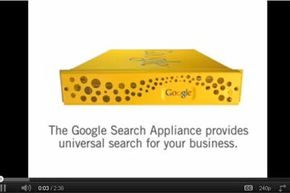
The flagship product here is the Google Search Appliance, known for its bright yellow server chassis. Companies buy this hardware and install it directly into their private networks. Once the intranet resources available to your organization are determined, they are indexed. New models have been developed to index cloud content even when it is located elsewhere in an external cloud storage space.
Employees are familiar with this experience. They simply use an internal web page that reflect the look and feel of Google.com. The difference is crucial. Results are retrieved from GSA’s local index, not the Google.com public index. It’s like a web search, but only within your business.
Data security remains a top concern for IT managers, and the GSA addresses this head-on. The device is behind the company’s firewall and cannot be accessed from the external Internet. A index is only as secure as the data it scans. The device also integrates with other business tools, such as Microsoft SharePoint, which makes collaboration and search more relevant.
The Google Mini Alternative
Not all businesses need a full GSA to do the heavy lifting. Google Mini is a scaled-down option. It is a small blue server with similar functions but less advanced features. It is designed for small businesses with small document libraries. This is a logical step if you want a GSA-style index but have less data to process.
Pricing and Licensing Models
The price of both Google Search Appliance and Google Mini is directly related to capacity. You pay for the number of documents your server needs to index.
- One GSA can handle 500,000 to over 30 million documents.
- Pricing requires a direct quote from Google, and is usually based on a 2- or 3-year license.
- Google Mini pricing starts in the thousands of dollars for a 2-year license with 50,000 documents.
- As the number of documents increases, the price of the Mini increases.
This structure allows companies to match their search investment to their actual data volume. By separating storage and retrieval costs, you no longer have to pay for indexing power you don’t use.
Integrating Search with Cloud Storage
The difference between storing information in the cloud and searching through Google is becoming less rigid. Companies no longer just dump files on the server and hope they can be found later. They actively building search layers on top of their storage.
By implementing these devices, companies can create a unified interface for different data sources. GSA treats files as part of a single searchable index, whether they reside on a local server, SharePoint, or off-site cloud storage. This reduces the friction of finding information in fragmented systems.
The trend suggests a hybrid approach. Pure cloud storage is convenient, but without effective internal search, it becomes a digital landfill. Google’s business tools provide mechanisms to turn storage into an easy-to-use resource. The devices remain on-site or in a private data center, but the logic spans the entire the company’s digital footprint.
As the cloud adoption accelerates, the need for intelligent indexing increases. A simple keyword search is not enough. Companies need context, speed and security. These devices offer a way to maintain control over sensitive data while leveraging the search technology they already know and trust. Yellow and blue servers may seem outdated, but the function they serve is becoming increasingly central to modern data management.
The boundaries between local and cloud storage are blurring. The search layer bridges that gap and making the data usable regardless of where it physically resides.