
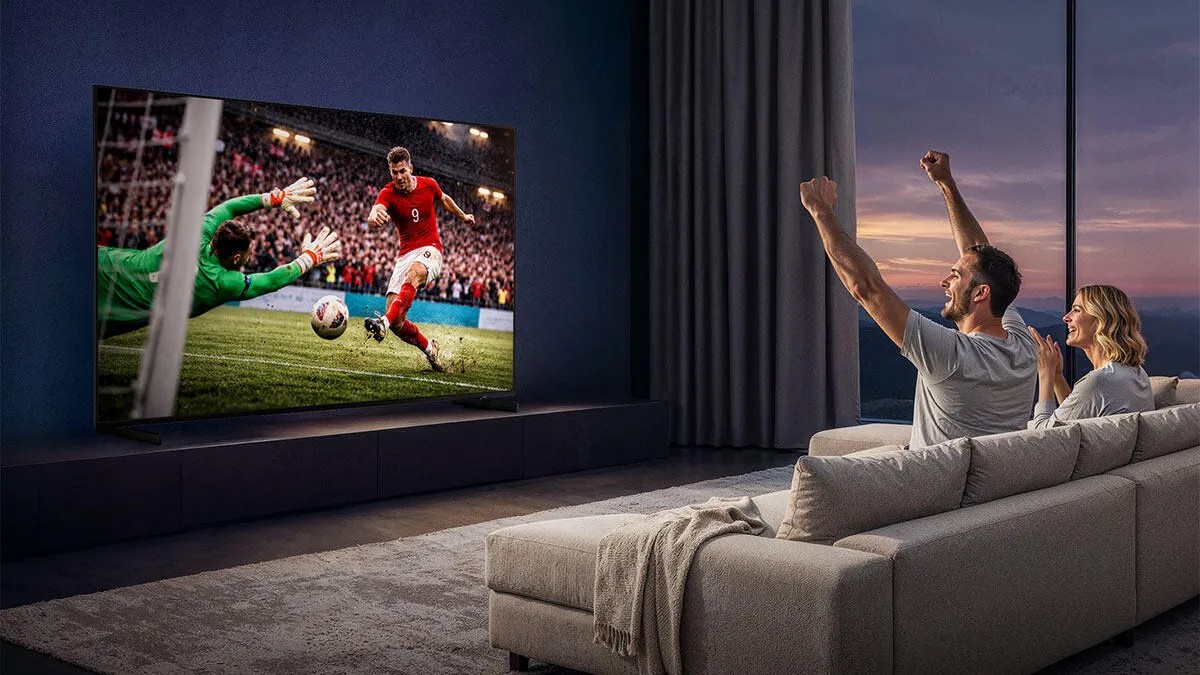
Samsung is shifting its strategy for high-end display technology. Following the debut of a massive, $27,000 115-inch Micro RGB TV last year, the company is now moving toward a more accessible market. For 2026, Samsung has unveiled two new series—the R85H and R95H —offering sizes ranging from 55 to 100 inches with entry prices starting at a much more approachable $1,600.
Understanding Micro RGB Technology
While these models are technically LCD TVs, they depart from traditional designs through their backlighting architecture. Instead of relying solely on standard filters to produce color, the R85 and R95 models utilize clusters of red, green, and blue micro LEDs.
This approach allows the LEDs to either augment or entirely replace traditional color filters, theoretically providing a much more vibrant and precise light source.
The “Color Volume” Debate: Quantity vs. Accuracy
Samsung claims the flagship R95H can hit 100% of the BT.2020 color area. In technical terms, this means the TV can reproduce an incredibly vast spectrum of colors that most consumer displays cannot reach.
However, there is a significant caveat to this metric:
– Accuracy vs. Volume: Simply being able to display more colors does not guarantee those colors look “correct.” In many high-end displays, pushing for maximum color volume can actually compromise color accuracy.
– The “Vivid Mode” Trap: Manufacturers often achieve these impressive benchmarks in “Vivid” settings, which can result in overly saturated, unrealistic images.
– The Real Goal: For the average viewer, the priority is not seeing more colors, but seeing the correct colors as the director intended.
Key Features: Anti-Glare and Gaming Performance
While the color specs grab the headlines, two other features may prove more impactful for daily use:
1. Samsung Glare Free Technology
One of the most practical upgrades is the new anti-reflective coating. Designed to virtually eliminate reflections from windows or bright overhead lights, this technology addresses one of the most common frustrations with large screens in bright living rooms.
2. Gaming-Centric Design
Samsung is positioning these models as premium options for gamers. The lineup includes:
– High Refresh Rates: The R95H supports 165Hz via Motion Xcelerator, while the R85H supports 144Hz.
– Hardware Flexibility: The R95H is compatible with the Wireless One Connect box, allowing users to hide messy cables and source devices away from the screen.
– Enhanced Mounting: Both models include a “Slim Fit Wall Mount” with a hinged design, making it easier to access ports even when the TV is mounted flush against a wall.
AI Integration and Sound
The 2026 lineup is heavily infused with Artificial Intelligence, moving beyond just image processing to include:
– Onboard Intelligence: Integration with chatbots like Microsoft Copilot or Perplexity.
– AI Soccer Mode Pro: An algorithm designed to enhance the visual fluidity of sports, making live broadcasts look as smooth as video games.
– AI Sound Controller Pro: A tool that allows users to isolate or amplify specific audio elements, such as boosting dialogue while lowering background sound effects.
Market Positioning: Micro RGB vs. OLED
Samsung is being transparent about where these TVs fit in their ecosystem. While OLED remains the gold standard for pure picture quality and contrast, the Micro RGB series is designed to win on brightness and color vibrancy.
Combined with superior anti-glare technology, these TVs are likely to target bright rooms and high-end gaming setups where traditional OLEDs might struggle with reflections.
Conclusion: Samsung is moving Micro RGB technology from a niche, ultra-luxury segment into the mainstream. While the massive color gamut numbers may be more marketing hype than practical necessity, the combination of high brightness, anti-glare tech, and gaming features makes this a formidable contender for bright living rooms.