
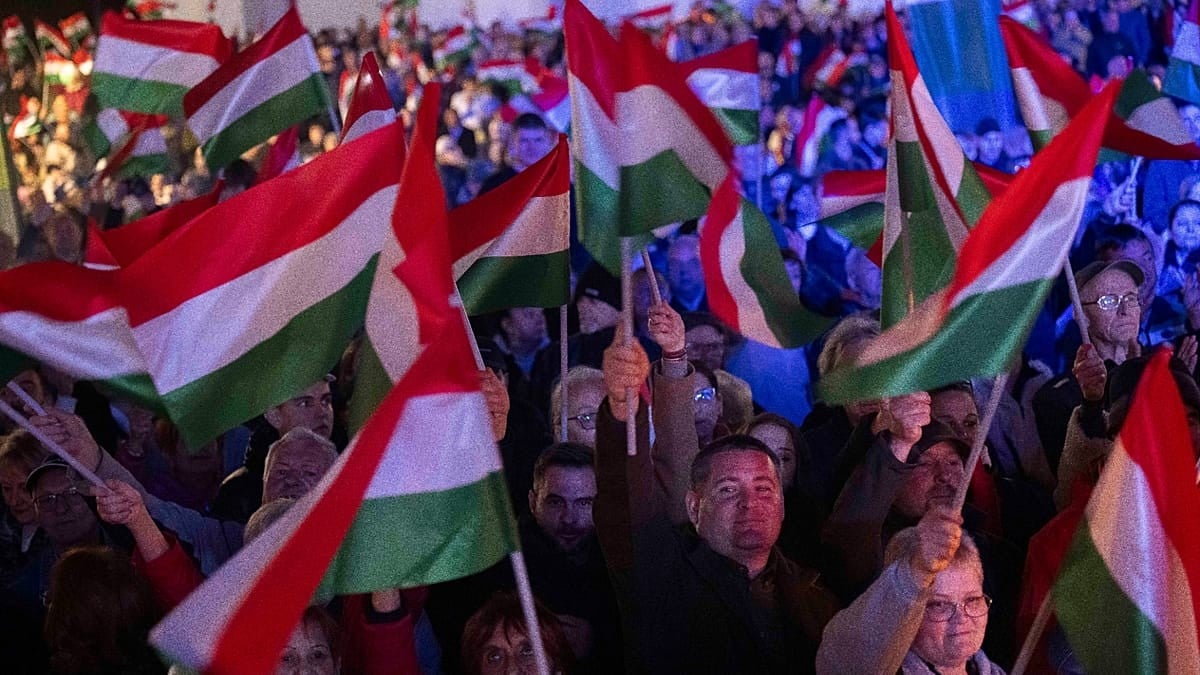
The recent parliamentary elections in Hungary have resulted in a seismic political shift. Peter Magyar’s Tisza party secured a two-thirds majority, claiming 138 of the 199 seats and ending Viktor Orbán’s 16-year reign. While international observers focused heavily on the threat of foreign interference, a closer look at the campaign reveals a much more complex—and domestic—battleground of misinformation.
The Domestic Engine of Disinformation
Contrary to the common narrative that foreign actors drive election interference, analysts suggest that the vast majority of disinformation in Hungary was homegrown. Szilárd Teczár of the fact-checking organization Lakmusz estimates that at least 90% of the disinformation originated within Hungary.
The pro-government Fidesz party did not act alone; it operated through a sophisticated ecosystem of influence, including:
– Controlled media outlets that echoed government narratives.
– Proxy organizations like the National Resistance Movement.
– Influencer networks, most notably Megafon, which amplified specific messaging across social media.
Moving from Propaganda to “Fabricated Proof”
A significant trend in this election was the shift from mere propaganda to the active manufacturing of “facts.” Researchers noted that the ruling camp utilized increasingly aggressive tactics to undermine the opposition.
One notable example involved the creation of a forged party platform for the Tisza party. This fake document, which included absurd proposals such as taxing pets, was leaked to media outlets to paint the opposition as economically reckless. Experts suggest this escalation occurred because the ruling party sensed a genuine threat to their power, prompting them to “create their own facts on the ground” to maintain control.
The Russian Connection: A Limited Reach
While Kremlin-linked influence operations were present, their impact appears to have been more localized than many feared. Russian actors employed a “classic playbook” of interference, including:
- The Matryoshka Operation: This group specialized in deepfake-style news, such as a fabricated video purportedly from Le Monde claiming a Ukrainian artist was poisoning Hungarian dogs.
- Storm 1516: This actor focused on spreading inflammatory articles, such as false claims that Orbán’s opponents had insulted Donald Trump, or accusing Tisza leaders of wanting to drag Hungary into the Ukraine conflict.
However, much of this Russian activity was misaligned with the local landscape. Many of these campaigns were conducted in English and hosted on X (formerly Twitter), a platform that carries less weight in Hungarian political discourse than Facebook.
Circumventing Digital Restrictions
The landscape of political campaigning changed significantly due to new advertising restrictions imposed by Meta and Google. To bypass bans on direct political advertising, pro-government actors pivoted to more covert digital strategies:
1. The Rise of “Private” Influence
Instead of traditional ads, Fidesz utilized private, invitation-only Facebook groups like “Fighters Club” and “Digital Civic Circles.” These groups functioned as digital command centers, where supporters were encouraged to like, share, and comment on specific posts to artificially boost their reach and bypass algorithmic filters.
2. The Weaponization of AI
Artificial Intelligence became a primary tool for both sides of the aisle:
– Negative Campaigning: Pro-government actors used AI-generated videos to depict Tisza politicians in military uniforms, attempting to stoke fears that the opposition would send young Hungarians to war.
– Myth-Building: Conversely, the Tisza party used AI to craft a specific image, such as generating “TIME Person of the Year” photos for Peter Magyar to build a narrative of a leader who defies established power.
Because many of these AI-generated videos and private group interactions are not tracked by official tools like the Meta Ad Library, they remain difficult for researchers to monitor and analyze in real-time.
Conclusion
The Hungarian election demonstrates that modern disinformation is no longer just about spreading lies; it is about manufacturing entire realities through forged documents, AI-generated imagery, and closed digital ecosystems. While foreign interference remains a concern, the most potent threat to democratic integrity appears to be the domestic use of sophisticated, untraceable digital tactics.