
Death is the worst. It doesn’t matter if it happened in real life or on a Nintendo cartridge. In game, this usually means ending a round of combat, failing a level, or losing unsaved progress. But in older games, failure wasn’t just a game penalty. It’s visually disappointing.
The characters don’t just stop moving. They move awkwardly from standing to lying down. Sometimes it is divided into pixels. In some cases, it may disappear completely. This happened because early developers relied on keyframe animation. Each function is a pre-programmed loop. Jump, drop, land, repeat. The same animation is repeated every time, regardless of context. These dead ends feel oppressive. They break the embedding. They make the world feel flat.
Let’s fast forward to today. Digital death has changed. Gore’s comments are now awaited. My bones were broken. Gallons of blood. But the realism of the body has also changed dramatically. The secret ingredient is Ragdoll Physics.
What is ragdoll physics?
Ragdoll physics is a type of procedural animation. Instead of playing pre-saved clips, the game calculates how your body should move based on the physics engine. The results look like people. Sometimes it is very accurate. Other times it’s fun. Weakness in limbs. The body is twisted. I feel like a rag doll with too much tequila.
When carefully integrated by developers, the effect can be subtle but powerful. Add reality to chaotic scenes. Consider a first-person shooter. Shoot the enemy with the shotgun. Victims do not show the “death” animation. The engine reacts to shocks.
Bump shoulders? Arch your upper body back to absorb the force.
Did it punch you in the stomach? The role doubles. Then it falls forward.
Every death is unique. All reactions are calculated in real time.
This is more than a simple visual style. This is complicated math. Programmers are constantly fine-tuning algorithms to make virtual objects behave like simulated objects. The goal is not just to look authentic. It’s about a sense of authenticity.
Animation engine
This change is based on a powerful game engine behind the scenes. These systems can withstand heavy lifting. They manage conflicts. Simulates gravity. They slow down. Without these, the ragdoll effect looks like a problematic polygon. Instead, it provides a layer of interactivity that static animation cannot provide.
Moving from keyframes to process responses changes the way we experience failure. This is no longer just a game over the screen. This is a physical result. If you stop for a moment in the middle of the chaos, you realize the severity of the violence.

Developers have been chasing the ghosts of reality for years. They embedded gravity, speed and momentum into the code to control everything from racetracks to platform jumps. Without these invisible rules, the game lacks structure. It’s just a floating polygon.
Character deaths were previously static. impact. It’s the same animation every time. Original but practical. Hardware has since been improved. Dedicated GPU reduces CPU workload. Graphics become clearer. Add depth to the game. And Death Animation finally woke up.
Bullet Shock Revolution
Games like Halo and Max Payne began to feature bodies jolted by ballistics. It is not a pre-rendered clip. React in real time. Rockstar Games explored this with Grand Theft Auto. Natural light. The human body moves with amazing precision. What is the secret? Ragdoll physics.
Instead of building ready-made loops, the programmers built characters that reacted to walls, bombs and bullets in real time. It’s not perfect. But it is believable. Games have never felt more real.
Hitman: Codename 47 was an early adopter. Knock down the enemy. Drag the soft rolling frame. steal the uniforms. The bullet hit with exaggerated force. The physics is still not entirely convincing. But the illusion remains. The players noticed the difference.
Bottom layer: Verlet integration
Hitman relies on Verlet integration. This is an algorithm that applies Newton’s laws of motion to computer animation. Think of the skeleton as dots connected by rules. Simple. Effective. Uses less CPU time than complex simulations. Efficiency is important. You’ll see more enemies on screen without the frame rate dropping.
However, early rag dolls had their limitations. They flopped too much. Or not enough.
Hybrid Ragdoll: Midway Point
Hybrid Ragdoll physics combines real-time simulation with pre-made animations. Jurassic Park: Trespasser used it. Characters don’t just fall apart; they collided. They bent. They move more than living things.
Still, the brain noticed glitches. Limbs twisted unnaturally. The interaction feels a little odd. Far better. But it’s not natural enough.
Procedural Animation: Current Frontiers
Procedural animation is the last step. No predetermined clips. Everything in the game always reacts to physics. Death animations are only part of it. Every action, every collision, every interaction with the environment is real-time. It’s more convincing. It’s more immersive.
The shift from static clipping to dynamic responsiveness changes the way players experience virtual worlds. It’s not just about looking authentic. It’s about feeling real. When the character reacts to the blow, the player believes in the outcome. This belief changed everything.
The game is not perfect yet. Limbs clip. Physics break. However, the gap is narrowing. We are approaching a world where every movement has a physical weight. Death isn’t a cutscene. This is the result.
It changes the way we play.

How #ragdoll physics turns game death into hilarious chaos
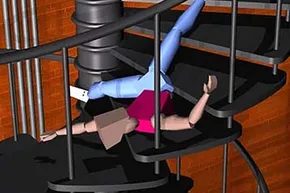
If the stage is a physics engine, the animated characters are just puppets. Ragdoll physics look realistic because the character is made up of rigid parts connected together in a system similar to a real-world skeleton. When damaged, the bodies flop, loll and bounce across the screen.
The math and physics are extremely sophisticated, and even today the CPU power and processing algorithms have yet to find a way to perfectly mimic a collapsing humanoid form. The result is often hilarious, with the characters’ articulated limbs contorting and bouncing in all sorts of unrealistic and ridiculous ways, like a rag doll rolling down a flight of stairs. Many of today’s online games, like Happy Wheels, take advantage of this effect and essentially providing crash-test dummies to torture and fling through all sorts of silly and bizarre scenarios.
Many modern simple games use ragdoll physics to make the on-screen action less violent and more cartoonish and fun. However, in modern games, the elements of fun and entertainment overshadow the sophisticatedity of physics.
Euphoria engine and real-time reactions
One of the most sophisticated animation engines is called Euphoria created by NaturalMotion. Euphoria is used in very popular games such as Star Wars: The Force Unleashed, Red Dead Redemption and Grand Theft Auto 4.
NaturalMotion claims that Euphoria can simulate the body movements of any part of any scene in real time, including the character’s muscles and motor system. For example, a character can be frightened by the sound of a machine gun blast or try to break their fall when they topple from a moving vehicle. Ultimately, these types of games offer a more engaging gaming experience.
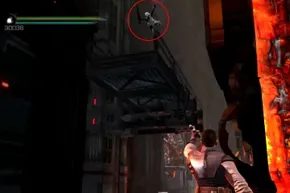
Ragdoll physics that allow characters to realistically flop realistically when defeated, the backbone of modern game animation is skeletal animation. This mysterious engine makes your digital avatar look like a living person, not a sliding cardboard cutout.
Basically, the system is based on two different layers. The first is the mesh. Skin, armor and clothes are visible to the player. The other is the rig or skeleton. This rigid base structure supports the mesh and determines its movement. Think of this as a articulated body, which is a set of rigid parts connected by joints.
The programmer don’t just let rotate these joints freely. They set strict limits and restrictions. A head can’t rotate your head 360 degrees or tuck it under the chin. The wrist can swing and rotate, but only in a certain range of motion that mimics human anatomy. If the angle exceeds the programmed limit, the movement stops. This prevents weird distortions that break the immersive experience.
Reusing the Digital Skeleton
Once the developer has build a skeletal framework for one character, the next character doesn’t have to be built from scratch. You can use the same base for several characters. They can be effectively placed in the virtual world simply by changing the appearance of the surface, i.e. changing the mesh to flesh out different races, classes or enemy types.
This efficiency comes from the fact that skeletal animation is based on kinematic chains or trees. This is a hierarchical structure. The parts are connected. When the femur moves, the lower leg follows. This movement is ripples down the chain.
Programming such cause-and-effect relationship in a digital environment is difficult. Developers often use the Featherstone algorithm, named after articulated body dynamics expert Roy Featherstone. This method helps calculate how forces are transmitted through connected limbs.
The Math Behind the Motion
Making a character look believable requires a heavy data load. The programmer must take into account the geometry of each body part and its relative position in 3D space. They define restrictions and rules for joints and connectivity, and at the same time also calculate spatial inertia.
All these elements are described using mathematical algorithms and physics engines. Animators use software such as CAD to build these geometrical characters on a joint-by-joint basis. They literally construct a digital being from the inside out. Only then can that being be dropped into with the digital environment.
Regardless of who makes them, physics drives modern video games. It doesn’t matter if the physics is scientifically accurate or just funny enough to make you laugh. The point is that physics makes the game more engaging. With bigger budgets and more powerful hardware, physics engines are expected to become more complex, elegant and messy.