
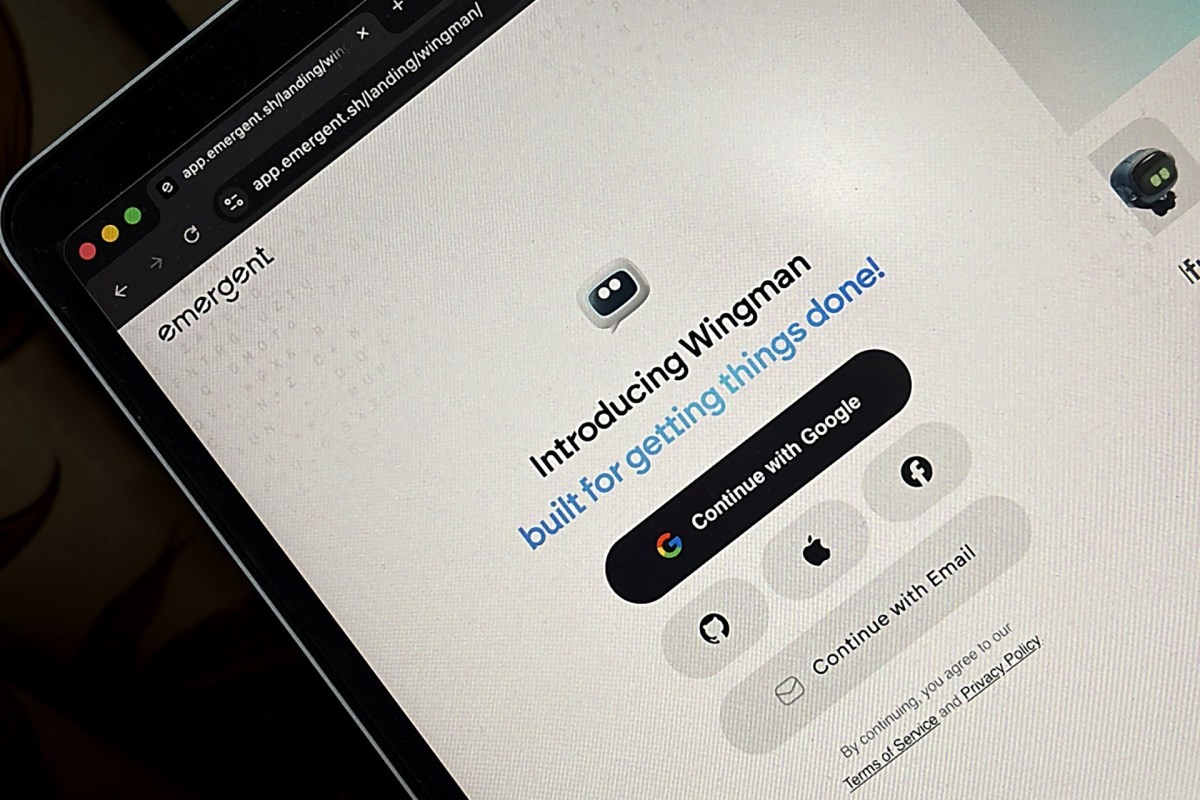
The landscape of Artificial Intelligence is shifting from tools that help us create to agents that help us execute. Bengaluru-based startup Emergent is positioning itself at the forefront of this transition with the launch of Wingman, an autonomous AI agent designed to manage routine tasks through familiar messaging interfaces.
The Evolution: From “Vibe-Coding” to Autonomous Execution
Emergent first entered the spotlight with its “vibe-coding” platform, a tool that allows non-technical users to build complex, full-stack applications using simple natural language prompts. This approach competes directly with established developer tools like Cursor and Replit by lowering the barrier to software creation.
However, the company is now moving beyond the development phase. With Wingman, Emergent is addressing a critical question in the AI industry: Once software is built, how can it be operated more efficiently?
“You move from software that supports the business to software that can actively help run it.” — Mukund Jha, Co-founder and CEO of Emergent
How Wingman Works: The Messaging-First Approach
Unlike many AI tools that require users to log into a new, dedicated dashboard, Wingman is designed to live where people already communicate. By embedding the agent into platforms like WhatsApp, Telegram, and Apple’s iMessage, Emergent aims to integrate AI into existing workflows rather than adding another layer of complexity.
Key features of the Wingman system include:
- Background Operation: The agent connects to essential tools—such as email, calendars, and workplace software—to perform tasks in the background.
- Chat-Based Command: Users can assign, monitor, and delegate tasks through simple text or voice commands within their preferred messaging app.
- Trust Boundaries: To mitigate the risks of full autonomy, the system utilizes a “human-in-the-loop” model. It handles routine, low-stakes tasks independently but pauses to seek explicit user approval before taking consequential actions.
The Competitive Landscape: The Race for Autonomy
The launch of Wingman places Emergent in a high-stakes arena. The industry is currently witnessing a massive push toward “agentic” AI—software capable of completing multi-step workflows without constant human intervention.
Emergent is competing against both niche players and tech giants:
– Niche Innovators: Tools like OpenClaw (formerly Clawdbot) are gaining traction among early adopters looking for specialized automation.
– Tech Giants: Companies like Anthropic and Microsoft are aggressively developing their own agent-based ecosystems to dominate the enterprise market.
Challenges and Limitations
Despite its ambitions, Wingman is not a “set it and forget it” solution. Mukund Jha acknowledged that the technology still faces significant hurdles, particularly regarding:
– Ambiguity: The agent struggles when goals are unclear or instructions are vague.
– Edge Cases: Complex, “messy” real-world scenarios that deviate from standard workflows.
– Human Judgment: Situations that require nuanced decision-making or emotional intelligence remain difficult for the AI to navigate.
Market Position and Availability
Emergent is backed by significant capital, having raised $70 million in January 2025 at a $300 million valuation, with support from heavyweights like SoftBank, Khosla Ventures, and Lightspeed Venture Partners. The company’s scale is already impressive, boasting over 8 million builders and 1.5 million monthly active users on its core platform.
Wingman is currently being rolled out via a limited free trial, with a transition to a paid model following the initial period. Existing Emergent users can access the agent directly through their current accounts.
Conclusion
By moving AI from specialized development environments into everyday messaging apps, Emergent is attempting to turn AI from a creative assistant into a functional employee. The success of Wingman will likely depend on how effectively it can navigate the “gray areas” of human decision-making.