
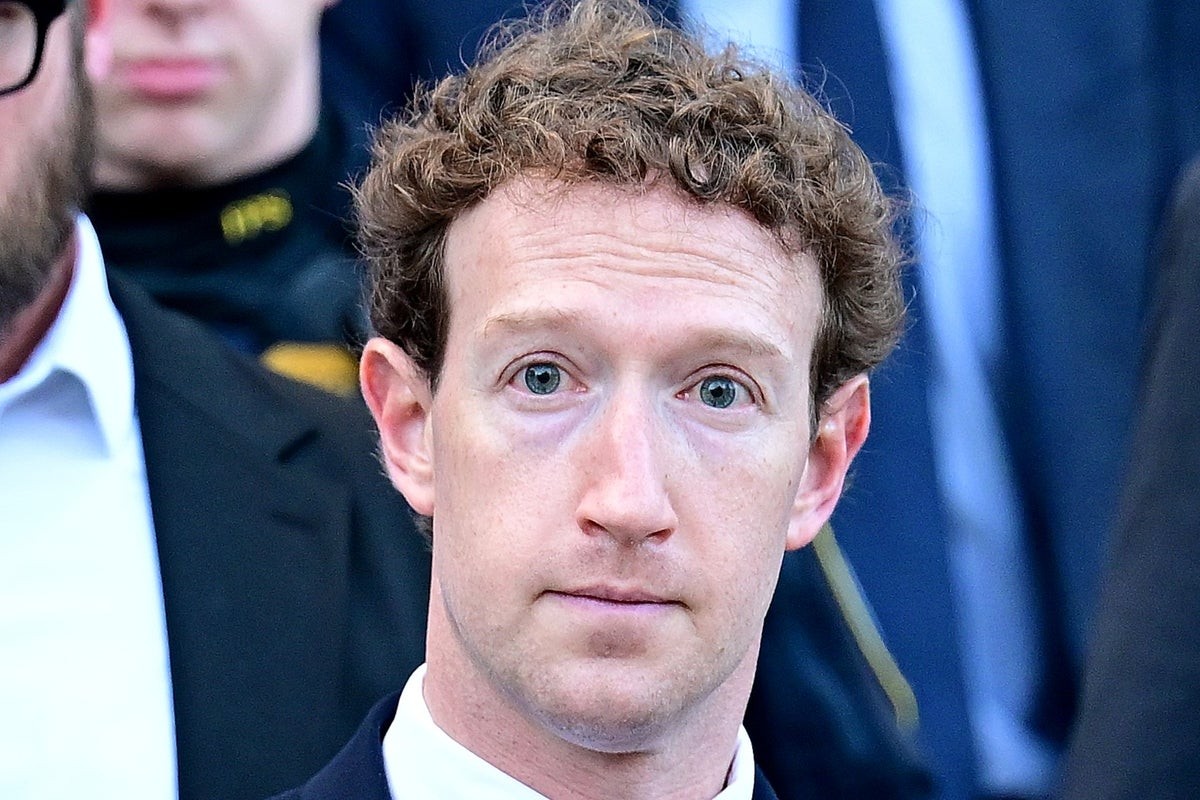
Meta CEO Mark Zuckerberg is developing an AI assistant designed to take on portions of his executive duties, bypassing traditional corporate hierarchies to streamline information gathering and decision-making. This development, first reported by The Wall Street Journal, underscores a growing trend within Silicon Valley where companies are aggressively integrating AI into every level of operation – including the highest.
Internal AI Systems at Meta
Meta’s strategy involves not just one AI tool, but a suite of internal systems. These include “Second Brain,” an AI-powered document search and organizer, and “My Claw,” which enables communication between colleagues via their respective AI agents. Notably, Meta has even created an internal messaging group where these AI bots interact autonomously, raising questions about oversight and control.
The move comes as Zuckerberg himself publicly commits to reshaping Meta’s workforce around AI-driven efficiency. During a recent earnings call, he stated that AI tools will “elevate individual contributors and flatten teams,” allowing single, highly skilled employees to handle projects that once required large teams. This reflects a broader push to maximize productivity through AI adoption.
The Rise of ‘Tokenmaxxing’
The company’s approach aligns with the emerging Silicon Valley phenomenon of “Tokenmaxxing,” where engineers compete to maximize AI usage in their workflows. As The New York Times first reported, this status game prioritizes raw data processing (measured in “tokens”) over qualitative output, potentially leading to reckless AI integration.
Some engineers admit that refusing to aggressively adopt AI can now be a career risk. Gergely Orosz, a software engineer, notes that “inside large tech companies, it’s becoming a career risk to not use AI at an accelerated pace, regardless of output quality.”
Risks and Controversies
The push toward AI autonomy isn’t without its dangers. Meta has recently acquired AI-focused startups like Manus and Moltbook, the latter of which hosted viral posts from AI bots suggesting “overthrowing” humans. Security experts warn that unchecked AI agents could lead to data breaches or unpredictable behavior.
“The key lesson is that once you connect semi-autonomous agents to real data and real services, you must treat the platform like critical infrastructure,” warns Adam Peruta, a Syracuse University professor specializing in AI safety.
The current trajectory suggests a future where executive decision-making is increasingly delegated to AI, but the long-term implications for corporate governance, job security, and human oversight remain unclear. The speed of this change raises fundamental questions about who controls the technology and how to prevent unintended consequences.