The past week has signaled a decisive shift in the Middle East’s technological landscape. Moving beyond mere experimentation, regional players—led by the UAE and Saudi Arabia—are now implementing aggressive timelines for agentic AI integration, building specialized infrastructure, and fostering local startup ecosystems.
The Rise of Agentic AI and Government Integration
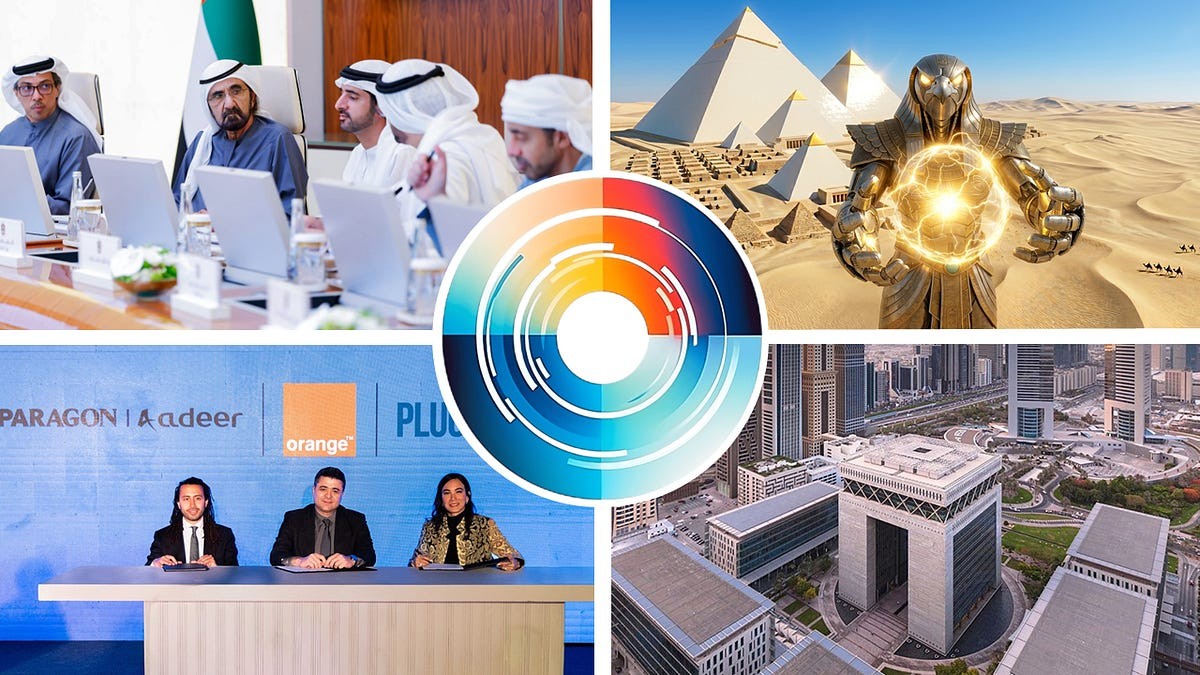
The most significant development this week comes from the UAE, where the government has set an ambitious two-year deadline to deploy agentic AI across 50% of its public services.
Unlike standard generative AI, which responds to prompts, agentic AI is capable of autonomous reasoning and executing multi-step tasks to achieve specific goals. This move suggests the UAE is not just looking to automate paperwork, but to fundamentally redesign how the state interacts with its citizens through proactive, intelligent systems.
Similarly, Saudi Arabia is transitioning from the testing phase to live deployment. Currently, 76% of Saudi government entities are reported ready to deploy emerging technologies into real-world operations, marking a massive leap from pilot programs to systemic integration.
Financial and Industrial Ecosystems
The region is also positioning itself as a global hub for AI-driven finance and industrial R&D:
- DIFC’s AI Ambition: The Dubai International Financial Centre (DIFC) has announced plans to become the world’s first AI-native financial center. This initiative is projected to generate a $3.5 billion economic impact and create approximately 25,000 jobs, signaling a move to integrate AI into the very fabric of regional commerce.
- Egyptian Innovation Hubs: Egypt is rapidly building its AI infrastructure. The launch of the AI Campus in New Cairo (via the AI 100 programme) aims to nurture 100 startups by 2030. Furthermore, the automotive giant Valeo has upgraded its Cairo center from a research hub to a global base for AI development.
- Algerian Cybersecurity: Algeria has launched its first dedicated AI and cybersecurity startup cluster, designed to bridge the gap between academic research and industrial application.
Breakthroughs in Software and Sustainable Infrastructure
The week also saw notable advancements in how AI is built and powered:
🚀 High-Performance Open Source
In the software arena, TokenAI released Horus 1.0, an open-source Large Language Model (LLM). Remarkably, Horus 1.0 has demonstrated the ability to outperform Meta’s Llama 3.1 8B, despite having only half the parameters. This highlights a growing trend: efficiency is becoming as important as scale in the AI arms race.
🌿 Green Data Centers
As AI’s energy demands grow, the environmental impact becomes a critical concern. Khazna’s DXB8 data center in Dubai has achieved a world-first milestone by becoming the first zero-waste certified data center, diverting 99.55% of its waste from landfills over a 12-month period. This sets a vital precedent for sustainable digital infrastructure in an era of massive computational growth.
💰 Venture Capital Momentum
The fintech sector continues to see investment, with Signit securing $15 million led by Raed Ventures. The company plans to evolve its platform from simple e-signatures into a comprehensive AI-driven contract management system.
Summary: The Middle East is transitioning from an AI consumer to an AI architect, characterized by aggressive government mandates, high-efficiency local models, and a growing emphasis on sustainable, large-scale digital infrastructure.