
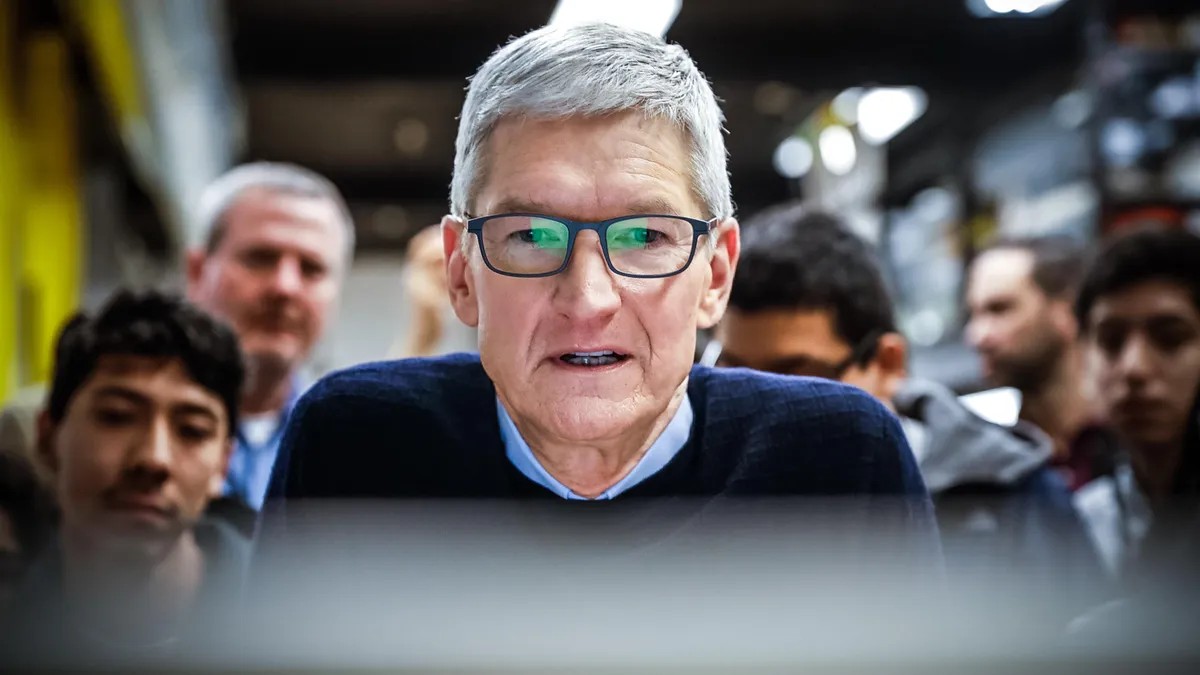
With Tim Cook’s announcement that he will step down as CEO this September, Apple prepares to enter a new chapter. Taking the helm in 2011 following the passing of Steve Jobs, Cook inherited a company at a crossroads. While Jobs was the visionary architect of the iPhone and Macintosh, Cook became the master strategist who scaled Apple into a global powerhouse.
Under his 15-year leadership, Apple’s market value surged to over $3.6 trillion. He successfully transitioned the company from a hardware-centric manufacturer to a diversified ecosystem of devices and recurring services.
As his tenure concludes, we look at the five most significant innovations that defined the Cook era.
1. Apple Watch: Defining a New Category
Launched in 2014, the Apple Watch was Cook’s first major foray into a brand-new product category. It represented a pivotal shift: moving Apple from a device in your pocket to a device on your wrist.
While the smartwatch market had existed in a niche capacity, Apple’s entry provided the mainstream momentum the industry lacked. The success of this move is evident in the numbers; by the final quarter of 2026, Apple Watch shipments accounted for 32% of the entire global smartwatch market, according to Counterpoint Research.
2. AirPods: Turning Skepticism into Dominance
When Apple introduced AirPods in 2016, the reaction was far from universal acclaim. Critics mocked their design, and the “white stem” aesthetic became a frequent subject of social media ridicule.
However, the product was a masterstroke of ecosystem integration. By phasing out the traditional headphone jack on iPhones, Apple paved the way for a wireless future. The market quickly followed: by 2017, NPD reported that AirPods captured 85 cents of every dollar spent on truly wireless headphones. What began as a controversial design became the industry standard.
3. Apple Music: The Pivot to Services
In 2015, Apple made a fundamental shift in its business model by launching Apple Music. This marked the company’s transition from a “transactional” model—where users bought individual songs via iTunes—to a “subscription” model.
Entering a market already dominated by Spotify was a high-stakes move, but Apple leveraged its massive existing user base to compete effectively. Within just one year, Apple Music had secured a subscriber base half the size of Spotify’s. Today, it remains the second-largest music streaming platform in the world, boasting a catalog of over 100 million songs.
4. Vision Pro: Entering Mixed Reality
The launch of the Vision Pro in 2023 signaled Apple’s ambitious attempt to lead the “spatial computing” revolution. While the VR and AR markets had been developing for years, Apple’s entry brought unprecedented hardware sophistication to the table.
The device is defined by its high-end technology, featuring dual 4K micro-OLED displays that offer a level of visual fidelity far surpassing most competitors. However, the Vision Pro also highlights the challenges of high-end innovation: with a $3,500 price tag and a relatively heavy form factor, it remains a premium, niche device rather than a mass-market tool.
5. AirTag: Expanding the Ecosystem
(Note: The provided source text concludes before detailing the AirTag; however, based on the context of the era, the AirTag represents Apple’s expansion into the “Find My” network and the use of ultra-wideband technology to solve everyday problems of asset tracking.)
Conclusion
Tim Cook’s legacy is defined by his ability to take the revolutionary foundations laid by Steve Jobs and build a massive, profitable, and highly integrated ecosystem around them. He didn’t just sell products; he expanded the very definition of how technology integrates into daily life.