For years, foldable smartphones were viewed as experimental novelties—impressive to look at, but plagued by deep screen creases, mediocre battery life, and underwhelming cameras. However, a significant shift is underway. The industry is moving past the “prototype” phase and into a period of rapid refinement, with hardware and software finally catching up to the ambitious promise of a folding screen.
As manufacturers like Samsung, Oppo, and Honor iron out long-standing engineering hurdles, the category is seeing a surge in momentum. Market research firm IDC predicts global foldable shipments will grow by 10% in 2025, with a massive 30% jump expected in 2026. This growth is driven by a fundamental change: foldables are no longer just “different”; they are becoming objectively better than traditional “slab” phones in several key areas.
Solving the “Crease” Problem
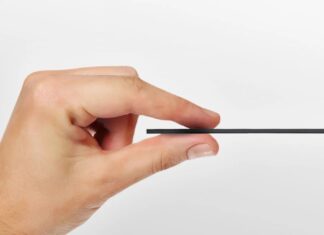
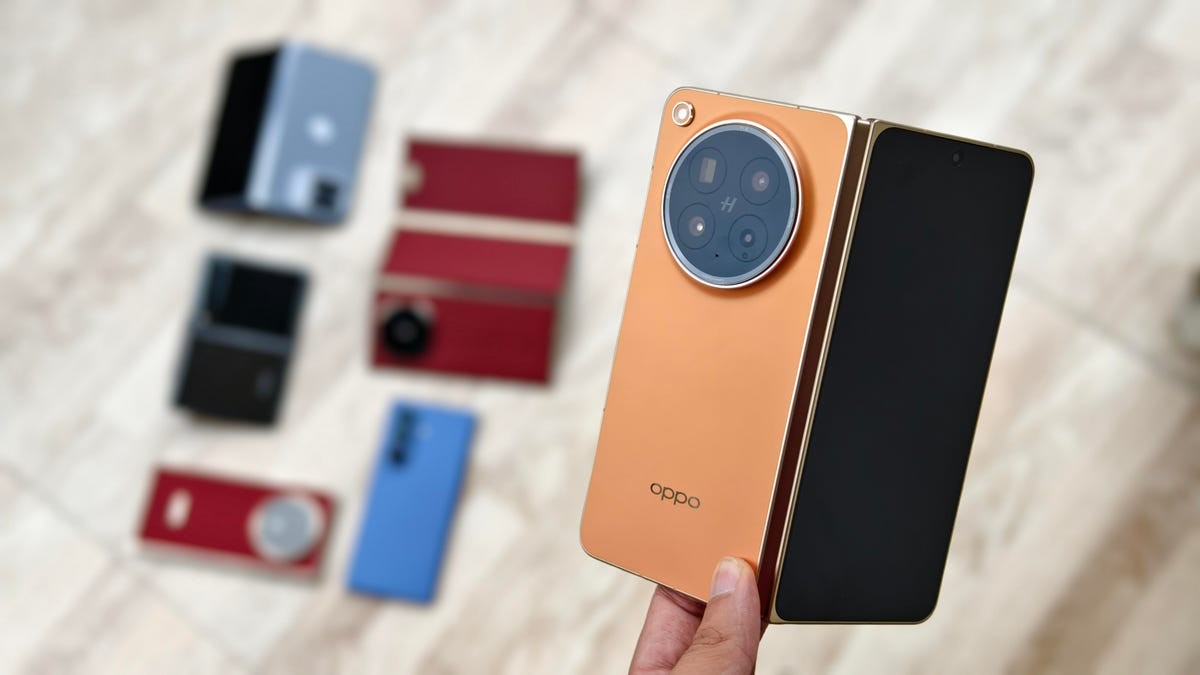
The most visible flaw of early foldables was the distracting indentation running down the center of the display. While many brands attempted to minimize this with new hinge designs, Oppo’s Find N6 has set a new benchmark. By using 3D-printed liquid photopolymer droplets within the hinge mechanism, Oppo has reduced height variance to just 0.05mm.
The result is a screen that feels almost entirely flat, making the crease nearly invisible to the touch. This level of engineering is crucial for mass adoption; a seamless display makes the device feel like a premium piece of glass rather than a mechanical tool.
Battery Life and the Silicon-Carbon Breakthrough
Battery capacity has historically been the Achilles’ heel of foldables due to their slim, complex internal architecture. However, a new technological trend is changing the math: silicon-carbon batteries.
Unlike traditional lithium-ion cells, silicon-carbon batteries are denser, allowing manufacturers to pack more power into a smaller footprint. This is already visible in the market:
– Honor Magic V6 and Oppo Find N6 are utilizing these high-capacity cells to outperform many standard flagship phones.
– OnePlus and Realme are pushing boundaries with massive capacities (up to 10,001 mAh) that maintain a manageable weight.
While giants like Samsung and Apple have yet to fully adopt this technology, its maturation in the Chinese market suggests that “all-day battery life” is becoming a reality for foldables, rather than a distant goal.
Bridging the Camera Gap
In the past, buying a foldable meant sacrificing photography quality. You could have a big screen, or you could have a great camera, but rarely both. That compromise is evaporating.
Modern foldables are now sporting high-end sensor arrays that rival the best “slab” flagships. Huawei’s Mate X7, for instance, features a 50-megapixel main camera with a 10-stop variable aperture, allowing for superior low-light performance. With 200-megapixel sensors appearing in Oppo and Samsung models, the foldable is finally transitioning from a productivity tool to a primary photography device.
Software: The Key to True Multitasking
A large screen is useless without software that knows how to use it. We are seeing a divergence in how operating systems handle the foldable form factor:
– Android Evolution: With the upcoming Android 17, Google is making windowed multitasking mandatory for apps, which will significantly improve the experience on devices like the Pixel 10 Pro Fold.
– The Apple Factor: Rumors regarding an “iPhone Fold” suggest Apple may bring iPad-like multitasking to the iPhone, potentially introducing sidebar layouts and side-by-side app views that have long been missing from iOS.
Durability and the Dust Challenge
Perhaps the most difficult engineering feat is protecting a device with moving parts. While many phones now offer water resistance, dust resistance remains the frontier.
Most foldables carry IP58 or IP59 ratings, which protect against water and large particles but may still allow fine dust or pocket lint to enter the hinge. The Google Pixel 10 Pro Fold, with its IP68 rating, stands out as a leader in creating a truly “dust-tight” design. As consumers demand devices that can survive real-world environments, this focus on ingress protection will become a deciding factor in brand loyalty.
The Bottom Line: The era of the “compromised” foldable is ending. As hardware durability, battery density, and multitasking software converge, foldable phones are moving from a niche luxury to a legitimate contender for the title of the world’s best smartphone.