For decades, many skiers hit a wall: a comfortable, yet limiting, intermediate level. You can handle most groomed runs, but double-black diamonds remain firmly out of reach. This isn’t a lack of skill, but a matter of infrequent practice and outdated methods. Enter Carv, a wearable tech solution that provides real-time feedback and coaching, helping skiers break through plateaus without expensive lessons or frustrating instructors.
The Intermediate Plateau: A Common Struggle
The issue isn’t unique. Many recreational skiers – those who hit the slopes only a few days each year – struggle to progress beyond a certain point. Years of experience don’t translate into improvement without consistent refinement. Unlike dedicated athletes, casual skiers don’t have the time or resources for frequent professional coaching. The result? A plateau where technique stagnates, and fear of progression sets in.
Introducing Carv: Wearable Ski Coaching
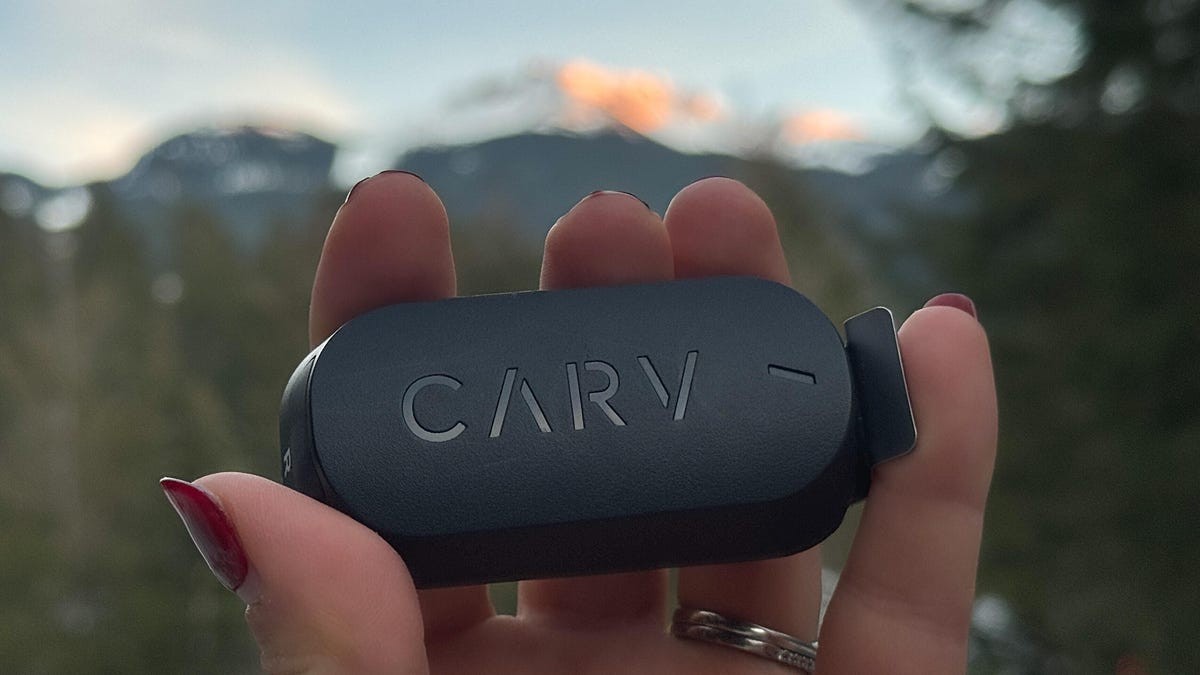
Carv consists of two small, sensor-packed modules that clip onto ski boot power straps. These devices track foot movement, connecting to a smartphone app that analyzes performance and delivers personalized feedback. The system offers both real-time audio coaching via headphones and post-run data analysis, including a “Ski IQ” score. Priced at $250 for the hardware plus a subscription fee, it’s a cost-effective alternative to single-day lessons that can run the same price.
This approach aligns with a broader trend of wearable technology that moves beyond simple activity tracking (steps, sleep) to provide actionable insights. Carv doesn’t replace human instruction, but it bridges the gap for skiers who lack time, access, or confidence in traditional coaching.
Testing Carv on the Slopes
One skier tested Carv during a six-day trip to Whistler, Canada. Despite challenging weather conditions (heavy rain), the system immediately assigned a Ski IQ score of 111, classifying the user as “peak pioneer” – above the average Carv user (IQ of 100). Driven by competitive instinct, the skier set out to improve.
The app highlighted turn shape as a primary weakness, noting a tendency to force early angles instead of carving smooth arcs. Data visualization tools, including turn-by-turn graphs and average path diagrams, revealed inconsistencies in technique. This prompted the skier to focus on rounding out turns, leading to an immediate improvement from 111 to 116 Ski IQ on a green slope.
The Power of Real-Time Feedback
Carv’s real-time coaching proved particularly effective. By finishing turns properly – shifting weight and finding the edge – the skier unlocked a “new sensation” described by Carv co-founder Alex Jackson. The system’s “learn” and “train” modes gamified the process, providing escalating beeps when turns aligned with optimal technique.
The results were tangible. A sibling, a more experienced skier, immediately noticed the improvement after a single run. Carv’s drills encouraged the skier to lean forward, a technique previously resisted due to fear. By the end of the week, Ski IQ reached 118 on a black diamond, thanks to an algorithm update favoring more challenging terrain.
Reclaiming the Thrill of Skiing
Carv reignited a passion for improvement that had waned over years of casual skiing. The feedback loop boosted confidence, broke bad habits, and unlocked potential. According to Jackson, “Skiing is one of those sports where the better you get, the more fun it gets.”
While progress isn’t always linear, Carv provided a focus that transformed technique. The skier now watches tutorials, engages with ski-related content, and even considers remortgaging to fund professional lessons. For the first time in a decade, the slopes feel exciting again.
The device may not be for every skier, but it proved invaluable for breaking through a long-standing plateau. Carv provides the tools, but the skier must still commit to the process. The results? More speed, style, and grace on even the most intimidating black diamonds.