
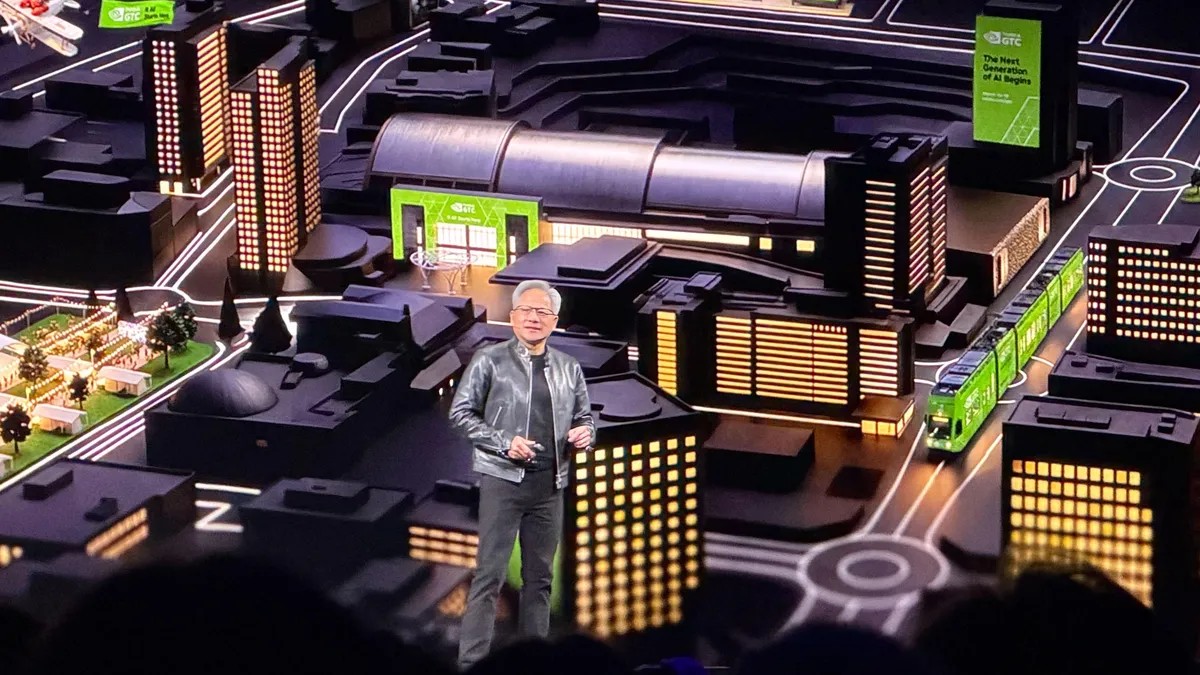
Nvidia’s annual GTC conference underscored the company’s relentless push to lead the artificial intelligence revolution. CEO Jensen Huang unveiled a series of advancements focused on data center dominance and the emerging trend of “agentic AI”—where AI systems operate autonomously to achieve complex goals. The keynote featured three key announcements: NemoClaw, DLSS 5, and the Vera CPU. These technologies aren’t just incremental upgrades; they signal a fundamental shift in how AI will be developed, deployed, and experienced.
NemoClaw: Democratizing Autonomous AI Agents
Nvidia introduced NemoClaw, a reference stack built on the OpenClaw platform, designed to simplify the creation of AI agents. Unlike previous methods, NemoClaw offers a single-command installation, streamlining the setup of essential components for developers.
This matters because the barrier to entry for building advanced AI agents is lowering. The platform also emphasizes privacy through an “isolated sandbox” with policy-based guardrails, addressing growing concerns about data security in AI development. This makes it easier for businesses and individuals to experiment with always-on AI assistants without compromising sensitive data. The goal is continuous operation – 24/7 performance on dedicated Nvidia hardware.
DLSS 5: Redefining Visual Fidelity in Gaming
Nvidia showcased significant progress in generative AI-powered graphics with DLSS 5. The technology uses real-time neural rendering to achieve unprecedented levels of realism, blurring the lines between video games and cinematic experiences.
The impact is substantial: DLSS 5 can analyze a single frame and generate upscaled visuals with photo-realistic lighting, materials, and textures. This eliminates the need for manual optimization, promising a future where games look dramatically better with minimal performance trade-offs. Major developers, including Bethesda, Capcom, Ubisoft, and Warner Bros. Games, are already committed to integrating DLSS 5 into titles such as Assassin’s Creed Shadows, Resident Evil: Requiem, Starfield, and a remastered The Elder Scrolls IV: Oblivion. The software is expected this fall.
Vera CPU: Powering the Next Generation of AI Factories
The final major announcement was the Vera CPU, designed to accelerate the deployment of agentic AI at scale. Nvidia claims Vera delivers double the efficiency and a 50% performance increase over current CPUs.
This is critical because the demand for compute power in AI is exploding. Vera provides the single-thread performance and bandwidth needed to build “AI factories”—large-scale deployments of autonomous agents. Huang positioned Vera as a pivotal moment in AI history, suggesting that the new chip will unlock capabilities previously limited by hardware constraints.
“Vera is arriving at a turning point for artificial intelligence,” Jensen Huang stated, signaling Nvidia’s intention to remain at the forefront of this rapidly evolving field.
In conclusion, Nvidia’s GTC 2026 keynote reinforced the company’s dominance in AI. The combination of NemoClaw, DLSS 5, and Vera CPU represents a significant leap forward in AI development, graphics technology, and compute infrastructure. These advancements will reshape how AI agents are built, how games look, and how efficiently AI systems operate, solidifying Nvidia’s position as a key driver of the next era of artificial intelligence.