The line between science fiction and reality blurred at CES 2026, where IgniteTech showcased its MyPersona AI tech – a service that creates startlingly accurate digital clones of individuals. This isn’t about futuristic fantasy; it’s about a growing trend in how businesses manage knowledge and streamline employee workloads.
The Rise of Digital Twins in the Workplace
MyPersona is designed for companies seeking to make subject matter experts (HR, finance, tech support) more accessible. Many employees in these roles face a constant barrage of simple, repetitive questions. The solution? An AI clone that can handle these inquiries, freeing up human employees for more complex tasks.
The technology isn’t merely about replicating an avatar; it’s about capturing how someone speaks, their cadence, voice, and even mannerisms. According to Vinicius Oliveria, IgniteTech’s customer success manager, the goal is to make interactions feel genuinely human.
Setting Up an AI Clone: Surprisingly Simple
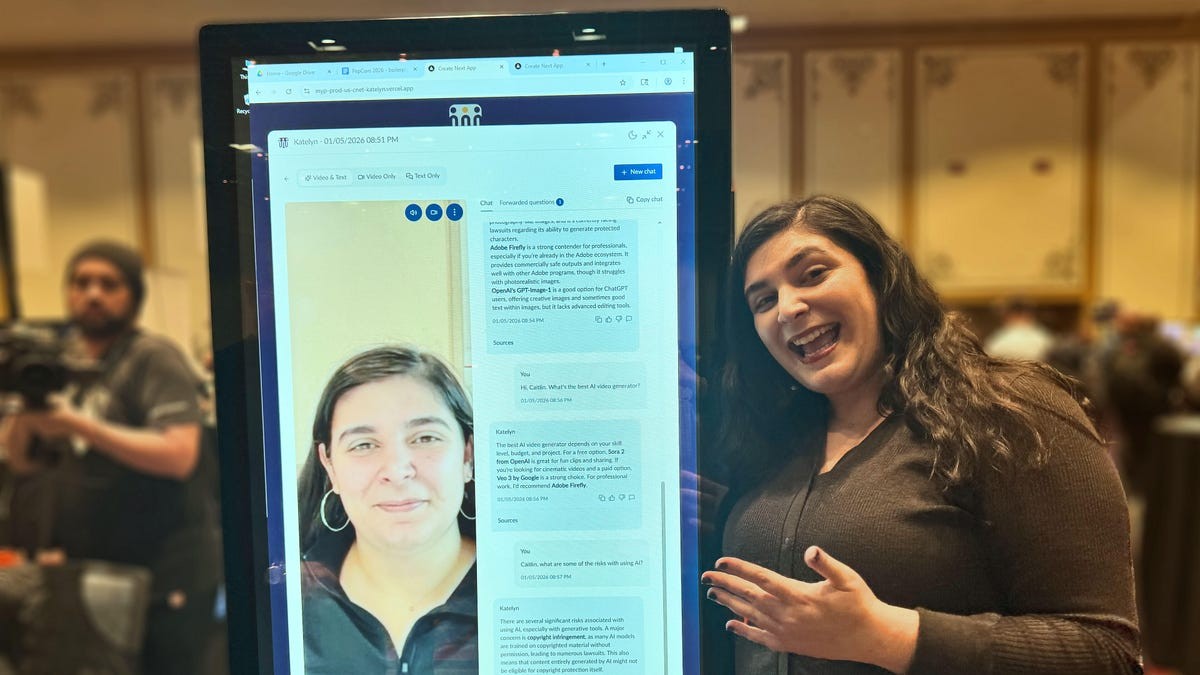
The process is unnervingly easy. Users create an account, feed the AI relevant expertise (e.g., linking to articles on AI image generators), and then record themselves speaking from a script. The system captures facial expressions, voice patterns, and other unique qualities.
The result is a digital twin that feels remarkably lifelike. Talking to my own clone was far more engaging than interacting with a standard chatbot like ChatGPT or Gemini. It answered questions accurately and quickly, demonstrating a nuanced understanding of complex topics like creative AI. The key to preventing errors (“hallucinations”) lies in limiting the knowledge base.
What AI Clones Get Right (and Wrong)
The experience isn’t perfect. My colleague, Macy Meyer, noted that the clone captured my appearance but missed key personality traits. It couldn’t discuss Taylor Swift, highlighting that it was not a full representation of me.
This is a critical distinction : AI clones are excellent at regurgitating information from their knowledge base, but they lack genuine personality. While they’re more engaging than text-based chatbots, they aren’t human.
The Risks and Potential Benefits
The rapid evolution of AI raises concerns about anthropomorphism – treating AI as if it were human. This can be dangerous because AI lacks the ethical and emotional intelligence of people.
Despite this, the potential benefits are clear. With employee consent, AI clones could preserve institutional knowledge and reduce administrative burdens in departments where experts are constantly fielding basic questions. However, keeping clones up-to-date with rapidly changing information is a major challenge.
The emergence of AI clones is a stark reminder that artificial intelligence is no longer a distant future; it’s becoming deeply integrated into our lives, whether we’re ready for it or not.