
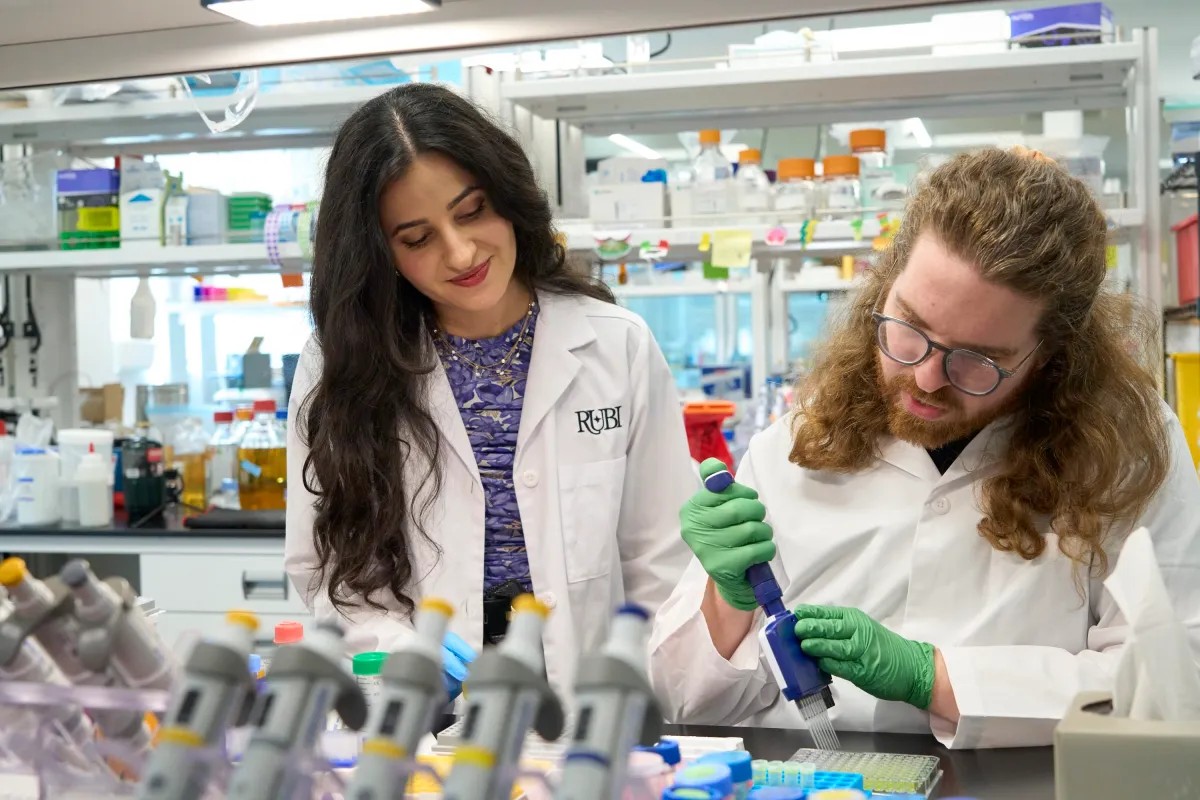
The fashion industry faces mounting pressure to address its environmental impact. With an estimated one garbage truck of textiles discarded every second, and emissions exceeding those from international shipping and aviation combined, sustainable alternatives are urgently needed. Now, startup Rubi Labs is pioneering a revolutionary method: manufacturing clothing materials directly from captured carbon dioxide.
The Problem with Traditional Cellulose Production
Currently, most cellulose – the key ingredient in fabrics like lyocell and viscose – comes from trees. This reliance on forestry contributes to deforestation, including the destruction of virgin rainforests. Existing recycling efforts address waste, but don’t solve the fundamental problem of raw material sourcing.
Rubi’s approach bypasses traditional methods by “taking the machinery of biology outside of the cell,” as co-founder Neeka Mashouf explains. Instead of relying on plants or fossil fuels, they use enzymes to convert CO₂ into usable cellulose. This method offers a potentially carbon-negative pathway for textile production.
How It Works: Enzymes and AI-Powered Efficiency
Rubi doesn’t use genetically engineered bacteria or chemical catalysts, unlike some competitors. Their system employs a “cascade” of naturally occurring enzymes. This is significant because the enzyme industry already exists on a massive scale – used in everything from high-fructose corn syrup to wastewater treatment.
The startup has further optimized these enzymes using artificial intelligence and machine learning, boosting their efficiency and stability. In their reactors, CO₂ is introduced into an aqueous solution, and within minutes, visible cellulose precipitates. The modular design – reactors fit inside shipping containers – suggests scalability.
Funding and Industry Validation
Rubi recently secured $7.5 million in funding, led by AP Ventures and FH One Investments, with participation from H&M Group, Patagonia, and Walmart. The company has already secured over $60 million in non-binding off-take agreements, indicating strong industry interest. Pilot testing with major brands confirms the material’s viability.
Beyond Textiles: A Platform for Sustainable Materials
Rubi isn’t limiting its focus to apparel. The underlying technology has the potential to produce cellulose for a wide range of industries. As Mashouf states, this is “a platform to make all the important chemicals and materials across the economy in a low-cost way.”
By directly capturing and utilizing CO₂, Rubi offers a compelling solution for reducing the fashion industry’s carbon footprint. Its enzyme-based process promises a scalable, potentially carbon-negative alternative to traditional cellulose production, positioning it as a key player in the future of sustainable materials.