
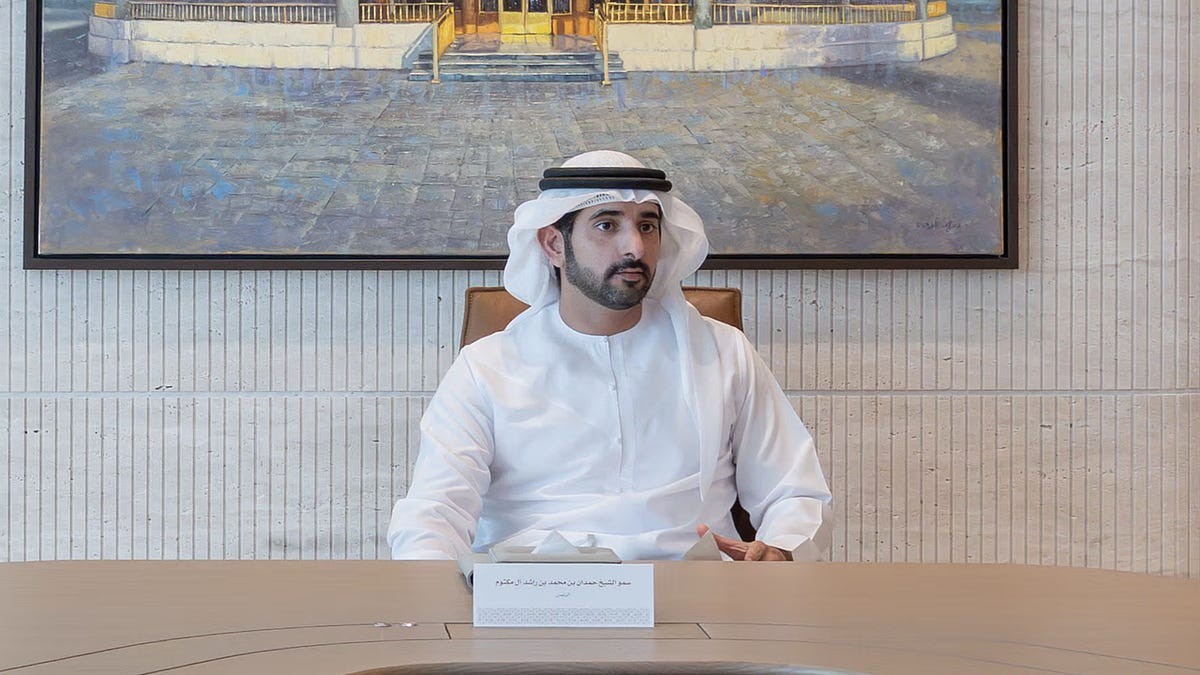
Dubai has launched a comprehensive two-year initiative to embed agentic AI into its private sector, aiming to transform the emirate into the world’s leading hub for autonomous artificial intelligence adoption. Announced by Crown Prince H.H. Sheikh Hamdan bin Mohammed bin Rashid Al Maktoum, under the directives of H.H. Sheikh Mohammed bin Rashid Al Maktoum, Vice President, Prime Minister, and Ruler of Dubai, the program targets all business councils affiliated with the Dubai Chamber of Commerce and Industry.
This move is not merely about adopting new software; it is a strategic pivot toward an economic model where AI agents—systems capable of acting autonomously to create value—drive productivity and growth. By combining specialized training, dedicated incubators, and new funding mechanisms, Dubai seeks to bridge the gap between technological potential and commercial reality.
Why the Shift to “Agentic” AI Matters
To understand the significance of this initiative, one must distinguish between current AI trends and the next evolutionary step. While generative AI tools respond to human prompts, agentic AI operates autonomously. These systems can monitor conditions, make decisions, and execute complex tasks without continuous human intervention.
Economists refer to the emerging landscape as the Agentic Economy. Research from PwC and the University of California, Berkeley, projects that agentic AI could contribute between $2.6 trillion and $4.4 trillion annually to global GDP by 2030. However, this economic windfall will not be evenly distributed. It will accrue to cities and economies that proactively equip their private sectors with the necessary frameworks, talent, and infrastructure to harness these technologies. Dubai’s early and deliberate entry into this space is a calculated effort to capture a significant share of this future value.
A Three-Pillar Strategy for Private Sector Transformation
The initiative is designed to be actionable, moving beyond policy statements to concrete structural changes within Dubai’s business ecosystem. The Dubai Chamber of Commerce and Industry has been directed to oversee three key delivery mechanisms:
- Specialized Training Tracks: Business councils will undergo targeted education to understand and implement agentic AI, ensuring that leadership across industries is equipped with the knowledge to drive adoption.
- Dedicated Incubators: New incubators will be established specifically for agentic AI companies. These hubs aim to foster innovation, support startups, and create new economic pathways, particularly for young entrepreneurs entering the field.
- Targeted Funding: New funds have been allocated to support the transition, lowering the financial barriers for businesses looking to integrate autonomous AI systems into their operations.
The explicit goal is to boost productivity, expand business volumes, and position Dubai as the global benchmark for agentic AI readiness. By embedding these structures within existing business infrastructure, the emirate ensures that the transformation is scalable and sustainable.
Aligning Public and Private Sector Ambitions
Dubai’s private sector push is synchronized with significant advancements in its public sector AI strategy. Last week, Digital Dubai, the government’s technology authority, published an AI Integration Matrix Framework. This whitepaper classifies government AI use cases into four quadrants, providing a common methodology for public sector organizations to prioritize investments, eliminate duplication, and deploy AI coherently.
The framework has already guided the deployment of over 100 AI systems across various sectors, marking a shift from fragmented pilots to a coordinated ecosystem. Furthermore, this local initiative mirrors a broader federal strategy: the UAE Cabinet recently approved a framework to deploy agentic AI across 50% of government sectors, services, and operations within two years.
By aligning Dubai’s private sector program with federal ambitions, the emirate creates a unified national strategy. This coordination ensures that businesses operating in Dubai are not only keeping pace with but also leading the technological transformation occurring across the wider UAE government.
Conclusion
Dubai’s two-year agentic AI program represents a decisive move from passive technology adoption to active economic transformation. By equipping the private sector with the tools, training, and capital needed to harness autonomous AI, the emirate is positioning itself to lead the emerging Agentic Economy. This strategic alignment between public policy and private innovation aims to secure Dubai’s status as a global leader in both technological readiness and economic productivity.