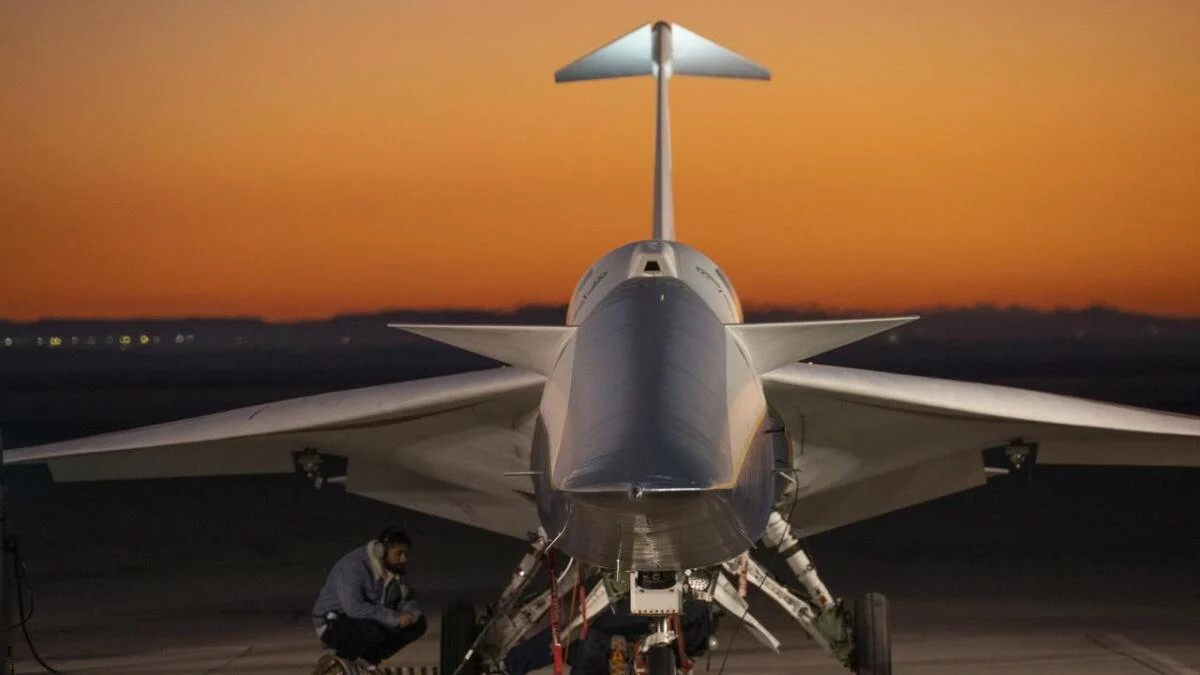
NASA’s experimental X-59 supersonic jet landed prematurely on Friday, March 20, after a cockpit warning light triggered an early return to Edwards Air Force Base in California. The flight, lasting just nine minutes, was cut short despite initial plans for an hour-long test run. Project manager Cathy Bahm confirmed the incident was separate from a previous caution light observed during takeoff.
The X-59’s Purpose: Redefining Supersonic Flight
This experimental aircraft is central to NASA’s efforts to reshape commercial supersonic travel. Current regulations ban routine supersonic flights over land due to the disruptive sonic booms produced by traditional aircraft. The X-59, built in partnership with Lockheed Martin, aims to demonstrate that supersonic flight can be achieved with significantly reduced noise – a mere “thump” instead of a deafening boom. If successful, this could lead to the lifting of current flight restrictions.
The potential impact is significant: a New York to Los Angeles flight, currently taking 5–6 hours, could be slashed to under three hours at speeds around 925 mph.
Why Early Issues Are Expected
Bob Pearce, head of NASA’s aeronautics research, emphasized that encountering problems during the testing phase of an experimental aircraft is standard. “Building something that never existed before means you’re going to find issues,” he stated.
The X-59’s unique design, including its elongated nose, is intended to diffuse the pressure waves that cause sonic booms. Instead of a single shockwave, the aircraft aims to produce a series of smaller pulses, making the sound far less disruptive on the ground. The initial test flights have intentionally remained subsonic to focus on system checks.
A New Way to Fly: No Front Window
The X-59 also features an unconventional cockpit layout. The long nose, crucial for mitigating sonic booms, eliminates the possibility of a traditional windscreen. Instead, pilots rely on a high-definition display combining images from external cameras. Test pilot Less, who flew the X-59 for the first time during this mission, reported the system handled seamlessly, even surpassing traditional visibility in certain conditions, such as direct sunlight.
Looking Ahead
NASA plans over 100 additional test flights, gradually increasing speed and altitude before conducting controlled “thump” demonstrations over populated areas. The ultimate goal is to gather data that will convince regulators to reconsider current supersonic flight restrictions, potentially ushering in a new era of faster, quieter commercial air travel.