
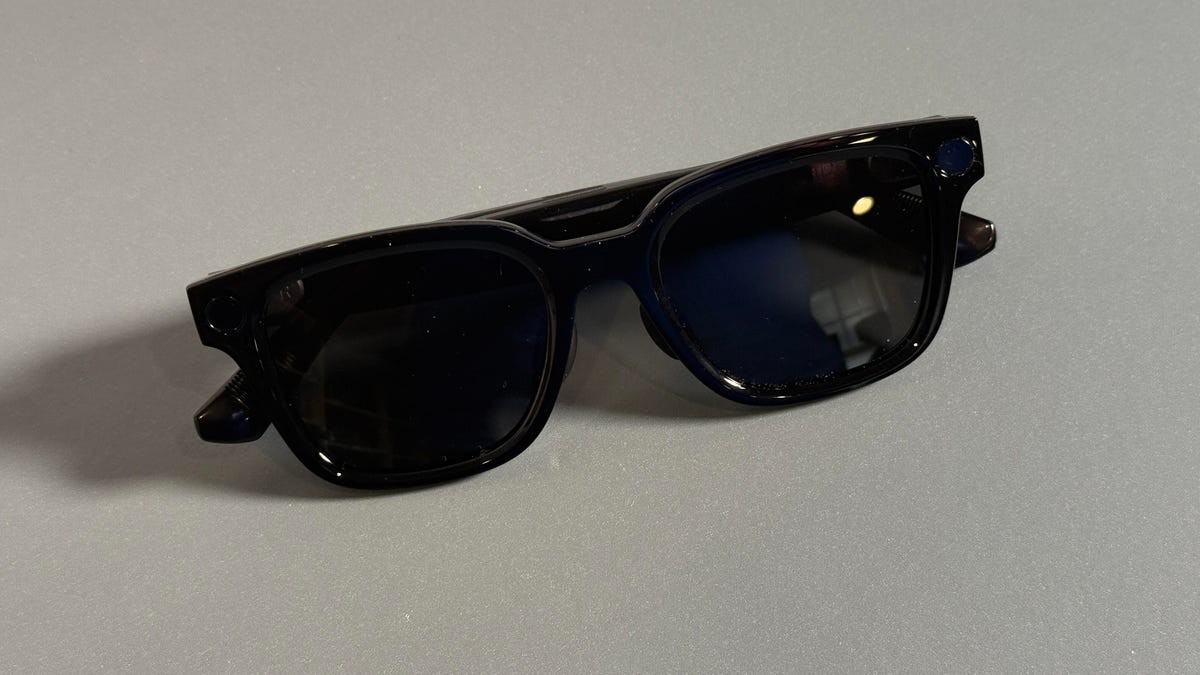
While Meta’s Ray-Ban smart glasses currently dominate the market, they highlight a growing frustration in the wearable tech industry: the “walled garden” problem. Currently, Meta’s hardware is locked into a single ecosystem—Meta AI. If you want to use ChatGPT or Gemini, you simply can’t.
This lack of versatility is a major hurdle for smart glasses to become truly useful daily tools. However, new competitors are attempting to break this monopoly, even if they haven’t quite perfected the experience yet.
Breaking the Monopoly: The Rokid Alternative
Unlike Meta, the Chinese manufacturer Rokid offers smart glasses that allow users to toggle between different AI engines. For a price point significantly lower than Meta’s premium offerings, Rokid provides a choice: users in the US can switch between ChatGPT and Gemini.
This flexibility is a crucial step toward making wearables feel like versatile assistants rather than just single-purpose gadgets. By allowing users to choose their preferred “brain,” manufacturers can cater to different user preferences in how AI processes information.
The “Impersonal AI” Problem
Despite the ability to switch models, Rokid’s approach reveals a significant technical limitation: the lack of account integration.
When you use ChatGPT or Gemini on your phone or computer, the AI knows you. It remembers your preferences, your past conversations, and your specific data. On Rokid glasses (and many other emerging wearables like Even Realities’ G2), you are essentially starting from scratch every time.
- No Personal Context: The glasses use the AI models to answer questions or analyze photos, but they do not log into your existing OpenAI or Google accounts.
- Generic Responses: Because the AI has no access to your personal history, the interactions feel “antiseptic” and disconnected from your digital life.
- Model Differences: Testing shows that while the models perform similarly, their “personalities” differ. For instance, in analyzing a cluttered room, ChatGPT provided a more structured, diagnostic list, while Gemini offered a more “holistic” and descriptive narrative.
The Roadmap: Personalization vs. Privacy
The future of AI wearables will likely be decided by how well these devices integrate with your existing digital identity. There are three distinct paths emerging in the industry:
1. The Integrated Ecosystem (Google & Apple)
Google is expected to release Gemini-powered glasses that act as a seamless extension of your Google account. This would allow the glasses to tap into your emails, documents, and apps like NotebookLM, creating a highly personalized assistant. Apple is rumored to follow a similar path, leveraging its deep integration between iOS and Siri to make glasses a natural extension of the iPhone.
2. The Walled Garden (Meta)
Meta currently lacks a mobile operating system, which limits its ability to create a deeply integrated ecosystem across different devices. This makes their AI feel somewhat isolated from the user’s broader digital life, despite their massive social media footprint.
3. The Hardware-First Approach (Rokid & Others)
Companies like Rokid are focusing on hardware flexibility, allowing users to choose their AI engine. However, until these companies find a way to bridge the gap between the hardware and the user’s personal AI accounts, they remain “half-step” solutions.
Conclusion
The transition from smart glasses being “novelty gadgets” to “essential wearables” depends on personalization. While the ability to switch between different AI models is a welcome step toward variety, the real winner in the wearable race will be the company that can make an AI feel like a continuous, knowledgeable extension of the user’s own digital life.