
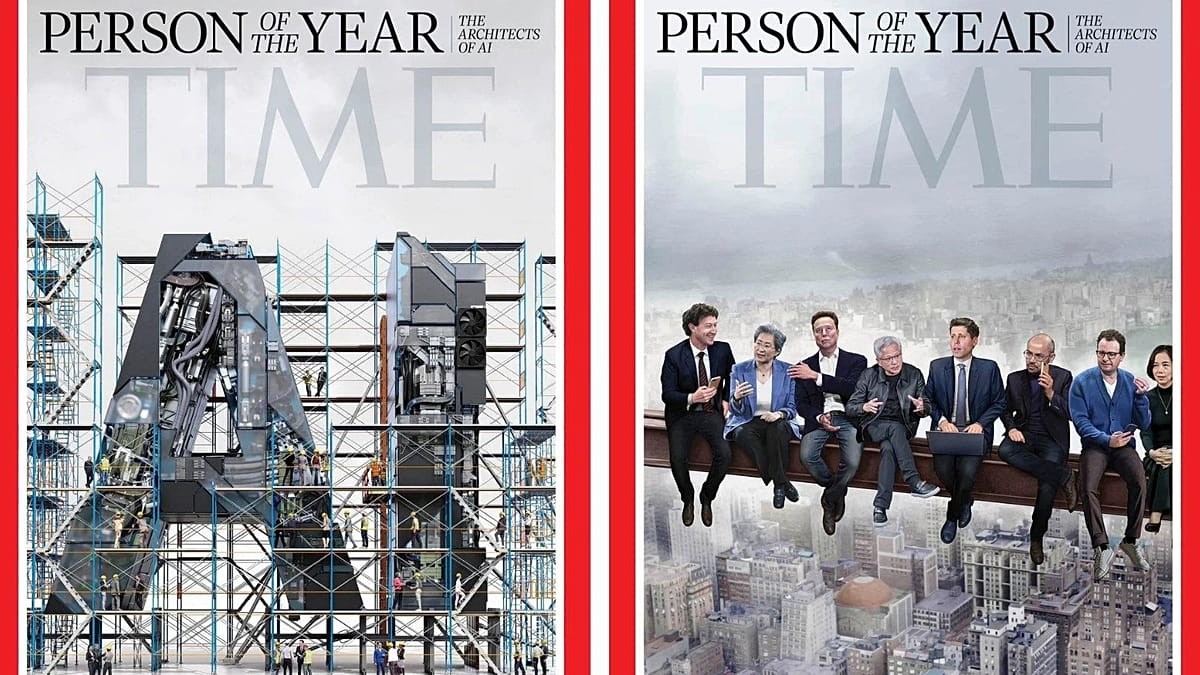
Artificial intelligence has officially reached a turning point. TIME Magazine has designated the “Architects of AI” as its 2025 Person of the Year, acknowledging the transformative – and often unsettling – impact of this technology on global society. The decision reflects not just technological advancement, but the pervasive anxiety and debate now inseparable from AI’s rapid rise.
The Year AI ‘Roared Into View’
TIME’s editorial team underscored that 2025 marked the moment when AI ceased to be a future concept and became a tangible, disruptive force. The magazine’s announcement framed the selection as recognition of those who “delivered the age of thinking machines,” simultaneously captivating and alarming humanity. This isn’t simply about innovation; it’s about a fundamental shift in how we live, work, and perceive reality.
Cultural and Linguistic Reflections of AI Anxiety
The choice is underscored by the very language we’re using to describe this era. Dictionaries worldwide have chosen words that reveal widespread unease. Collins Dictionary crowned “vibe coding” – creating software through natural language instead of manual programming – as its Word of the Year, a testament to AI’s accessibility and potential to displace traditional skills. Cambridge Dictionary’s selection of “parasocial” highlights the hollow connections forming between people and AI chatbots, while Macquarie Dictionary’s pick of “AI slop” captures the messy, often low-quality output flooding the digital landscape.
“Person of the Year is a powerful way to focus the world’s attention… and this year, no one had a greater impact than the individuals who imagined, designed, and built AI.” – Sam Jacobs, TIME editor-in-chief.
The Double-Edged Sword of Progress
The magazine acknowledges that this technological leap comes with significant trade-offs. The energy demands of AI systems are straining resources, jobs are being automated, and misinformation is spreading at an unprecedented rate. The concentration of power in the hands of a few tech leaders echoes historical patterns of wealth and influence. Nvidia’s CEO Jensen Huang put it bluntly: “This is the single most impactful technology of our time.”
The risks are stark: potential for large-scale cyberattacks, economic instability, and growing inequality. Even former President Trump captured this mood by suggesting, “If something happens, really bad, just blame AI.” This illustrates the extent to which AI has entered mainstream consciousness as both a tool and a scapegoat.
A Pattern of Recognition: Machines and the Masses
This isn’t the first time TIME has honored a non-human entity. In 1982, the personal computer was hailed as “Machine of the Year,” and in 1988, the magazine named “Endangered Earth” as its “Planet of the Year.” The 2006 pick of “You” celebrated the early social media creators who pioneered user-generated content. This history suggests TIME recognizes that progress isn’t always about individuals, but sometimes about forces that reshape entire eras.
The designation of the “Architects of AI” as Person of the Year is a stark reminder that this technology is no longer on the horizon; it is here, reshaping our world in ways we are only beginning to understand. The gamble is epic, and the future remains uncertain.