
Twitter’s backend relies on the Representational State Transfer (REST ) architecture. This isn’t a rigid blueprint of servers and cables. It’s a design philosophy. It defines how resources are addressed and accessed. For Twitter, REST means the service plays nice with standard Web syndication formats.
Web syndication sounds complex but is actually simple. An app grabs info from one source and pushes it to many destinations. Twitter supports two of these formats: Really Simple Syndication (RSS ) and Atom Syndication Format (Atom ). Both pull data from a single resource and push it elsewhere.
These formats are just a few lines of code. A site admin can embed them into their page. Visitors subscribe to the feed. They get updates whenever the admin posts. Twitter uses this mechanism to let members broadcast messages to their network. Users subscribe to each other’s feeds.
Twitter leverages standard syndication feeds to allow members to post messages to a network of other Twitter members.
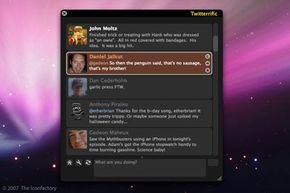
By granting third-party developers partial access to its API, Twitter enabled a wave of independent tools. These programs tap into Twitter’s services via a clean interface.
Real Tools Built on Twitter’s API
You don’t have to use Twitter’s main site. Several apps integrate directly with the network.
- OutTwit connects Twitter to Outlook for Windows.
- Tweet Scan searches public posts in real time via a custom engine or Firefox.
- Twessenger plugs Twitter into Windows Live Messenger 8.1.
- Twittervision maps public posts live on Google Maps.
- Flotzam ties Twitter into Facebook, Flickr, and blogs.
- iTunes to Twitter broadcasts the current Mac song title to your network.
New apps drop every day. This is just a snapshot.
Under the Hood: XML and Markup Languages
Both RSS and Atom rely on Extensible Markup Language (XML ). XML structures data within documents. It doesn’t have strict rules like HTML. It complements languages by adding tags.
These tags are invisible to humans. Programmers use them to identify and manipulate data. Computers read these tags to process information. This structure allows different systems to talk to each other.
Why This Matters for Modern Tech
Understanding this stack explains why Twitter felt like an open platform for so long. The REST architecture allowed developers to build bridges. You could tweet from Outlook. You could map tweets on a globe. You didn’t need to visit twitter.com.
This modular approach changed how we thought about social media. It wasn’t just a walled garden. It was a data source. Any developer could hook into it.
The technical side extends to mobile devices too. But the foundation remains XML and syndication. These protocols turn isolated posts into a flowing river of information.
How does this affect your feed today? Less directly than before. Twitter has tightened its API access. Many of these third-party clients are gone or limited. But the architecture remains. The way data moves—from XML tags to REST endpoints—still powers the web.
The open era of Twitter APIs didn’t last forever. But it proved a point. Data flows better when barriers are low. We just have to see where the next protocol leads.