
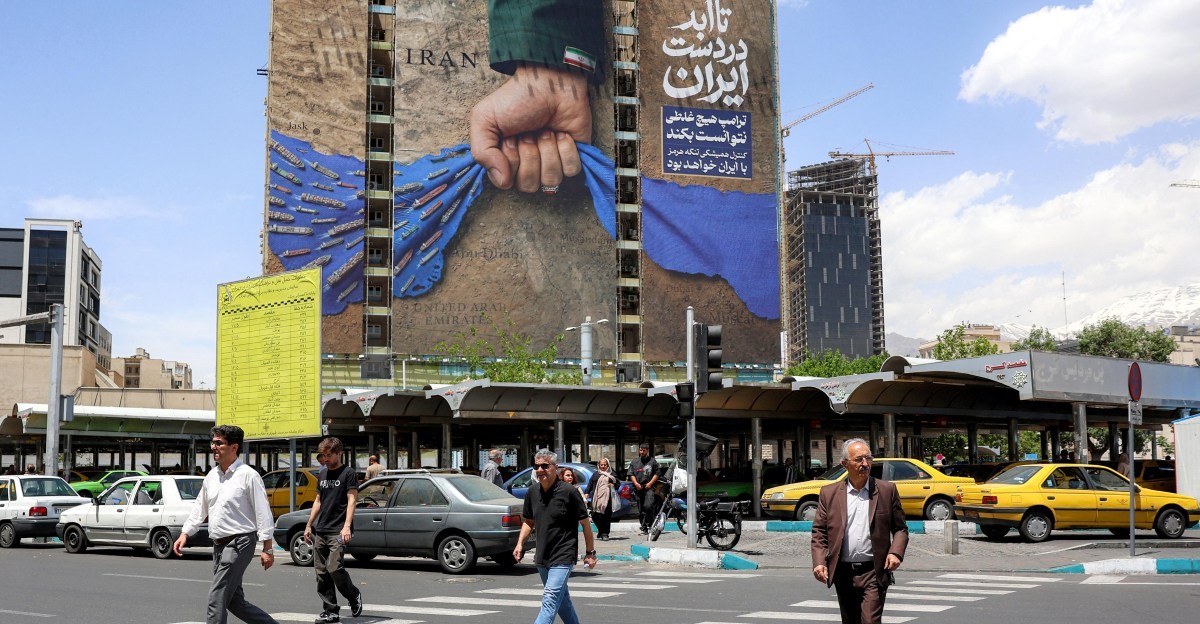
The conflict between the United States and Iran has entered a precarious phase of “managed escalation.” Despite ongoing missile exchanges and attacks on commercial shipping in the Strait of Hormuz, the Trump administration maintains that the ceasefire initiated in early April remains technically in effect.
According to Joint Chiefs of Staff Chair Gen. Dan Caine, Iran’s recent actions against US Navy vessels and commercial ships remain “below the threshold of restarting major combat operations.” However, the strategic reality is far more volatile. Iran continues to strangle global energy supplies by blocking the Strait of Hormuz, while a US naval blockade inflicts severe economic damage on Tehran. Experts warn that a catastrophic global energy crunch could occur within weeks if the situation is not resolved.
Diplomatic efforts are underway, but progress is uneven. President Donald Trump recently paused “Project Freedom,” a US naval operation designed to escort stranded ships out of the strait, citing positive developments in negotiations. Reports suggest a deal is imminent, causing oil prices to dip before Trump cautioned against premature optimism.
With no clear resolution in sight, analysts have identified five plausible scenarios for how this standoff might conclude.
1. A Nuclear-Linked Diplomatic Deal
The most optimistic scenario involves a comprehensive agreement that addresses both immediate shipping concerns and long-term nuclear tensions. Intelligence suggests the US and Iran are close to finalizing a “one-page memorandum” that would:
- Lift restrictions on shipping through the Strait of Hormuz.
- See Iran pause its nuclear enrichment activities.
- Result in the US releasing billions of dollars in frozen Iranian assets.
Negotiations are currently focused on the duration of the enrichment pause, with Iran proposing five years and the US seeking twenty. This outcome would be historically ironic. The release of funds echoes the 2015 nuclear deal (JCPOA), which Trump famously criticized as “green, green cash” before withdrawing in 2018. However, if Iran agrees to dismantle its existing stockpile of highly enriched uranium, this deal could offer the most stable path forward for the administration.
2. A Limited Non-Nuclear Agreement
A more likely, yet less comprehensive, outcome is a deal that resolves the immediate shipping crisis without addressing the nuclear issue. Iran may be willing to reopen the strait in exchange for the lifting of the US blockade, effectively shelving nuclear negotiations for later.
This scenario relies on the belief that Iran can withstand economic pressure longer than the US can withstand global market instability. While ordinary Iranians face shortages of basic necessities and Tehran struggles with oil storage, US intelligence indicates that recent bombing campaigns have not significantly altered Iran’s timeline for developing a nuclear weapon.
If the war’s primary objective was to halt Iran’s nuclear ambitions, this outcome would represent a strategic defeat for the US. Iran’s missile capabilities, though degraded, can be rebuilt, leaving the core security threat intact.
3. Forced Reopening of the Strait
If diplomacy fails, the US may attempt to forcibly reopen the Strait of Hormuz. “Project Freedom” has already successfully escorted two ships out of the Gulf, but over 1,000 vessels remain stranded. Crucially, this operation is designed only to extract existing ships, not to guarantee safe passage for new traffic.
For global commerce to resume, international shipping companies and insurers must believe the route is safe. The challenge today is far greater than during the 1980s “Tanker War.” Modern drone technology allows Iran to threaten shipping at a significantly lower cost and with higher lethality than in the past.
While President Trump has resisted deploying ground troops to capture strategic locations like Kharg Island due to casualty risks, public and economic pressure is mounting. The administration is also attempting to build an international coalition, though allies have thus far been hesitant to join.
4. Return to Full-Scale War
Although Trump has insisted the war has ended, he has repeatedly threatened to resume bombing if no deal is reached. He has specifically targeted Iran’s power grid and infrastructure as potential objectives, threats that were made but not acted upon in April.
The rhetoric suggests a willingness to escalate if Iran does not “wave the white flag of surrender.” However, historical precedent suggests that regimes willing to sacrifice their own citizens to maintain power are unlikely to capitulate under external pressure. A return to full-scale war would likely involve intense aerial bombardment and potentially direct Israeli involvement, resulting in significant regional destabilization and global economic shock.
5. The Crisis Becomes the New Normal
Perhaps the most unsettling possibility is that the crisis does not end dramatically but simply fades into a new, unstable status quo. The current tension may ease gradually without a formal resolution.
In this scenario:
* The US might ease its embargo, similar to recent adjustments with Cuba.
* Iran could institutionalize a system of charging tolls for transit through the Strait of Hormuz, either unilaterally or with regional partners.
This would fundamentally alter the global economic landscape. It signals a shift away from the “freedom of navigation” that underpins modern globalization. If Iran can successfully leverage its geographic position to extract revenue or exert political pressure, other nations controlling strategic chokepoints may follow suit.
The Bottom Line: Whether Iran agrees to lift restrictions or not, it has demonstrated the ability to close the strait at will. This creates a form of deterrence that may be more effective than its nuclear program ever was. The world may need to stop asking how this crisis will end, and start preparing for the geopolitical reality it has already created.