
The French language just made a move. The Commission d’enrichissement de la langue française has officially recognized numérique as a standard term. Digital is out. This neologism can be traced back to the Latin word numerus meaning “number”. It fits. We live in a world built on a binary system. zero and one. That simple switch flipped the switch on the modern era.
This is more than just a vocabulary update. It signals a change in the way we look at technology. This term directly refers to the digital revolution. This change accelerated dramatically in the early 21st century. But how did we get here? Why is history important in your everyday life?
From binary code to global connections
Think of the digital revolution as a historical turning point. It sits right next to Gutenberg’s printing press and the Industrial Revolution. It changes everything we produce and the way we communicate. The timeline starts earlier than most people realize.
In 1936, mathematician Alan Turing laid the foundation for the model. Then came Colossus. This electronic calculator was built outside of London in 1943 and ran on that same binary logic. It was the direct result of Turing’s theories.
The real acceleration happened in the following decades. Major milestones define the infrastructure we rely on today.
- 1971: Microprocessor introduced. The first email was sent this year.
- 1981: Personal computers entered homes.
- 1983: Motorola launches the first commercial cell phone.
- 1990s: Everything clicked into place. Smartphones, the Internet, and personal computing have become mainstream.
Who really uses it?
It’s hard to imagine its scale without looking at the numbers. We’re not talking about niche enthusiasts anymore. This is a global infrastructure.
Approximately 4.54 billion people use the Internet. 5.19 billion people have a mobile phone. This corresponds to almost half of the world’s population that uses social networks. 3.8 billion accounts. 99% of them access these networks via mobile devices.
Consider volume. Approximately 293 billion emails are sent around the world every day. Ignore spam for now. Let’s think about the data that flows through it. It’s continuous. It’s huge.
France is not far behind in this digital revolution. This country is deeply integrated. 83% of the population is connected to the Internet. 84% of people own a smartphone. The barriers to entry are gone. Participation does not require special training. All you need is a connection.
Why is word choice important? Because language shapes thinking. When we stop saying “numbers” and start saying “numbers,” we recognize a mathematical root. The foundation. It’s a reminder that this isn’t magic. It’s just counting. Quickly.
The shift is complete in the lexicon. Infrastructure is everywhere. It is no longer a question of whether we are connected. It’s about what happens next if the binary count continues.


Why does computing matter?
The digital revolution is more than just a trend. It mirrors the printing press in 1914. Today, data floods every corner of our economic, social, cultural, strategic and political lives. We see the same fault lines that appeared a hundred years ago. Some countries have democratized these tools. Others are still trying to catch up.
Let’s take France as an example. More than half of the population reads news online. Sixty percent of its companies have moved to Big Data analytics. 400,000 students and employees improve their skills through Mooc platforms. The share of the digital industry in the country’s GDP is currently 5.5 percent. The country is leading by example. France is the European leader in e-administration. Even political protest has migrated to networks.
But this progress hides deep divisions. The Digital Divide measures inequality in access to the Internet and IT technology. Rural areas have suffered the most. It crushes developing countries. In Africa, only 28% of the population has internet access. This created a new kind of illiteracy. We call it digital illiteracy or illectronism. You cannot participate in society unless you are online.
How digital infrastructure works
The spread of digital objects is based on three pillars. world wide web. Telecommunication networks. And the miniaturization of hardware. Network development is the engine of this revolution.
Internet vs. the Web
People often confuse the two. They aren’t the same thing. The World Wide Web is a hypertext system. It runs on top of the Internet. The Internet itself is a worldwide Computers network. It uses packet switching to route information. Data is transmitted along optical fiber or metal cables. Transport protocols act as languages. This enables information to travel across continents in the air.
Hardware Revolution
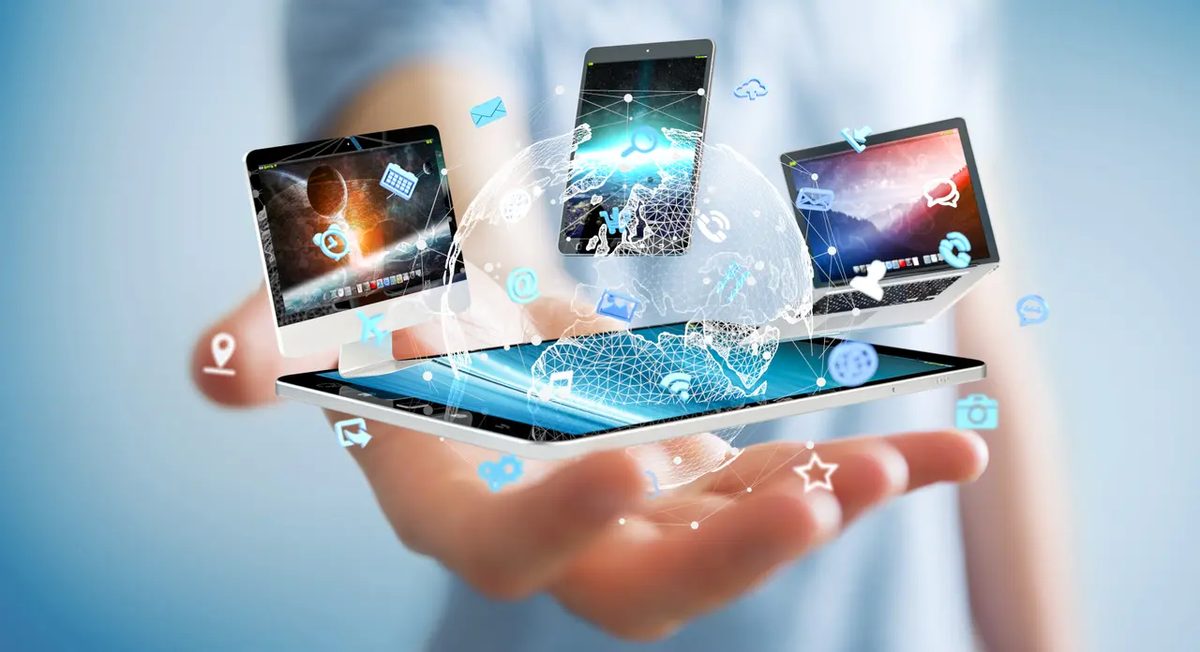
The physical aspects of computation can be traced back to Turing’s model. Alan Turing’s theoretical framework influenced the hardware revolution. This is also reflected in the devices we use every day. *Computers . Smartphones . Tablets *.
These are more than just tools. They are an extension of our cognitive and social life. The miniaturization process made them portable. Ubiquitous. The web gave them purpose. The network gave them voice. Without any of these layers, the modern digital experience falls apart.
We are now drowning in connectivity. But for almost three-quarters of Africa’s population, the ocean is dry. The gap is not just about access. It’s about the agency. Who manages the data? Who will be left behind when the servers are shut down? The infrastructure is there. The question is who can use it.