
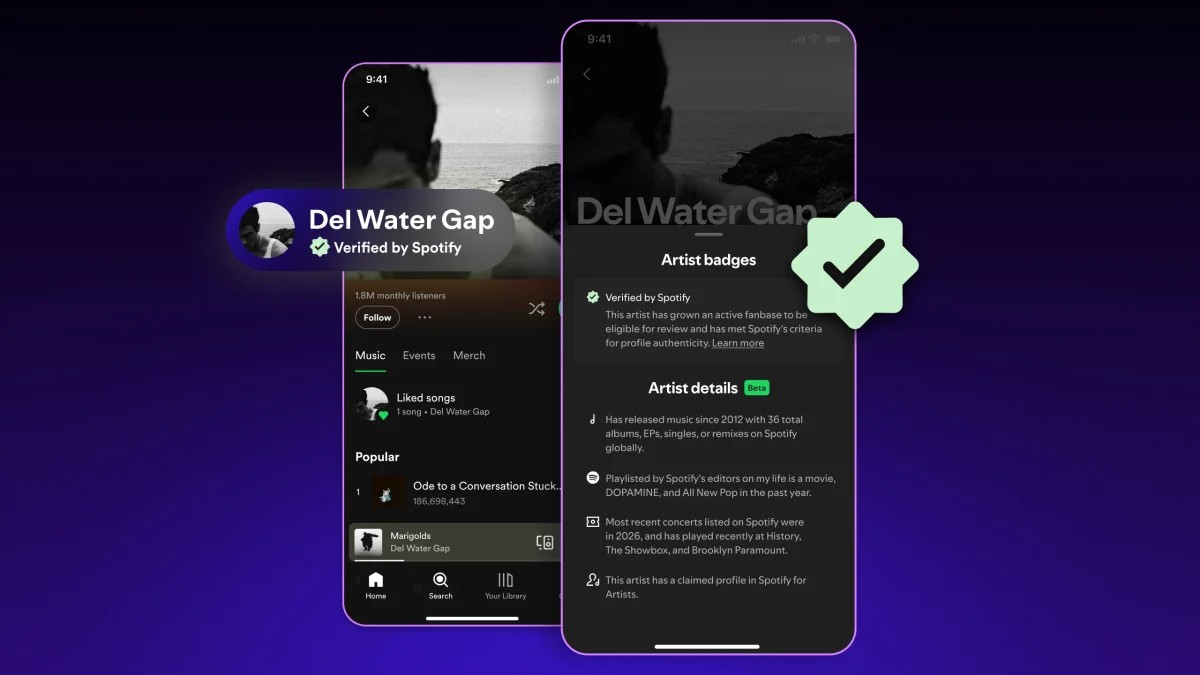
Spotify is taking decisive action to help listeners navigate the growing presence of artificial intelligence in music. Starting April 30, the streaming platform will roll out a “Verified by Spotify” badge, a light green checkmark designed to clearly distinguish human artists from synthetic-only profiles.
This move addresses a pressing concern for users who have increasingly found themselves streaming AI-generated tracks or encountering profiles that lack any human creator behind them.
How Verification Works
The verification process is not manual; it relies on a sophisticated automatic filtering system. Spotify evaluates artist profiles based on three main criteria:
- Engagement History: Analyzing listener activity and interaction patterns.
- Policy Compliance: Ensuring the profile adheres to Spotify’s terms of service.
- Authenticity Markers: Looking for real-world indicators of a human presence, such as:
- Live concert dates
- Official merchandise stores
- Linked social media accounts
In addition to algorithmic checks, Spotify will employ human reviewers to verify profiles that appear to be operating in “good faith.” Initially, this human review will focus on the platform’s most searched artists. The company notes that these policies are designed to evolve alongside the music industry, particularly regarding human artists who use AI as a creative tool rather than as a replacement for their identity.
Greater Transparency and Control
Beyond the badge, Spotify is beta-testing a new feature akin to “nutrition facts” for music. This expanded artist information section aims to provide deeper context about an artist’s history and authenticity. Furthermore, artists will gain greater control over what information appears on their public profiles, allowing for more accurate self-representation.
The rollout of these verification badges will happen gradually over the coming weeks.
Why This Matters
The introduction of these badges comes in response to significant user frustration. Listeners have reported a surge in AI-generated songs and AI-only artist pages clogging the platform. There have also been concerns about algorithmic recommendations pushing synthetic music into personal playlists, sometimes even attributing AI tracks to deceased artists—a practice that sparked controversy last year.
While Spotify has previously implemented spam filters and impersonation policies, users have consistently called for clearer, visible disclosures. A Spotify spokesperson previously clarified that the platform “doesn’t give AI-generated music any special treatment,” emphasizing that while responsible AI use by human artists is permitted, the company remains aggressive in removing content farms, impersonators, and those attempting to game the system.
The core goal is clarity: ensuring that when you press play, you know whether you are listening to a human creator or a machine.
Conclusion
Spotify’s new verification system marks a significant step toward transparency in the age of generative AI. By combining automated filters with human oversight and providing clearer artist data, the platform aims to restore trust and help listeners make informed choices about the music they consume.