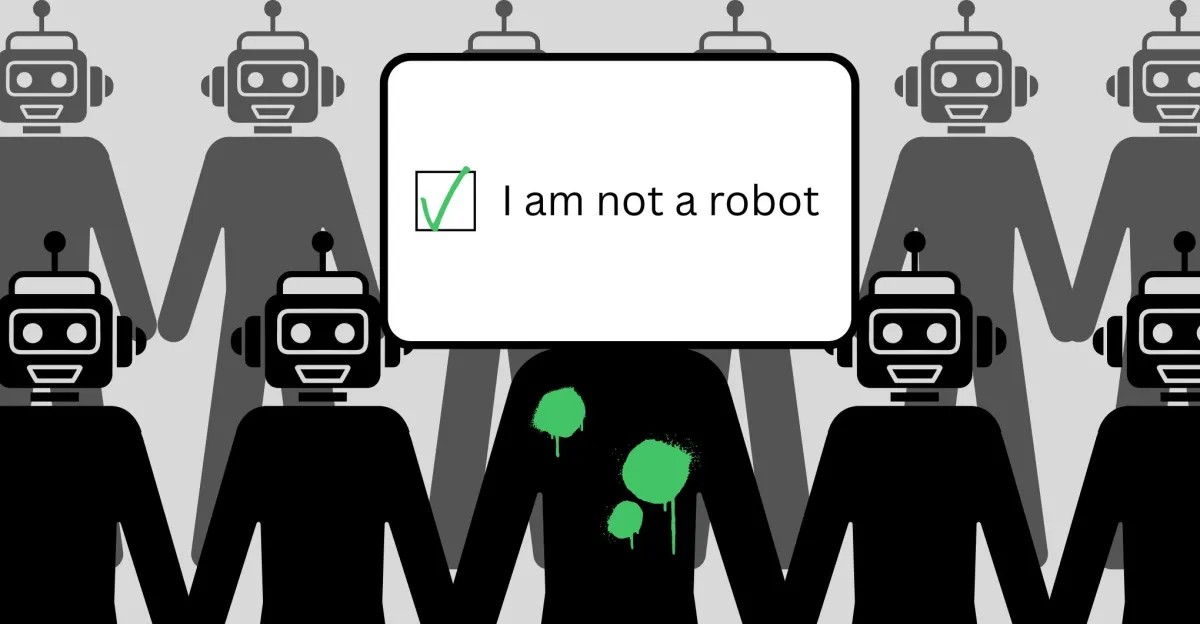
The question of whether content is created by humans or artificial intelligence (AI) is quickly becoming a defining issue of our digital age. As AI tools become increasingly sophisticated, capable of generating text, images, and audio indistinguishable from human work, skepticism grows. The solution isn’t better AI detection—it’s verifying the human element, and a growing number of initiatives are exploring how to do just that.
The Problem with AI Labeling
Current AI labeling efforts, such as the Content Credentials standard (C2PA), have largely failed. The reason is simple: those who profit from AI-generated content—whether it’s scammers, unethical businesses, or those seeking to manipulate public opinion—have no incentive to disclose its origins. The market rewards deception, and AI labeling relies on voluntary transparency. This creates a fundamental flaw in the approach, making it ineffective at scale.
The Shift Towards Human-Made Verification
Instead of chasing AI, the focus is shifting to authenticating human work. The core idea is to provide creators with a way to prove their content’s origin, similar to how “Fair Trade” or “Organic” labels signify specific production standards. Several solutions are emerging, each with its own approach:
- Industry-Specific Certifications: Organizations like the Authors Guild offer “human authored” certifications for written works, but these can’t be applied universally.
- Broad-Spectrum Labels: Projects like Proudly Human and Not by AI aim to cover all forms of creative content, but their verification processes vary in reliability. Some rely on trust, while others use AI detection tools (which are often flawed).
- Manual Auditing: The most reliable method remains labor-intensive: human auditors verifying a creator’s process through sketches, drafts, and other evidence.
- Blockchain Solutions: Proof I Did It leverages blockchain technology to create an unforgeable digital certificate of authorship. This approach shifts the question from “does this look real?” to “can this account prove its history?”
Defining “Human-Made” in a Hybrid World
The challenge isn’t just verification, but also definition. With AI tools now integrated into many creative workflows, drawing the line between human and AI assistance is increasingly difficult. As UC Berkeley lecturer Nina Beguš points out, “Authorship is disintegrating into new directions, becoming more technologically enhanced and more collective.”
The Economic Imperative
The demand for human-made authenticity isn’t just about ethics; it’s about economic survival. Creative professionals are fighting to distinguish their work from the flood of AI-generated content that threatens their livelihoods. Some creators, like romance author Coral Hart, have already profited handsomely from AI-generated novels while deliberately avoiding transparency due to fear of backlash.
The Future of Authenticity
To succeed, a single, universally recognized standard is needed. This requires not just buy-in from creators and platforms, but also enforcement by governments and regulatory bodies. If a “Made by Human” label can achieve the same level of recognition as “Fair Trade” or “Organic,” consumers might once again trust what they see.
Ultimately, the debate isn’t about stopping AI, but about preserving the value of human creativity in a world where both are increasingly intertwined. The need for clear, verifiable authenticity will only grow as the lines between human and machine blur further.