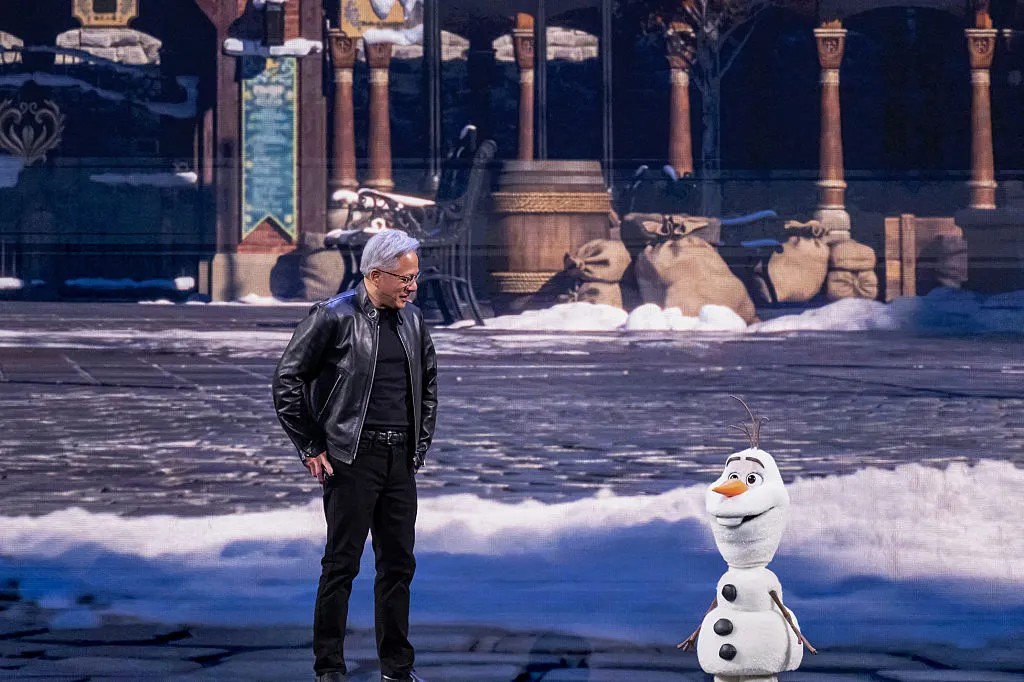
Nvidia’s recent GTC conference showcased both ambitious technological leaps and the practical hurdles of deploying advanced robotics. CEO Jensen Huang outlined a future where “OpenClaw” – an open-source AI strategy – becomes essential for all enterprises, while also unveiling a robot version of Disney’s Olaf from Frozen. The latter demonstration, though technically impressive, highlighted the often-overlooked social considerations of real-world robotic integration.
The OpenClaw Imperative
Huang’s call for universal adoption of OpenClaw is a calculated move. Nvidia is investing heavily in the project, ensuring its continued evolution even after the departure of its original creator. This strategy minimizes risk: inaction could sideline Nvidia as OpenClaw gains traction, while investment positions the company to capitalize on its success. As Kirsten Korosec of TechCrunch noted, “doing nothing is a greater risk than doing something that doesn’t go anywhere.”
Olaf’s Unscripted Moment
The Olaf robot demonstration was a spectacle, but also a cautionary tale. The robot’s microphone was cut mid-sentence as it began to ramble, illustrating the unpredictable nature of real-time AI interaction. While Nvidia showcased its robotics capabilities, the event raised critical questions about deployment in public spaces. Sean O’Kane pointed out the obvious: “What happens when a kid kicks Olaf over? And then every other kid who sees Olaf get kicked or knocked over has their whole trip to Disney ruined and it ruins the brand?”
The Unseen Side of Robotics
The focus on engineering overshadows the messy realities of integrating robots into human environments. Disney’s past attempts at park automation, as documented by the YouTuber Defunctland, demonstrate a pattern of technical success followed by social failure. The key challenge isn’t just building the robot; it’s anticipating how people will interact with it. The hype around humanoid robots often ignores these critical gray areas, prioritizing engineering feats over human behavior.
The core issue is not whether Nvidia can build robots, but whether they should deploy them without addressing the inevitable social fallout. The Olaf incident, though lighthearted, underscores a fundamental truth: technological advancement must account for human unpredictability to avoid undermining its own success.
The future of AI and robotics depends on recognizing that engineering is only half the equation. The other half is understanding how people will react, and preparing for the consequences.