



Philadelphia’s newest immersive art experience, the Ministry of Awe, isn’t just another walk-through gallery. Housed in a former bank building, it’s a six-story labyrinth of surrealist art, hidden passages, and interactive exhibits that blur the line between reality and imagination. But what sets it apart is how subtly—and thoughtfully—artificial intelligence is woven into the experience.
A New Kind of Immersion
The Ministry of Awe, created by artist Meg Saligman and over 100 collaborators, is designed to feel like a step into another world. Visitors can dial vintage phones that connect to mysterious recordings, explore bathrooms that log audio “deposits,” and discover hidden messages tucked into drawers. The theme of banking and power permeates the space, prompting reflection on wealth, influence, and the institutions that govern them.
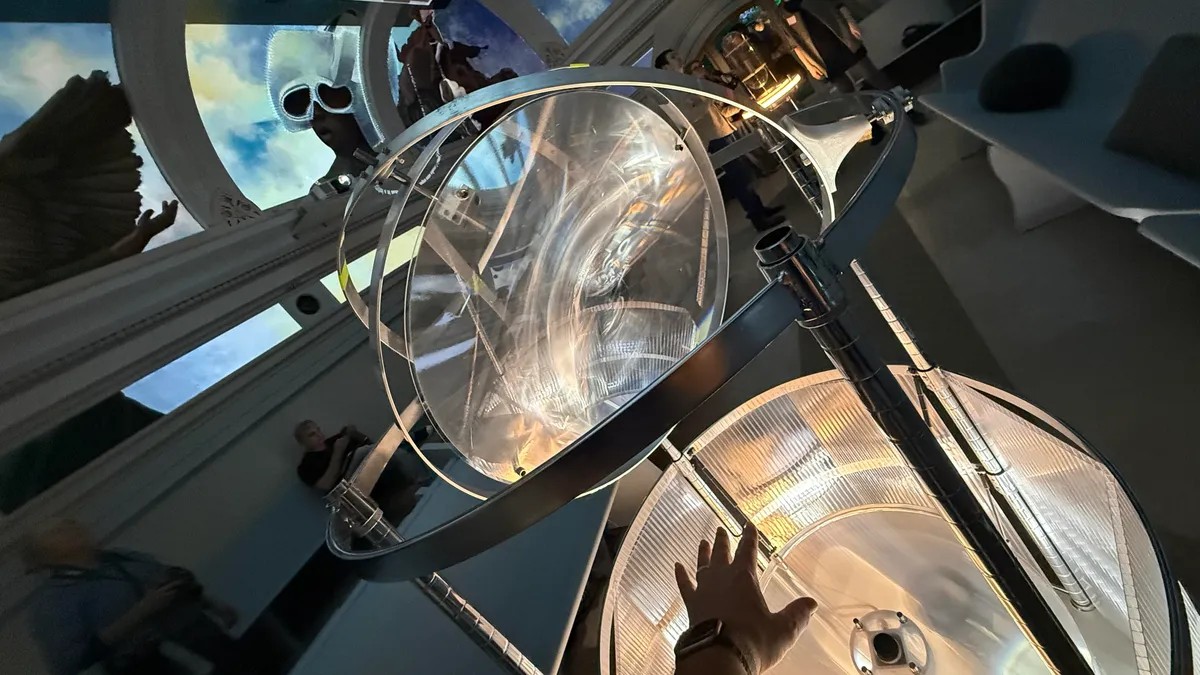
But the real intrigue lies in how technology enhances this world, not dominates it. The fifth-floor mural, The Heavens, is a prime example. Visitors can speak into microphones to see their words scroll across the ceiling, or place their hands on designated chambers to trigger AI-generated descriptions projected onto the artwork. The effect is seamless, adding a layer of interaction without disrupting the artistic integrity.
Spatial Computing for Spaces, Not Faces
The tech behind this integration comes from Spatial Pixel, a company founded by former Google Sidewalk Labs director Violet Whitney and architect William Martin. They describe their focus as “spatial computing for spaces, not faces,” meaning they build AI tools that respond to physical environments rather than individual users. Their open-source platform, Procession, blends multiple AI models to create dynamic experiences tailored to specific locations.
Whitney and Martin see art spaces as ideal testing grounds for AI, where rules can be deliberately set to respect the work and enhance visitor engagement. Their approach is a departure from the current trend of AI-driven tools that often prioritize individual data collection over artistic expression.
A Dialogue Between Art and Algorithm
The Ministry of Awe’s AI interactions are currently ephemeral—words fade, highlights disappear—but the underlying software is designed to evolve. Spatial Pixel plans to eventually record visitor contributions (with consent) to create a “bank” of ideas that Saligman can use to refine the artwork over time. The goal is to foster a perpetual dialogue between the artist, the AI, and the audience.
“What if you could actually talk to a painting?” Martin asks. “What if you could interact with a work of art and explore it in new ways?” This line of inquiry echoes similar experiments in AI art seen at events like SXSW, where questions of agency and ownership are increasingly central to the conversation.
The Ministry of Awe doesn’t demand smart glasses or wearable tech to function. Instead, it invites visitors to contemplate the delicate line between human creativity and artificial intelligence in a space designed for exploration, not surveillance.
Ultimately, the Ministry of Awe demonstrates that AI doesn’t have to replace artistic vision; it can amplify it. The project showcases how thoughtful integration of technology can unlock new forms of engagement while preserving the sacredness of art itself.


