



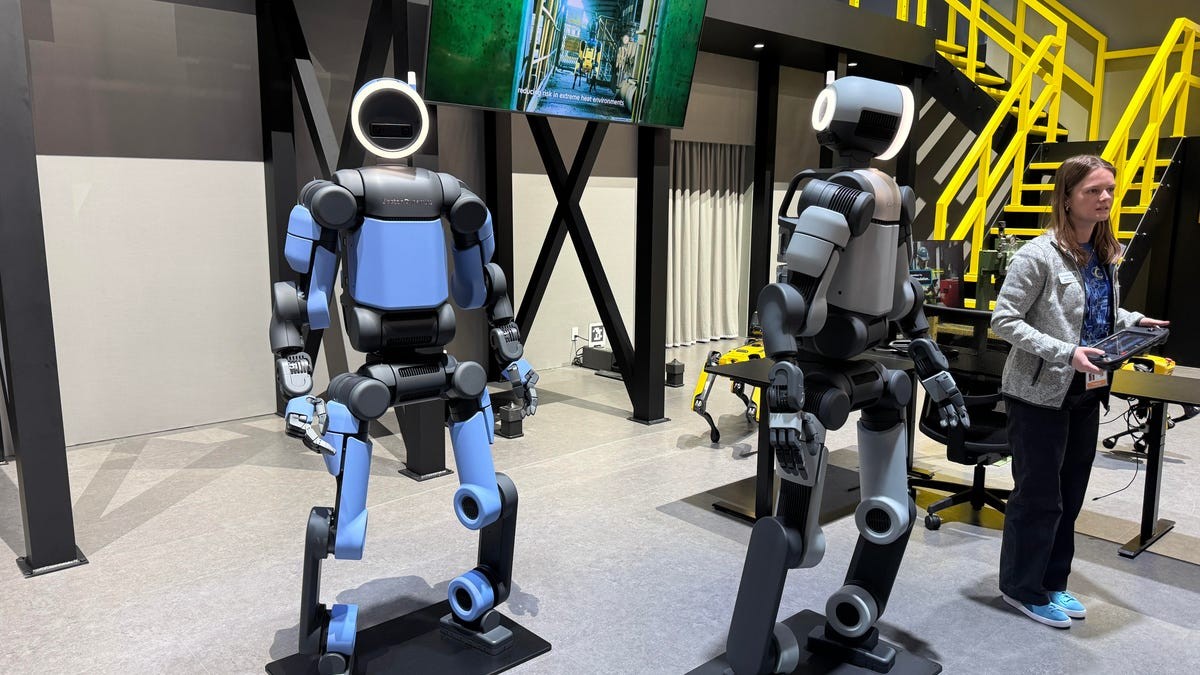
Boston Dynamics unveiled its latest Atlas humanoid robot at CES 2026, marking a significant leap toward practical, real-world robotic labor. The new Atlas prototype displayed an impressively human-like gait on stage, signaling a turning point in robotics development. It walked, twirled, and revealed a static version of the final product designed for industrial manufacturing.
Evolution of a Machine
The Atlas has undergone a decade-long transformation, evolving from a clunky metal construct into the sleek, agile machine seen today. This progress isn’t merely technical; it represents a broader shift in how we envision robots integrating into our lives. The original Atlas was a spectacle of engineering, but the new model is designed for utility, not just demonstration.
Designed for Work
The updated Atlas boasts 56 degrees of freedom, allowing for fully rotational joints and human-scale hands with tactile sensing. These capabilities are intended to equip the robot for complex environments and repetitive tasks. The robot’s AI will allow it to learn and adapt to new roles, making it a versatile tool in industrial settings.
Hyundai’s Manufacturing Push
Boston Dynamics’ parent company, Hyundai Motor Group, plans to deploy Atlas in its Savannah, Georgia manufacturing plant. This is not a distant future scenario; the robots will be performing real-world tasks in Hyundai’s facilities worldwide. The company believes that humanoid robots like Atlas will become the largest segment of the physical AI market.
Google DeepMind Partnership
To accelerate development, Hyundai is partnering with Google DeepMind, leveraging its AI models—including Gemini Robotics—to enhance Atlas’ capabilities. This collaboration is a full-circle moment, given Google’s previous ownership of Boston Dynamics between 2013 and 2017. The partnership demonstrates the rapid advancements in AI that are driving the next phase of robotics.
“We are excited to begin working with the Boston Dynamics team to explore what’s possible with their new Atlas robot as we develop new models to expand the impact of robotics, and to scale robots safely and efficiently,” said Carolina Parada, senior director of robotics at DeepMind.
The integration of AI and robotics signifies a transformational shift. According to Zach Jackowski, VP and general manager of Atlas, this moment is as impactful as the smartphone revolution. The question now is how society will adapt to the rise of advanced humanoid labor.


