




The early vision of the “information superhighway” promised a world where data flowed freely to anyone with a connection. For some, that utopia still exists. For others, the highway is littered with roadblocks. These barriers go by many names, but they all serve the same function: restricting access to specific content.
Motivations vary wildly. Some systems aim to shield children from harm. Others exist to enforce political control. Regardless of intent, the outcome is uniform. Access to identified pages is denied.
This isn’t just a government issue. You can buy software that does this today. These tools are often called Web filters. Critics prefer a blurrier term: Censorware.
The debate rarely splits cleanly into two camps. Some opponents sue. Others use technical workarounds to bypass blocks entirely. We will examine these layers, starting with the domestic level.
When Parents and Providers Play God
Consider the 2007 incident involving AT&T. The telecom giant faced backlash after editing a live webcast of Pearl Jam. The band was performing a cover of Pink Floyd’s “Another Brick in the Wall.” They had added lyrics criticizing then-President George W. Bush.
AT&T removed those lyrics.
Fans noticed. They complained. Eventually, the company admitted it wasn’t an isolated mistake. A spokesperson claimed the edits were never intentional. Yet the damage was done. It highlighted a uncomfortable truth: censorship isn’t always top-down. It often happens in the home, mediated by software you install yourself.
How Web Filters Work
These programs operate on simple logic. They maintain lists of domains or keywords. When you visit a site, the software checks it against the list. If it matches, the page doesn’t load.
This creates a private censorship network. Parents use them to block adult content. Employers use them to stop employees from wasting time. The technology is neutral. The application is not.
The Censorware Debate
Supporters argue these tools provide necessary protection. Without them, harmful content is just a click away. Opponents call it thought control. They argue that restricting information, even for good reasons, sets a dangerous precedent.
Who decides what is suitable? Parents? Software companies? Governments? The line blurs quickly.
Domestic Level Censorship
At home, censorship feels different. It’s not a wall. It’s a filter. It lets some things through while holding others back. This selective access shapes what we see, hear, and think.
Is this protection or manipulation? The answer depends on who holds the filter.
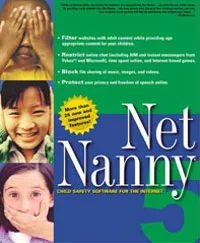

You can’t really argue that the open web is a safe space for children. It’s full of stuff parents would rather keep away from their kids’ eyes—pornography, hate speech, gambling, chat rooms that don’t have proper moderation. The list goes on. Some folks argue that parental oversight is the only real solution, but let’s be honest. You can’t stare at a browser tab for 12 hours straight. It’s exhausting. It’s unrealistic. Many parents feel they are constantly fighting a losing battle against the clock, let alone the internet.
So, they turn to tools. Hardware and software solutions become the new babysitters. Programs like Net Nanny or CYBERsitter pop up on the radar. These are web filtering programs designed to act as gatekeepers. You tell them what you don’t want seen. CYBERsitter, for instance, offers 35 different categories. You tick boxes for “pornography” or “social networking sites” and hope for the best.
These tools generally rely on two main techniques to do their dirty work: blacklists and keyword blocking.
A blacklist is straightforward. It’s a curated list of websites deemed undesirable by the software creators. These lists are dynamic. Companies update them constantly, often for free. If you try to visit a site on that list, the filter steps in. The request fails. Simple. But then there’s keyword blocking. This is where it gets messy. The software scans the page as it loads. It looks for specific words. If it finds them, it blocks access. The problem? It doesn’t always read the room.
Then there’s the firewall. This is a bit more hands-on. A firewall can be software or hardware. It acts as a barrier between your computer network and the wild west of the internet. It lets safe content in and keeps the rest out. But it requires a network administrator. In a home setting, that’s you. The parent. It demands more technical skill than a simple web filter. If you’re tech-savvy, you might enjoy the control. If you’re not, you might stick to the filtering software that does the heavy lifting for you.
“Web filters cannot detect context. A recipe for chicken breast might get blocked just as easily as a pornographic site.”
Think about your workplace. Have you ever tried to click a link, only to hit a wall of intimidating corporate messaging? Companies do this all the time. They limit what employees can see. It’s censorship from the top down. But when parents try to replicate that at home, things get complicated. The controversy around web filtering isn’t just about safety; it’s about accuracy.
Opponents of censorship have a legitimate gripe here. Many filtering programs encrypt their blacklists. They say it’s to prevent abuse. To stop people from hacking the filter. But encryption also means transparency is dead. You can’t see what’s being blocked. And that’s a problem. An encrypted blacklist might inadvertently include pages that are perfectly fine, including sites that criticize the filter creators themselves.
Even if the creators aren’t acting with malicious intent, the technology is flawed. Keyword-based filters lack context. They see words, not meaning. Early versions of these filters were notorious for this. They’d block access to a simple chicken breast recipe. Why? Because the word “breast” flagged the system. It couldn’t distinguish between a culinary website and a pornographic one. It just saw the keyword. And it blocked everything.
Big Businesses and Internet Censorship
This brings us to the corporate angle. If parents struggle with false positives, how do enterprises handle it? They don’t just rely on keywords. They use more sophisticated, often opaque, systems. But the principle remains the same. Control is the goal. Whether it’s a parent trying to protect a child or a company trying to protect productivity, the mechanism is the same. And the error rate is the same. You’re trading precision for coverage.
The bigger question isn’t just which tool to buy. It’s whether we accept that error. We accept that we’ll block the chicken recipe along with the pornography. Do we consider that an acceptable cost for safety? Or do we keep looking for a filter that actually understands nuance? The technology hasn’t quite caught up to the complexity of human language yet. And until it does, we’re left guessing what gets through and what doesn’t.


The Corporate Firewall and Productivity
The logic behind corporate internet restrictions is usually straightforward: stop the distraction. It isn’t just about letting people work; it’s about stopping them from wasting hours on non-work sites. But there’s a heavier weight on the ledger too. Corporate internet censorship often aims to prevent harassment claims. If an employee is browsing porn at their desk and a colleague walks by, that’s a hostile work environment. Companies use these blocks to avoid lawsuits, creating a sterile, if not entirely free, digital workspace.
Most places don’t just rely on home-user filtering software. They use firewalls. This gives administrators granular control. They can block specific pages or entire domains. The goal is precision. You want to stop the time-wasters and the illegal content without cutting off the legitimate research an employee actually needs.
When a worker hits a blocked site, they usually get a standard message. Access Denied. The network administrator has flagged this as inappropriate. There’s often a button to appeal the decision. It’s a safety valve. If a site was wrongfully blocked, the admin can tweak the firewall settings. But for most, it’s just a dead end.
Net Neutrality and the ISP Power Play
Then there are the gatekeepers. The telecom and cable companies. They control the pipes. In the US, the battle over net neutrality has been a long, bloody one. The core idea is simple: a level playing field. ISPs should allow access to all content without favoring one company over another. They can’t pick winners.
The Supreme Court recently dismissed net neutrality rules, effectively handing more power to the ISPs. Without those rules, the game changes. ISPs can charge content providers for bandwidth. Pay up, and your site loads faster. Don’t pay, and you lag behind. Imagine if Yahoo paid an ISP and Google didn’t. Suddenly, Google’s search results take five seconds to load while Yahoo’s are instant. Users will leave. It’s preferential treatment. Supporters of net neutrality argue this isn’t just economics. It’s censorship by proxy.
Search Engines and Self-Censorship
Search engines like Google and Yahoo face a different kind of pressure. They self-censor their results pages (SERPs) to keep things relevant. Webmasters try to game the system, tricking algorithms into ranking spam or junk at the top. Without filtering, every search would be a minefield of irrelevance.
But there’s a darker side. Critics point out that these US-based companies help restrictive regimes maintain control. They’re headquartered in America, but they operate globally. To do business in certain countries, they have to obey local laws. That means scrubbing results. It’s a delicate position. They’re caught between their home country’s values and the legal requirements of foreign governments.
Keep reading to see how other nations take this further.
Even if you live in a country that considers itself a democracy, the idea that the internet is a completely free zone is a myth. The United States has its own restrictions. If you are in a public library or sitting in a school computer lab, you will hit walls. Filters block certain content by default. It is not total suppression, but it is there. Other nations take this a step further. Some ban specific types of information entirely. A few places make accessing the web nearly impossible for the average citizen.
How Organizations Categorize Web Filtering
Tracking these restrictions is difficult because governments rarely publish their own blocking lists. The OpenNet Initiative (ONI) tried to map this chaos. They broke down web filtering into four distinct buckets. This framework helps explain why you might be blocked from one site but not another.
First, there is Political filtering. This targets content that challenges the state. It covers human rights abuses, religious movements, and social activism that the government finds inconvenient.
Second is Social filtering. This is the morality clause. Governments block sites related to sexuality, gambling, drugs, and other topics they deem offensive to public order or religious values.
Third is Conflict/Security filtering. Wars, skirmishes, and political dissent fall here. If a story threatens national security narratives, it gets buried.
Finally, there is Internet tools filtering. This is the most technical category. It targets the tools themselves. Email providers, instant messaging apps, language translators, and specifically, software designed to bypass censorship (like Tor or proxy services). If you try to use a tool to escape the filter, the filter catches you.
Which Countries Enforce the Strictest Internet Censorship?
The US approach is relatively liberal by global standards. We block a few pages, usually related to child safety or copyright. Elsewhere, the restrictions are severe. Reporters Without Borders tracks press freedom and digital rights. Their data points to a specific list of nations where internet freedom is virtually non-existent.
These include Belarus, China, Cuba, Egypt, Iran, Myanmar, North Korea, Saudi Arabia, Syria, Tunisia, Turkmenistan, Uzbekistan, and Vietnam.
“Some countries go well beyond restricting access.”
In Myanmar, the government allegedly monitors internet cafés. Computers are configured to take screenshots every few minutes. You are being watched while you type.
China has the Great Firewall of China. This is not just a simple blocklist. It is an advanced system that searches new web pages in real time. It can scan blogs for subversive content and block users before they even load the page. It is a dynamic, living barrier.
Cuba takes a different approach. Private internet access is banned. You cannot buy a connection for your home. To get online, you must go to a public access point. The state controls the infrastructure, so they control the entry.
When Online Activism Becomes Physical Danger
Censorship is not just about blocking websites. It can lead to violence. The fight often spills from the digital realm into the real world.
In 2006, Peter Yuan Li was attacked in his Atlanta home. Li was a US citizen. He was also an anti-censorship activist. He practiced Falun Gong, a spiritual movement often described as similar to Buddhism but heavily suppressed by the Chinese government. Li maintained websites that criticized the Chinese Communist Party.
Four men broke into his home. They bound him. They demanded to know where he stored his information. They beat him severely. They stole two laptop computers. They left other valuables untouched. This was not a random burglary. It was targeted. Li believed the men were sent by the Chinese government to silence him.
The internet has no borders, but physical bodies do. When a government decides your words are a threat, it does not always stop at a firewall.
The Fight Against Digital Walls
You don’t have to look far to see that thousands of people are fighting back against internet censorship through blogs and online advocacy every single day. But there is a lot more happening under the hood than just angry tweets. Several organizations are raising awareness about these restrictions, ranging from formal institutions with heavy-hitting legal teams to looser collectives willing to try guerilla tactics to bypass strict government policies.
Take the American Civil Liberties Union (ACLU) for instance. They are a fierce opponent of internet censorship, filing lawsuit after lawsuit to overturn restrictive laws. In 2007, they actually won a major victory. A federal court agreed with the ACLU that the Children’s Online Protection Act (COPA) was unconstitutional. COPA had made it illegal to present material online deemed harmful to minors, even if that same content was valuable or necessary for adults. That distinction between “harmful to kids” and “harmful to free speech” is exactly where the legal battle lines are drawn.
Mapping the Blockade
If you want to see where these restrictions are actually happening, look at the OpenNet Initiative. This isn’t just a blog; it’s a serious research effort involving departments from the University of Toronto, Harvard Law School, Oxford University, and the University of Cambridge. Their goal is straightforward: provide the world with clear information about which countries are allowing or denying access to information. You can go to their website and see an interactive map showing exactly which nations are censoring the internet. It’s not subtle.
Reporters Without Borders is also in the ring, though their scope is broader than just the web. They maintain a list of “internet enemies,” basically ranking countries based on how severe their internet restrictions and policies are. It’s a grim leaderboard, but it highlights the global scale of the issue.
Then there are the educators. The Censorware Project has been around since 1997, dedicated to teaching people about web filtering software and the practices behind it. Their site offers investigative reports on all the major web filter programs on the market, along with essays and news about censorship. A similar resource is Peacefire.org, which started as a safe haven for protecting free speech for young people online.
How to Bypass the Block
These groups don’t just complain. They offer advice. If you want to know how to disable or circumvent censorware, many advocates point toward proxy sites. Here is how they work: you visit a proxy site, which acts as a middleman. You use a form on that site to type in the URL of the restricted page you want to see. The proxy server fetches that information and displays it to you. The catch? Outsiders only see that you visited the proxy site. They don’t see the actual restricted content you pulled up. It’s a simple trick, but it effectively hides your tracks from local monitors.
It might be decades before the internet reaches its full potential as a true conduit for ideas. And ironically, getting there won’t be through some new technological breakthrough. It will be through changes in national and corporate policies.
The School and Library Debate
Speaking of policies, let’s talk about the Children’s Internet Protection Act (CIPA). Enacted by the U.S. Congress in 2000, this law imposes strict restrictions on internet access in schools and public libraries that receive funding from the E-rate program. The E-rate program helps make technology more affordable for these institutions, but the price of that discount is compliance with CIPA.
Critics argue that this act violates the First Amendment. They believe that filtering software often blocks too much, cutting off adults from lawful information in the name of protecting children. The Supreme Court weighed in on this in 2003. In a tight 5 to 4 decision, they upheld CIPA. So the law stands. The debate continues, but the legal precedent is set.
Think of the children, sure. But who decides what a child needs to see to understand the world? The answer is still being written, one block, one lawsuit, and one proxy click at a time.


